
Reviewed · CITY TOURS
Windhoek City Tour
Windhoek reveals itself in layers. This three-hour tour moves from Christuskirche and Parliament Gardens to Katutura, giving you both the polished center and the everyday city beyond it. I especially like the mix of colonial-era sights and local neighborhoods, plus the chance to taste kapana, a popular Namibian street food. I also like the stop at Penduka, where shopping supports a women’s craft project.
The main point to consider is that some central sights may be viewed from outside. Christuskirche, Alte Feste, and Parliament Gardens have reportedly had limited or closed interior access since COVID, so this experience is strongest as a guided city overview rather than a museum tour.
In This Review
- Key points to know before booking
- Why this is a useful first look at Windhoek
- Christuskirche, Windhoek’s familiar landmark
- Parliament Gardens and Namibia’s independence story
- The National Museum and a changing city center
- Alte Feste and the limits of an outdoor visit
- Katutura brings the tour down to street level
- Penduka turns shopping into a useful stop
- The guides are a major part of the value
- Group size, pickup, and comfort
- Is $37.38 a fair price?
- Who should book this Windhoek tour?
- Booking, weather, and cancellation details
- Should you book the Windhoek City Tour?
- FAQ
- How long is the Windhoek City Tour?
- How much does the tour cost?
- Is hotel pickup included?
- What is the maximum group size?
- Is food included?
- Does the tour visit Katutura?
- Can I visit Christuskirche inside?
- Is Alte Feste an active museum?
- Are children allowed on the tour?
- What happens if bad weather cancels the tour?
- Can I cancel for a full refund?
Key points to know before booking
- Katutura is the heart of the experience: You visit a local market, meet residents, and may taste kapana rather than simply driving past the township.
- Petrus is a much-praised guide: His personal stories, clear explanations, patience, and warm manner have helped make many tours memorable.
- Penduka adds purpose to souvenir shopping: The craft center supports women who are building income for themselves and their families.
- The group is capped at seven people: That small size should make it easier to ask questions and keep the tour personal.
- The route covers two very different Windhoeks: You see formal city landmarks, then residential districts and a community market.
- The price is $37.38 per person: For about three hours, local transport, guiding, and snacks, I consider it fair value, especially for a first morning in Windhoek.
Why this is a useful first look at Windhoek
Windhoek can be hard to read on your own. The city center has German-built churches, forts, gardens, and government buildings, while the wider city includes residential districts with very different stories and daily rhythms. A short visit can easily leave you with a neat collection of photographs but little sense of how the city fits together.
This tour helps connect those pieces. You begin with landmarks that explain the colonial period and Namibia’s road to independence. Then you head into Katutura, where the focus shifts from monuments to people, markets, food, and present-day life.
I like that balance. The tour does not treat Windhoek as a postcard capital made only of tidy streets and old buildings. It gives you a chance to ask how the city developed, what independence changed, and how people live now.
At 3 hours, this is not an exhausting full-day outing. It fits well on your first morning, a free afternoon, or a day between longer Namibian excursions. Some departures may run closer to three and a half hours, depending on the pace and questions.
More City Tours in Windhoek
- Windhoek: City and Township Tour
★ 4.8 · 430 reviews - Half-Day Windhoek City and Township Cultural Tour
★ 4.5 · 187 reviews - Windhoek: City Tour
★ 4.8 · 31 reviews
Christuskirche, Windhoek’s familiar landmark
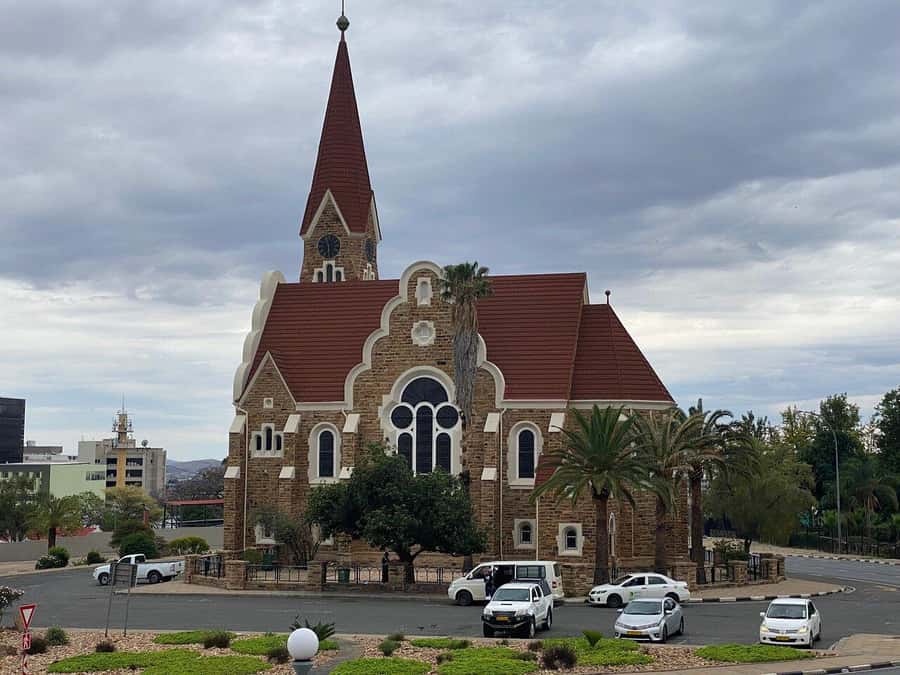
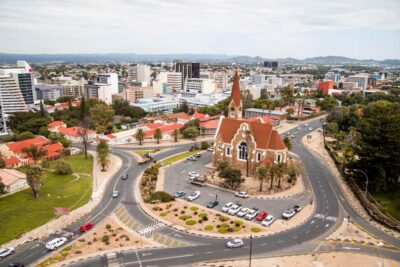
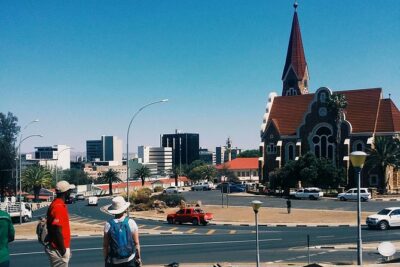
The first stop is Christuskirche, also called Christ Church, in central Windhoek. Its Lutheran identity and prominent position make it one of the city’s best-known landmarks.
You have about 15 minutes here. That is enough time for an introduction to the church’s story, photographs, and possibly a look inside if access allows. Do not book this tour expecting a long architectural visit. The value comes from hearing how the church fits into Windhoek’s German colonial past and seeing it as part of the city center.
Access is an important practical point. Information from recent visits indicates that the church may not have reopened fully after COVID. Your guide can still explain its importance, but the inside visit is not guaranteed.
For me, this is a good example of why a local guide helps. A building can look attractive and familiar in a photograph, but its meaning changes when you learn how it connects to Namibia’s difficult past and later political changes.
Parliament Gardens and Namibia’s independence story
Next comes Parliament Gardens, at the foot of the Tintenpalast, Namibia’s Parliament Building. The gardens offer a greener pause in the central city and provide a setting for three statues honoring people who played important roles in Namibia’s independence.
You spend about 20 minutes here. That time should give you a clear introduction to the figures represented and to the political processes shaping modern Namibia. You are not simply looking at statues. You are being given a way to understand who is remembered in public places and why.
The gardens and parliament area may also have access limits. Reports indicate that some central attractions have had restricted entry since the pandemic. Even if you remain outside, this stop works well as a guide-led orientation.
I find this part especially useful if Namibia is your first stop in southern Africa. The guide can place Windhoek’s buildings and memorials within the country’s larger story. The tour does not reduce that story to dates. It connects national independence with places you can see around you.
The National Museum and a changing city center
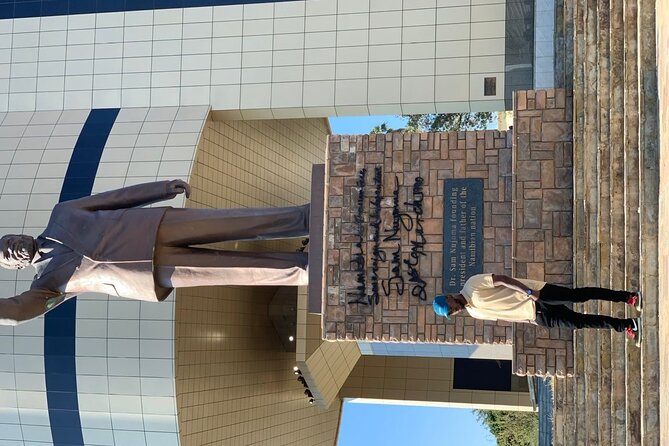
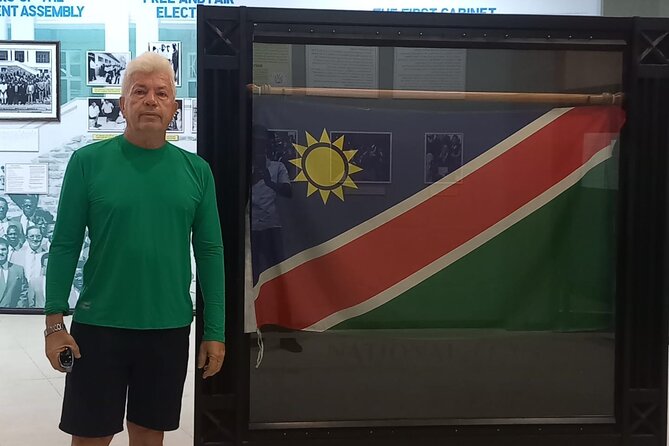
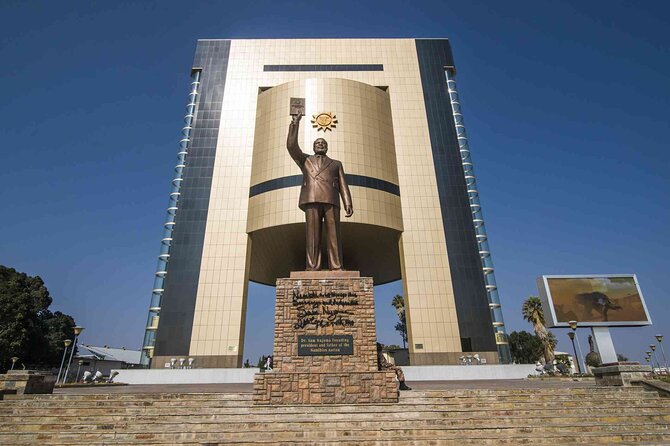
The route also includes the National Museum of Namibia, described as a newer addition to Windhoek’s skyline. Its collection covers objects and material from colonial-era Namibia through the modern country.
The timing here is not specified, so you should treat it as a flexible part of the route rather than a guaranteed long museum visit. Ask your guide what access looks like on your departure day.
Even a short introduction can be useful. The museum gives context to the buildings you see earlier and helps place Namibia’s past in a wider frame. If you want extended time with museum displays, this tour may not be enough on its own, but it can help you decide what to revisit later.
A few more Windhoek trips worth weighing up
- Windhoek: Bushman Walk with the San
★ 4.9 · 145 reviews - 6-Day Dunes and Wildlife Accommodated Safari from Windhoek
★ 5.0 · 123 reviews - 10-Day Namibia Highlights Guided Tour from Windhoek
★ 5.0 · 78 reviews - 12 Day Classic Namibia Camping Safari
★ 5.0 · 77 reviews
Alte Feste and the limits of an outdoor visit
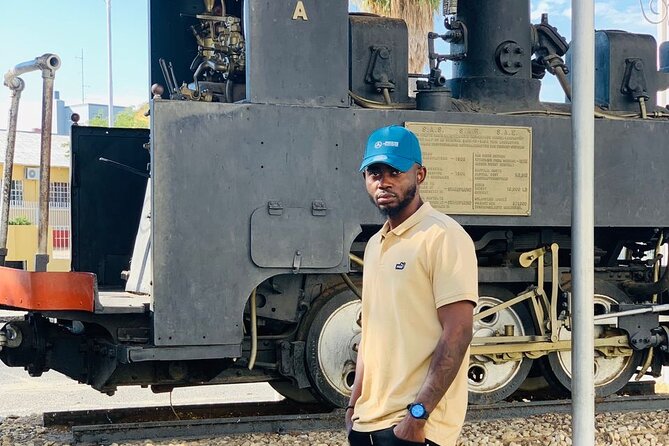
Alte Feste, or Old Fort, is described as Windhoek’s first building. German forces used it to defend their control of the city, giving the site a direct link to the colonial period.
The scheduled visit lasts about 10 minutes. That is brief, and the fort may feel more like a historical marker than a full attraction. It has served as a museum in the past, but it is currently described as empty.
Still, I would not skip it. A short stop here gives you a physical point of reference for the city’s early colonial development. Your guide’s explanation is the main reason to include it, especially if the gates are closed.
This is also where you should keep expectations sensible. The tour is not promising an active museum with extensive exhibits. You are seeing a place with historical importance, then relying on the guide to explain what you are looking at.
Katutura brings the tour down to street level
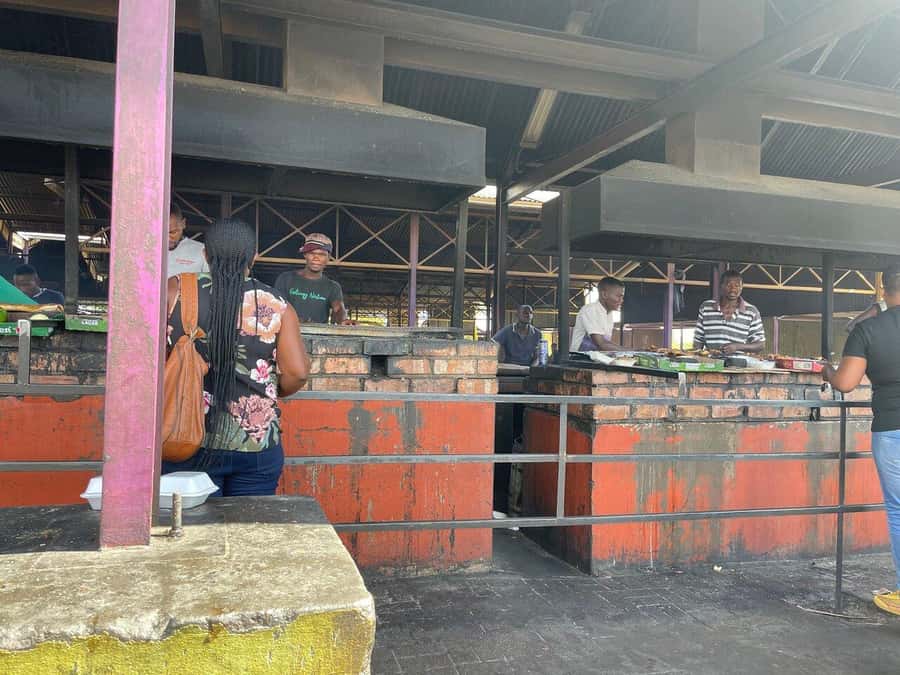
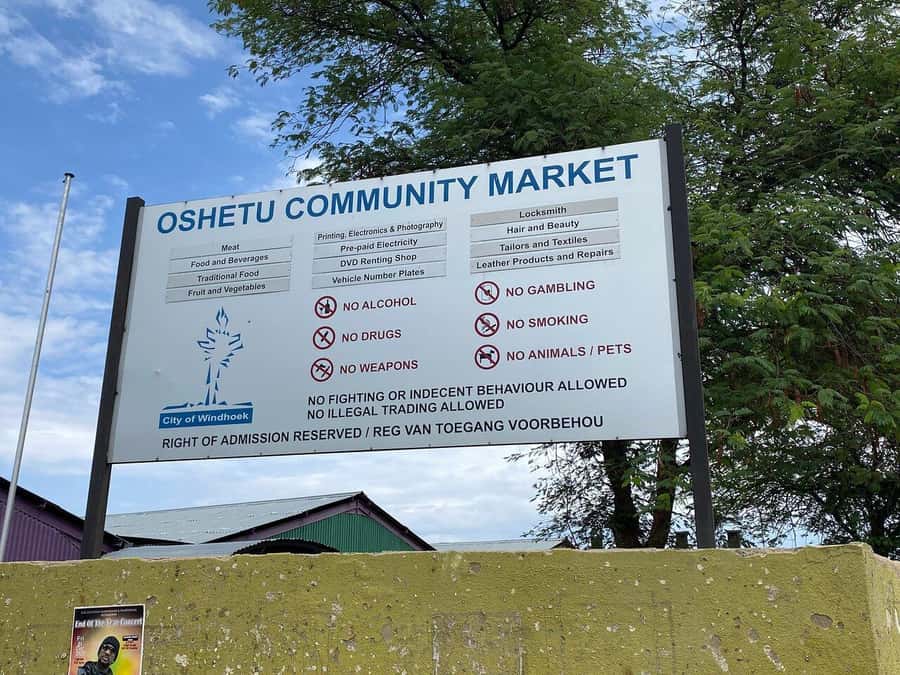
Katutura is the longest stop, with about an hour devoted to exploring the township, visiting a local market, and meeting local people. This is the section that gives the tour its strongest sense of place.
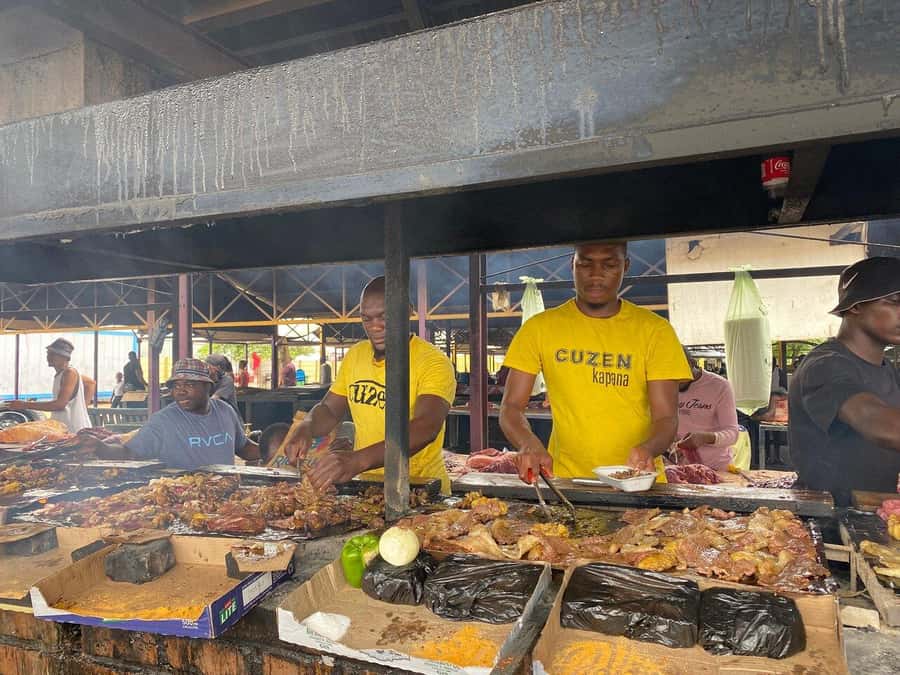
You may see a side of Windhoek that is easy to miss if you remain in the central hotel district. The experience includes a community market and the chance to try local food. Several people have singled out kapana, a Namibian street-food specialty, as a particularly enjoyable part of the morning.
Food helps make this stop feel direct and human. You are not only hearing about daily life. You are given a chance to taste something associated with the local market and to talk with the guide about what you are seeing.
The tour also appears to offer a more personal encounter in Katutura. One account described visiting a local home, but this should not be treated as a fixed part of every departure. If that kind of contact matters to you, ask the operator what is planned for your date.
Katutura is also the part of the tour that calls for respect. You are entering a residential community, not a staged attraction. Listen carefully, ask questions politely, and follow your guide’s direction about photographs and interactions. The point is to understand the neighborhood, not to collect poverty images.
I value the way this stop changes the tone of the tour. The central monuments explain national history, while Katutura shows how history continues to shape urban life. You get a better sense of the gap between official buildings and ordinary routines.
Penduka turns shopping into a useful stop
The final scheduled stop is Penduka Village, a craft project focused on helping local women support themselves and their families. You have about 30 minutes here.
This is a practical finish. You can browse handmade crafts and look for gifts before returning to your hotel or meeting point. I prefer this kind of shopping stop to a generic souvenir store because the purpose is clear: your purchase can support a social enterprise rather than only a commercial sales counter.
Do not expect a long workshop unless your departure specifically includes one. The information provided centers on the craft project, its social purpose, and the chance to buy products.
Penduka also gives the tour a hopeful ending. Earlier stops deal with colonial rule, independence, and difficult social realities. Here you see a project built around skills, income, and self-reliance. It is a modest stop, but it helps keep the tour from ending only with problems.
The guides are a major part of the value
The strongest praise for this experience centers on its guides, especially Petrus. He is repeatedly described as friendly, patient, caring, and easy to talk with. His strength seems to be connecting facts with personal experience rather than delivering a dry speech.
That matters on a city tour. Windhoek’s buildings alone cannot explain Namibia. You need someone who can answer questions, describe changes in the city, and speak about the country’s past without turning the experience into a list of dates.
Petrus is also praised for managing time well. One three-and-a-half-hour tour completed the planned route while still allowing questions. That is useful when you have limited time in Windhoek.
Other guides, including Esther, Ester, and Emmanuel, have also led warmly received departures. Emmanuel was especially praised for making the Katutura visit feel personal and touching. Since guide assignments can vary, I would book for the route and format first, while recognizing that the guide can make a large difference.
Group size, pickup, and comfort
The group size is limited to a maximum of seven people. That is one of the tour’s better practical features. A small group gives you more room to ask about Namibia’s history, local food, politics, or daily life without shouting over a busload of people.
Hotel pickup and drop-off are available if you select that option, and the service applies in Windhoek. The basic price may not include the convenience of front-door transport unless you choose the pickup option, so check the exact selection before paying.
The vehicle has been described as clean and comfortable. That is welcome because the tour includes driving between central Windhoek and Katutura. The experience is not a walking tour, and you should not expect to spend the entire three hours on foot.
The tour is near public transportation, and most people can participate. Children must be accompanied by an adult. The child rate applies only when the child shares with two paying adults.
You receive confirmation at booking and a mobile ticket. Snacks are included, with local delicacies forming part of the experience. The exact food selection is not specified, but kapana has been a highlight for some departures.
Is $37.38 a fair price?
At $37.38 per person, I see this as a good-value orientation tour. You are paying for about three hours of transport, a small group, local guiding, several central stops, a township visit, food, and a craft-project visit.
The value is not in admission tickets, since the listed stops have no separate admission charge. The value lies in access, explanation, and the route itself. Without a guide, you could see Christuskirche, Parliament Gardens, and Alte Feste, but you would miss much of the connection between those places and modern Namibia.
The price makes the most sense if you have only a short time in Windhoek or want context before setting out across the country. It is less useful if you prefer to spend hours inside museums or explore every attraction at your own pace.
I also like the small maximum group. A cheaper large bus tour might offer transport, but it would be less suited to questions and personal discussion. Here, the guide’s local perspective is the main product.
Who should book this Windhoek tour?
I would recommend it most strongly to:
- First-time visitors who want a clear introduction to Windhoek
- People with one morning or afternoon available
- Visitors interested in Namibia’s colonial period and independence
- Anyone who wants to see Katutura with local guidance
- Families seeking a short, structured outing
- Shoppers who prefer crafts connected to a social project
- Visitors who enjoy asking questions in a small group
I would be more cautious if you want guaranteed interior access to every landmark. The church, fort, and gardens may have limited access, and Alte Feste is described as currently empty.
I would also think carefully about the Katutura section if you are uncomfortable visiting residential areas. The stop can be meaningful, but it requires sensitivity and an open attitude. You should be ready to listen more than you photograph.
Booking, weather, and cancellation details
The tour requires good weather. If poor weather causes a cancellation, you should be offered another date or a full refund.
You can cancel for a full refund up to 24 hours before the start time. Cancellations or changes made within 24 hours are not accepted for a refund. The cut-off follows local Windhoek time.
Because the tour is often booked about 25 days ahead, early booking may be sensible if your Windhoek schedule is tight. I would also confirm the pickup option, current access to the central sights, and the expected guide before departure.
Should you book the Windhoek City Tour?
Yes, if you want a short but meaningful introduction to Windhoek. The mix is strong: central landmarks, independence history, Katutura, local food, and Penduka crafts. You get more than a drive around town, yet the tour remains compact enough to fit into a busy Namibia itinerary.
The best reason to book is the guide-led connection between places. Petrus and the other guides have been praised for making difficult history understandable, answering questions patiently, and helping people feel comfortable in unfamiliar parts of the city.
Skip it only if you need long museum visits or guaranteed indoor access. For most first-time visitors, the $37.38 price is a sensible way to get your bearings, taste kapana, meet the city beyond its center, and begin Namibia with a clearer sense of where you are.
FAQ
How long is the Windhoek City Tour?
The tour lasts approximately 3 hours. Some departures may take closer to 3 and a half hours depending on timing and questions.
How much does the tour cost?
The listed price is $37.38 per person.
Is hotel pickup included?
Hotel pickup and drop-off are available in Windhoek if you select that option. Check your chosen booking option to confirm that it is included.
What is the maximum group size?
The tour allows a maximum of 7 travelers.
Is food included?
Snacks and local delicacies are included. Kapana may be available to taste during the Katutura market visit, although the exact food selection is not specified.
Does the tour visit Katutura?
Yes. The tour spends about 1 hour exploring Katutura, including a local market and contact with local people.
Can I visit Christuskirche inside?
An interior visit may be possible if time and access allow, but it is not guaranteed. Access may have remained limited since COVID.
Is Alte Feste an active museum?
No. Alte Feste is described as currently empty, though its historical importance makes it part of the route.
Are children allowed on the tour?
Yes. Children must be accompanied by an adult, and the child rate applies only when sharing with two paying adults.
What happens if bad weather cancels the tour?
If the tour is canceled because of poor weather, you should be offered a different date or a full refund.
Can I cancel for a full refund?
Yes. You can cancel at least 24 hours before the start time for a full refund. Cancellations within 24 hours are not refundable.
Just added around Windhoek
- Knight Vibes: Bars, Shebeen, Clubs Crawl Windhoek★ 5.0 · 3 reviews
- 10 DAYS BEAUTY OF NAMIBIA | Guided Lodge★ 5.0 · 3 reviews
- From Windhoek: 3-Day Sossusvlei Shared Shuttle Tour★ 3.8 · 3 reviews
- 3 day Sossusvlei Camping★ 5.0 · 3 reviews
- Windhoek: Katutura Township Tour with Local Guide★ 3.5 · 3 reviews
- Windhoek: City & Township tour. Vehicle, guide, kapana★ 4.2 · 4 reviews
- Airport Transfers★ 5.0 · 5 reviews
- Predator Encounter: Half-Day Carnivore Feeding Windhoek★ 4.0 · 5 reviews
City Tours, compared.
Half-Day Windhoek City and Township Cultural Tour
Read our review →
swakopmund city tour dune 7 pink lake pink flamingos
Read our review →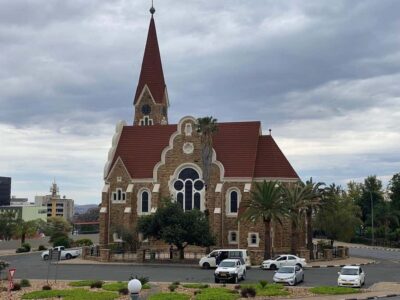
Walvisbay & Coastal Town City Private Local Guided Day Tour for Cruise Ships
Read our review →
Browse the lists this tour appears in