
Reviewed · WINDHOEK TOURS
Windhoek: Bushman Walk with the San
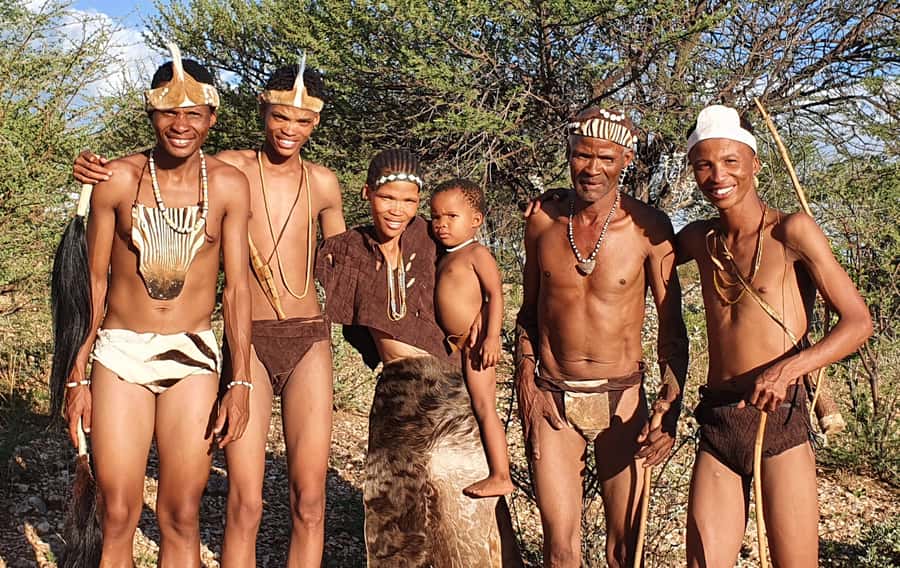
Ancient skills still have a place here. This small-group bushwalk near Windhoek gives you a direct introduction to San culture without spending a full day driving into remote Namibia. Over about two hours, San guides demonstrate traditional plant use, fire making, hunting methods, crafts, language, and social customs.
I especially like the chance to hear the click language and the practical demonstrations, rather than simply looking at displays in a museum. I also like that the activity supports the San families involved and helps younger people keep old skills alive. The main consideration is that this is a cultural demonstration on a farm near the capital, not a visit to a traditional village. One reviewer also found the directions confusing and the tour shorter than expected.
You pay about $43 per person, with hotel pickup and drop-off available if you choose that option. For a half-day activity in Windhoek, the price is fair if you value personal contact and cultural learning. Bring water, a hat, sunscreen, and closed-toe shoes. The bush can get hot, and shade may be limited.
In This Review
- Key points to know before you go
- What this San experience is really about
- Arriving at the farm outside Windhoek
- The two-hour bushwalk and its demonstrations
- Plants and survival in the bush
- Making fire without modern equipment
- Hunting tools, traps, bows, and arrows
- Ostrich-eggshell crafts and bracelets
- Language, stories, dancing, and social customs
- Authenticity, context, and the limits of the visit
- Is $43 a fair price?
- Timing, comfort, and what to pack
- Who will enjoy this walk most?
- Should you book the Bushman Walk with the San?
- FAQ
- How long does the Bushman Walk with the San last?
- Where does the activity take place?
- Is hotel pickup available?
- What language is the tour conducted in?
- What should I bring?
- Is the walk suitable for wheelchair users?
- Are drinks or souvenirs included?
- Can I cancel the booking?
Key points to know before you go
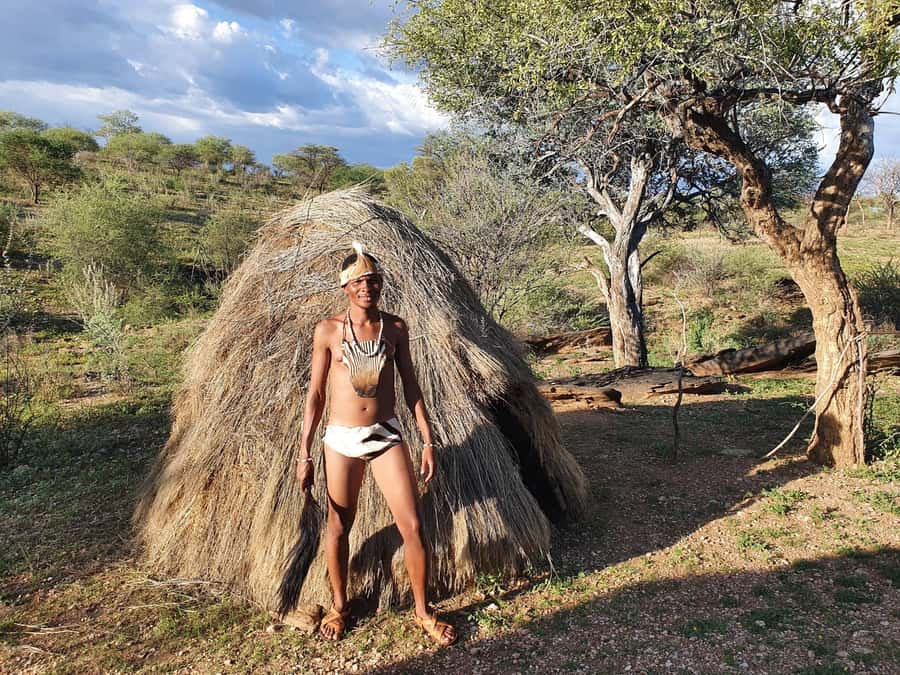
- The San demonstrations are practical: You see fire making, hunting tools, traps, plant uses, and ostrich-eggshell crafts.
- Language is part of the experience: You are introduced to a San click language, with translation into English.
- The walk lasts about two hours: Allow roughly two to three hours overall, especially if you use the optional transfer.
- The setting is close to Windhoek: You get a cultural activity without committing to a full-day trip outside the capital.
- Your payment supports the project: Income helps the San participants and their families maintain traditional skills.
- Expect a simple outdoor visit: Wear sturdy shoes, carry water, and do not expect wheelchair access.
What this San experience is really about
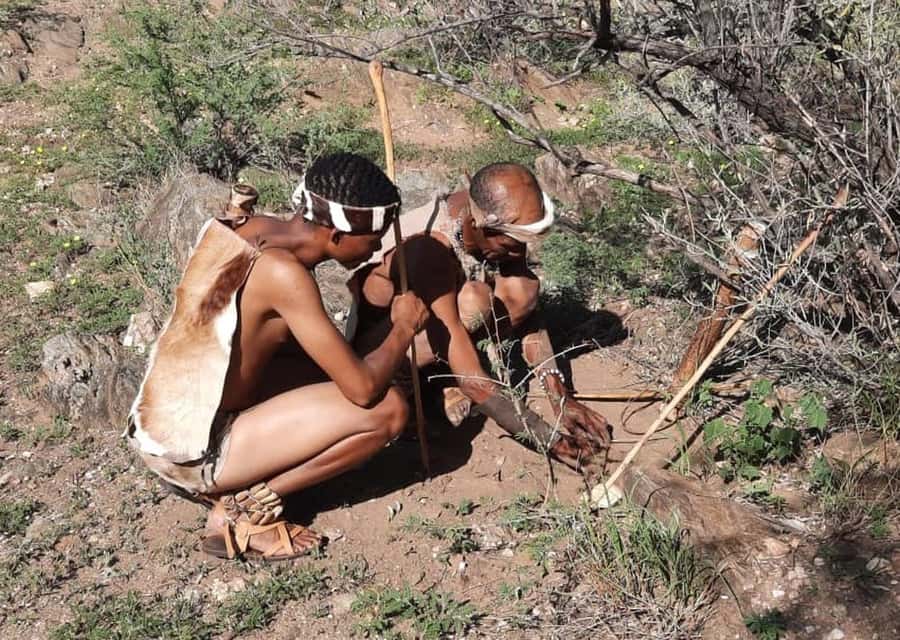
The Bushmen’s Survival Trust works with San people who share knowledge connected to an older hunter-gatherer way of life. That phrase can sound broad, so it helps to know what you actually do: you walk through the bush, listen to explanations, watch demonstrations, ask questions through an English-speaking guide, and take part in selected activities.
The strongest part is the practical teaching. The San participants show how natural materials can be used for daily needs, how fire can be made, how small hunting tools work, and how crafts are produced. You are not just hearing that people once depended on the bush. You see examples of how that dependence shaped skills, language, and social life.
The visit also addresses present-day realities. You learn about the pressure modern life places on San customs and why some traditional skills are at risk of disappearing. That discussion gives the activity more weight than a simple folk performance. It also helps you see the people involved as modern individuals dealing with real economic and cultural challenges, not as figures frozen in the past.
At the same time, you should keep your expectations sensible. The activity takes place near Windhoek, on a farm connected with the nonprofit project. It offers a short, arranged presentation of San knowledge. It cannot reproduce the life of a nomadic community in remote Namibia, and it does not claim to do so.
More Walking Tours:
- Private Guided Walking Tour with the San in Windhoek
★ 5.0 · 20 reviews - Windhoek: Katutura Township and City Walking Tour
★ 4.7 · 15 reviews - Windhoek : Cheetah walk Experience
★ 4.6 · 8 reviews
Arriving at the farm outside Windhoek
You can reach the meeting point with your own transport or select hotel pickup and drop-off in Windhoek. If you drive, parking is available near the pool area, where the guide welcomes you. The directions deserve attention because one person found the turn difficult to locate and noted that there was no clear sign at the proper entrance.
If you do not have a car, the transfer option is worth considering. One guest had trouble finding a taxi for the return journey, which is a useful warning in a city where transport arrangements may not be as simple as they look on a map. If you book pickup, wait in your hotel lobby and provide a WhatsApp number so the operator can confirm the timing and contact details.
The farm also has other animals, including alpacas, horses, and donkeys, according to one detailed account. These are not the main attraction, but they can add a pleasant extra moment before departure if time allows.
The project has a nonprofit side beyond this activity. The farm owner, Nicole, helps provide a place for the San participants and supports social projects connected with children and communities in Namibia, Tanzania, and India. The tour income goes directly to the San participants and their families, apart from booking platform fees, according to the information provided by the operator.
The two-hour bushwalk and its demonstrations
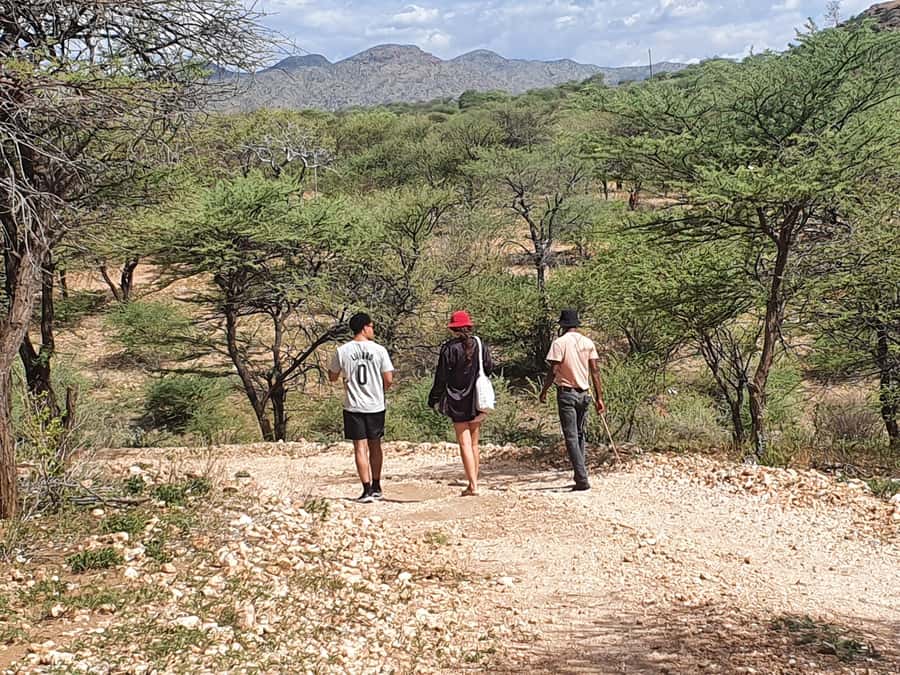
The walk itself is not described as difficult. You follow the San through a natural bush setting while the English-speaking guide explains what is happening. It is a good fit for families and older children who can manage an easy outdoor walk. Two children aged 14 and 17 enjoyed the activity, and another parent brought a five-year-old child who liked the interaction.
The exact order of the demonstrations can vary, but you should expect several connected themes.
Plants and survival in the bush
The San share information about bush plants and their uses. This is one of the most valuable parts because it shows how close observation of the natural world supported food gathering, medicine, and daily survival.
You may see or hear how particular plants were identified and used, but keep in mind that a short walk can only cover a small part of this subject. The information sheet included with the activity gives you something to refer to afterward. Listen carefully, ask questions, and avoid treating the bush as a place to experiment with plants on your own.
A few more Windhoek trips worth weighing up
- Windhoek: City and Township Tour
★ 4.8 · 430 reviews - Half-Day Windhoek City and Township Cultural Tour
★ 4.5 · 187 reviews - 6-Day Dunes and Wildlife Accommodated Safari from Windhoek
★ 5.0 · 123 reviews - Windhoek City Tour
★ 5.0 · 113 reviews
Making fire without modern equipment
Fire making is one of the clearest demonstrations of practical skill. You see how traditional methods work and why patience, dry material, and technique matter. It is a small lesson with a big effect: once you watch the process, the effort behind a basic fire becomes much easier to appreciate.
This activity also works well for children because it is visual and hands-on. You gain a better sense of the difference between knowing that an old method exists and actually seeing someone perform it.
Hunting tools, traps, bows, and arrows
The San demonstrate tools connected with hunting and trapping. One detailed account included lessons about making tools, building traps, and hunting with a bow and arrow, including the use of poison.
This section needs a thoughtful approach. It is an explanation of traditional techniques, not a modern hunting trip. You are learning how these methods fit into a hunter-gatherer system and how tools were made from available materials. The point is not spectacle. It is the skill, accuracy, and close reading of the environment behind each method.
Ostrich-eggshell crafts and bracelets
Craft work gives the walk a quieter change of pace. You learn about items made from ostrich eggshells, including bracelets and small jewelry pieces. The material is distinctive, and the work connects daily use with artistic expression.
There is also a small gallery selling self-made San jewelry. Cold drinks are available for 20 Namibian dollars. These purchases are not included in the tour price, so bring some local currency if you would like a drink or a piece of handmade work.
Language, stories, dancing, and social customs
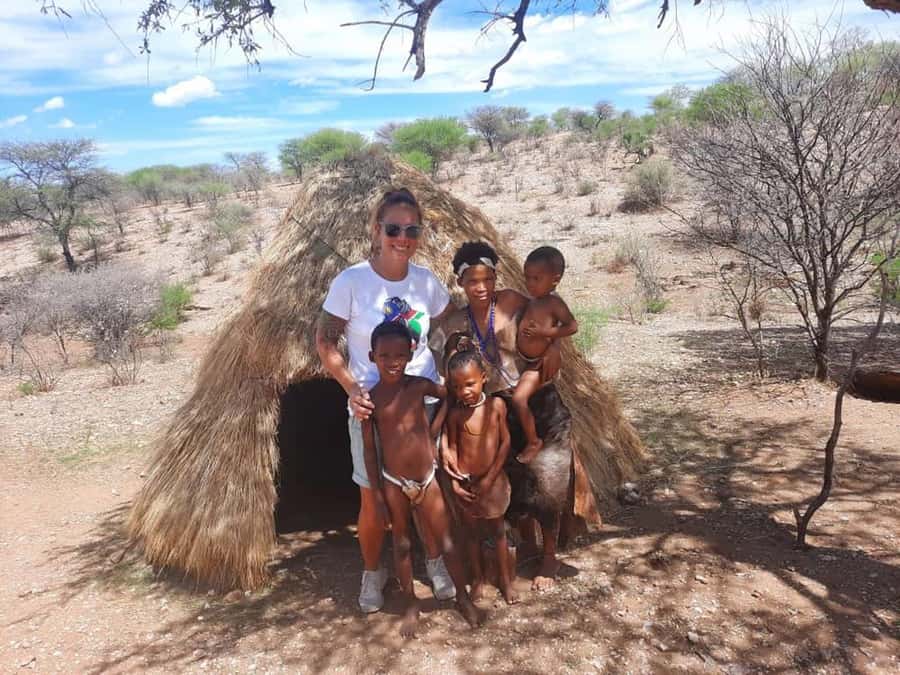
The introduction to the San click language is a highlight for many people. The sounds are difficult to reproduce, and the guide may help translate as the San participants speak in their own language. One particularly effective approach described by a guest involved allowing the San to speak first, then translating into English. That gives you a small taste of how much meaning can be communicated through gesture, expression, and tone even when words are unfamiliar.
The guide may also speak more than one language. Frans was praised for speaking English, Afrikaans, and his native Bushmen language, which he used to communicate with the San participants on behalf of the group. If Frans is leading your walk, his language skills should make the questions and translation easier to follow.
Storytelling brings the people and customs together. One story concerns courtship and the small bow used to declare love. It is a memorable example of how a simple object can carry social meaning. The ending may include dancing with the San, which several people found to be one of the most enjoyable parts of the afternoon.
The tone is warm and informal. You have time to ask about family life, hunting, language, and the effects of modern Western society. The best approach is respectful curiosity. Ask questions, listen to the answers, and remember that the San people you meet are sharing selected parts of their culture while living in the present day.
Authenticity, context, and the limits of the visit
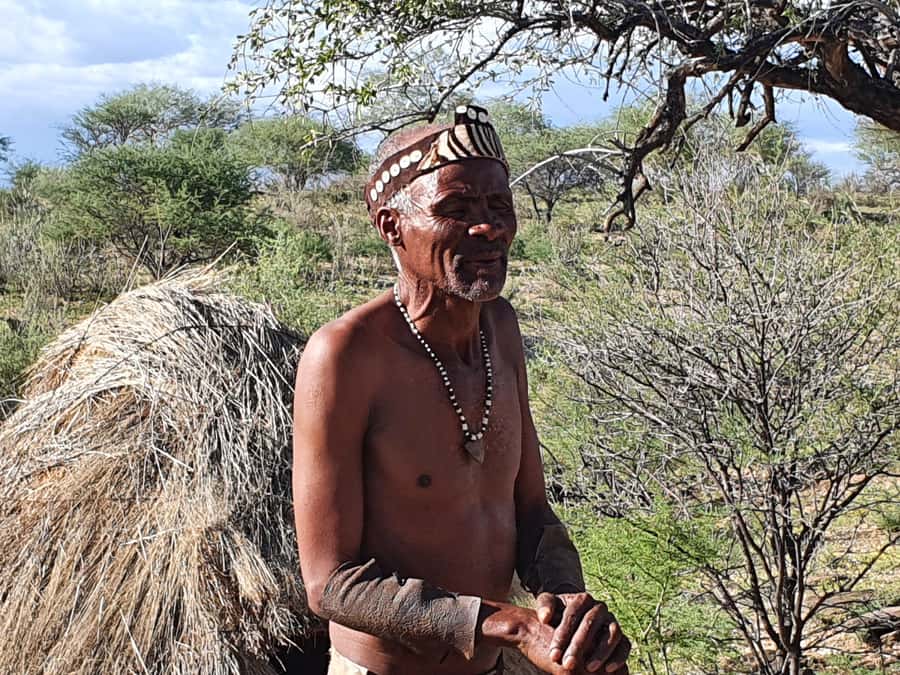
The word authentic requires care here. You are meeting real San people who speak their own language and demonstrate customs and skills connected with their heritage. That makes the encounter more personal than a general cultural display.
But the setting is organized for visitors, and the San participants are staying near Windhoek through a nonprofit arrangement. You are not seeing an untouched village or witnessing an ordinary day of remote hunter-gatherer life. The activities are selected, explained, and timed for a short tour.
I see that as a limitation, but not necessarily a flaw. Most people based in Windhoek will not have the time or access needed to reach remote San communities. This activity gives you a responsible starting point and creates income for the people doing the teaching. It also makes difficult subjects, such as poverty, cultural loss, and the effects of modern life, part of the conversation.
The experience works best when you treat it as an educational meeting rather than a staged claim to recreate the past. You are being shown skills and stories that might otherwise be lost. That is meaningful, even in a managed setting.
Is $43 a fair price?
At about $43 per person, the activity is not the cheapest way to spend two hours in Windhoek. The price becomes easier to justify if you choose hotel transport, want a guided experience in English, and care about supporting a community project.
You are paying for more than a walk. The fee covers the San-led demonstrations, translation, the guide, the farm setting, the information sheet, and the project that helps keep traditional skills in use. A short tour can still offer good value when it gives you a clear window into a culture you might otherwise never encounter during a city stay.
One person felt the price could be lower, especially because the tour ended after about two hours despite being described as lasting up to three hours. I would plan on two hours for the guided bushwalk and allow extra time for arrival, transport, questions, and any visit to the gallery. That keeps your schedule realistic.
If you have your own car and are only looking for a quick activity, the value is more debatable. If you need transport and want a meaningful cultural visit that fits neatly into an afternoon, the price is more convincing.
Timing, comfort, and what to pack
Windhoek can be hot, and the bush setting may offer little shade. A hat is strongly recommended, and an umbrella was suggested by one person as useful protection from the sun. Carry a bottle of water, even if you plan to buy a cold drink at the farm.
Closed-toe shoes are required. Choose footwear suitable for an easy walk over natural ground rather than sandals or open shoes. The walk is not presented as strenuous, but wheelchair users cannot take part.
The activity takes two to three hours depending on the selected option and start time. Check availability for the exact departure. Hotel pickup can add time, especially if several people are collected, so do not schedule a tight connection immediately afterward.
The language of the tour is English. A small group is available, which should make it easier to hear the explanations and ask questions. Group size can affect the feeling of the encounter, so request the small-group option if it matters to you.
Who will enjoy this walk most?
I would recommend it to anyone who wants more from Windhoek than restaurants, shopping, and city sights. It suits families, solo visitors, and people with a spare afternoon before or after a longer Namibia itinerary.
You will get the most from it if you are interested in:
- Indigenous cultures and oral traditions
- Practical survival skills
- Languages and translation
- Family-friendly outdoor activities
- Community-based tourism
- The social effects of modernization
It is also a good choice if you have limited time in Namibia. You do not need to travel deep into the country to meet San people and learn about their culture.
You may be less satisfied if you want a long wilderness walk, a full-day village visit, or a private experience with no arranged demonstrations. The tour is short, structured, and close to the city. That is its strength for some schedules and its weakness for others.
Should you book the Bushman Walk with the San?
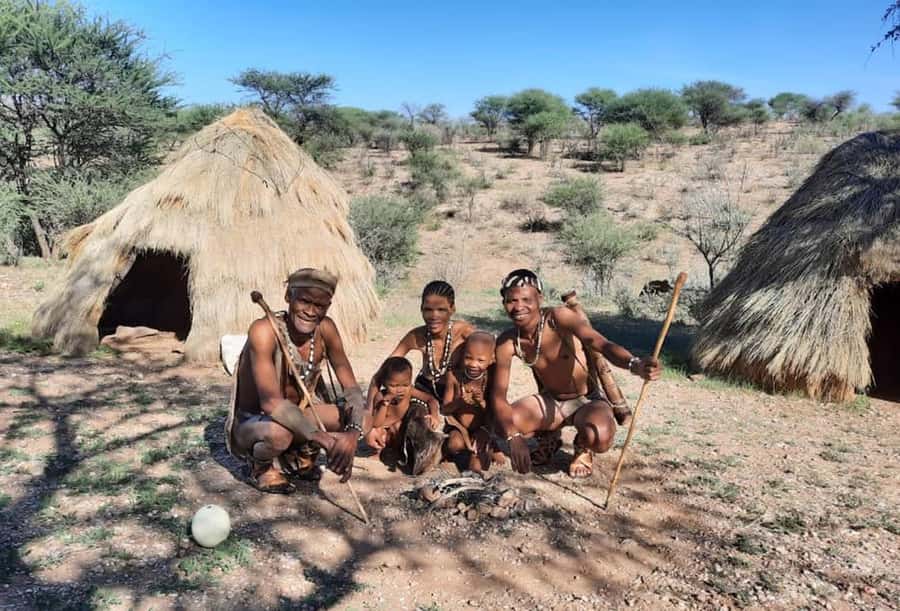
Yes, I would book it if you have a free half-day in Windhoek and want a cultural experience with a clear social purpose. The strongest reasons are the direct interaction, the San language, the practical demonstrations, and the chance to learn about present-day challenges rather than seeing only a romantic picture of the past.
Book the transfer if you do not have a car, confirm the pickup details through WhatsApp, and allow extra time for the drive. Bring water, a hat, sunscreen, and closed-toe shoes. Go with an open mind, but keep the setting in perspective: this is a carefully arranged introduction to San knowledge, not a replica of a remote village.
With a rating of 4.9 from 145 bookings, the experience has earned strong approval. Its real value lies in the human contact and the support it provides, not in the length of the walk. For many people, that makes it one of the more worthwhile short activities near Windhoek.
FAQ
How long does the Bushman Walk with the San last?
The activity takes about two to three hours overall. The guided bushwalk itself lasts around two hours.
Where does the activity take place?
It takes place in the Khomas area near Windhoek, at a farm connected with the Bushmen’s Survival Trust. You can park near the pool area.
Is hotel pickup available?
Yes. Hotel pickup and drop-off in Windhoek are available if you select that option. If using pickup, wait in the hotel lobby.
What language is the tour conducted in?
The tour is conducted in English. The San participants also demonstrate their own click language, with translation provided by the guide.
What should I bring?
Bring closed-toe shoes, drinking water, a hat, and sun protection. The area can become very hot.
Is the walk suitable for wheelchair users?
No. The activity is not suitable for wheelchair users.
Are drinks or souvenirs included?
No. Cold drinks are available for 20 Namibian dollars, and a small gallery sells handmade San jewelry. These extras are not included in the tour price.
Can I cancel the booking?
You can cancel up to 24 hours in advance for a full refund. A reserve-now, pay-later option is also available.
Just added around Windhoek
- Knight Vibes: Bars, Shebeen, Clubs Crawl Windhoek★ 5.0 · 3 reviews
- 10 DAYS BEAUTY OF NAMIBIA | Guided Lodge★ 5.0 · 3 reviews
- From Windhoek: 3-Day Sossusvlei Shared Shuttle Tour★ 3.8 · 3 reviews
- 3 day Sossusvlei Camping★ 5.0 · 3 reviews
- Windhoek: Katutura Township Tour with Local Guide★ 3.5 · 3 reviews
- Windhoek: City & Township tour. Vehicle, guide, kapana★ 4.2 · 4 reviews
- Airport Transfers★ 5.0 · 5 reviews
- Predator Encounter: Half-Day Carnivore Feeding Windhoek★ 4.0 · 5 reviews
Windhoek Tours, compared.

Half-Day Windhoek City and Township Cultural Tour
Read our review →
6-Day Dunes and Wildlife Accommodated Safari from Windhoek
Read our review →

10-Day Namibia Highlights Guided Tour from Windhoek
Read our review →
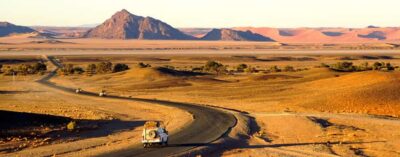
Namibia Self-Driving Audio Guide (in English & German)
Read our review →Browse the lists this tour appears in