
Reviewed · GUIDED
10 DAYS BEAUTY OF NAMIBIA | Guided Lodge
Namibia rewards the curious. This 10-day private circuit links wildlife, desert scenery, coastal towns, ancient rock art, and living cultures without asking you to plan every long transfer yourself. I especially like the full-day Etosha safari and the chance to see both Himba and Damara traditions with a local guide. The main consideration is the pace: several days involve long drives and early starts, so this is sightseeing by road rather than a restful lodge holiday.
The tour costs $4,842.28 per person and includes nine breakfasts, seven dinners, fuel, and parking. I also like that the experience is private, with only your group participating. Guide Basile receives the strongest praise in the available feedback, particularly for his professionalism and the amount of useful information he shares. Still, check exactly what your accommodation package covers, since restroom access and Wi-Fi are not provided on board, and GST is excluded.
In This Review
- Five details that shape this Namibia journey
- Why this route works for a first visit to Namibia
- Day 1: Okahandja woodcarvers on the road north
- Day 2: Etosha wildlife and the Okaukuejo waterhole
- Day 3: Himba traditions and the Damara Living Museum
- Day 4: A second Himba visit and Twyfelfontein rock engravings
- Day 5: Swakopmund, German architecture, and the Zeila wreck
- Day 6: Walvis Bay by boat, then Dune 7
- Day 7: Kuiseb Pass, the Tropic of Capricorn, and Solitaire
- Day 8: The big desert day at Sossusvlei and Deadvlei
- Day 9: Red dunes and the move toward the Kalahari
- Day 10: Namibia’s story at the National Museum
- Is $4,842.28 a fair price?
- Who should book this private lodge tour?
- FAQ
- Where does the tour start and end?
- How long is the experience?
- Is pickup available?
- Is this a private tour?
- What meals are included?
- Is Wi-Fi available on the vehicle?
- Are all admission fees included?
- What is the cancellation policy?
Five details that shape this Namibia journey
- Etosha is the wildlife centerpiece, with a full-day game drive and time at the famous Okaukuejo waterhole.
- Himba and Damara culture receive real space, with visits to Himba communities and the Damara Living Museum.
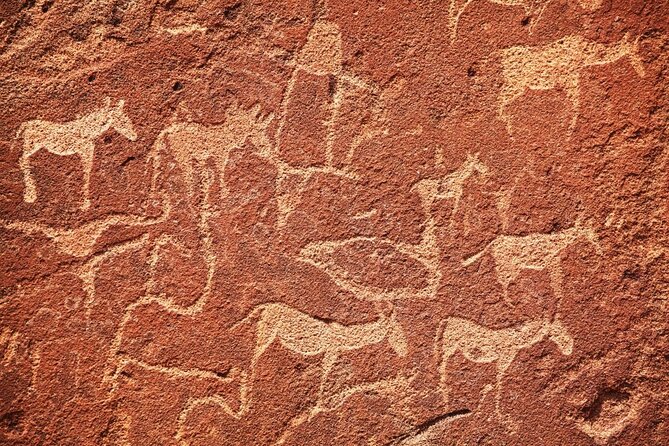
- Twyfelfontein adds ancient rock art, giving the route more depth than a scenery-only desert tour.
- Walvis Bay includes a three-hour boat cruise, with champagne and lunch listed as part of the experience.
- Sossusvlei, Deadvlei, Dune 45, and Sesriem Canyon share one packed day, so expect an early, active schedule.
- The route ends with the Kalahari and Namibia’s National Museum, giving you both red dunes and a final historical stop.
Why this route works for a first visit to Namibia
Namibia is a large country with attractions spread far apart. That makes a guided road trip practical, especially if you want wildlife, desert, coast, and cultural visits in one holiday. This tour begins and ends in central Windhoek, starts at 8:30 am, and includes pickup.
The route has a clear north-to-west-to-south rhythm. You first move toward Etosha, then continue into the Kunene region for Himba communities and Twyfelfontein. From there, the road reaches Swakopmund and Walvis Bay before turning inland through the Namib Desert toward Sossusvlei and the Kalahari.
I would not choose this trip if you want to unpack once or spend long afternoons beside a pool. You change scenery often, and the distances matter. On the other hand, that same movement is the reason the tour offers such a broad picture of Namibia in only 10 days.
It is a private activity, which is important at this price. Your group is not combined with strangers, and the guide can explain places at a pace that suits you. The available feedback repeatedly praises Basile, calling him professional and extraordinary. One past guest specifically noted learning a great deal while seeing the country well. That is the sort of guide service you want on long drives, where interpretation can make a plain roadside stop worthwhile.
A few more Windhoek trips worth weighing up
- Windhoek: City and Township Tour
★ 4.8 · 430 reviews - Half-Day Windhoek City and Township Cultural Tour
★ 4.5 · 187 reviews - Windhoek: Bushman Walk with the San
★ 4.9 · 145 reviews
Day 1: Okahandja woodcarvers on the road north
The first scheduled stop is the Mbangura Woodcarvers Craft Market in Okahandja, about an hour. Admission is free, and the market offers an easy introduction to Namibian craft traditions before the route continues toward Otjiwarongo.
This is a useful opening stop because it breaks up the first road section and gives you a chance to browse handmade work. The practical point is to keep your expectations measured. The stop is listed for one hour, so this is a short market visit, not a full cultural workshop or a long town tour.
Because the rest of the trip includes major parks and desert sites, the market may feel modest. I would still enjoy it as a first glimpse of local commerce and artistry, rather than treating it as a headline attraction.
Day 2: Etosha wildlife and the Okaukuejo waterhole
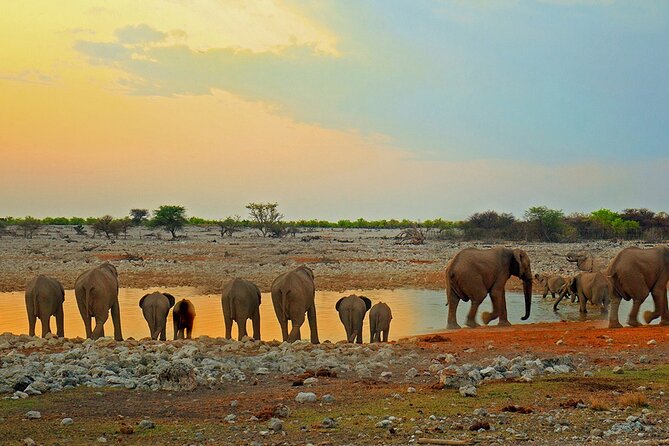
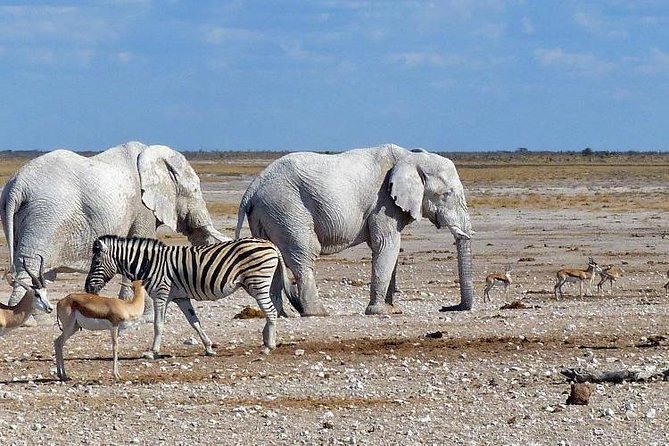
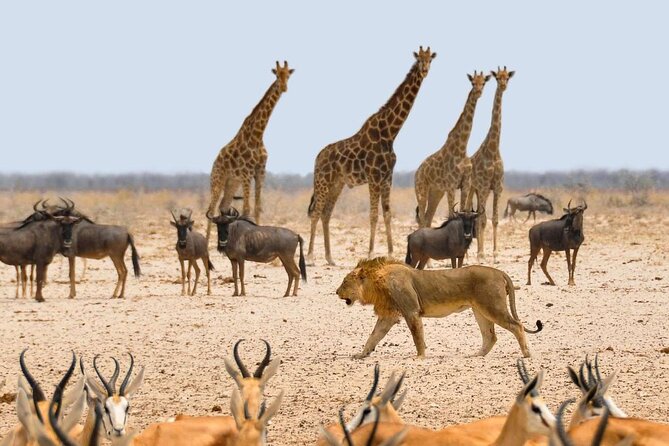
Etosha receives a full six-hour game drive in your own vehicle with a guide. This is one of the strongest parts of the journey. The park is known for open dry-country scenery and waterholes where animals gather, and the planned sightings include springbok, zebra, giraffe, elephants, lions, and antelope.
The route also calls attention to less common species. Keep watch for the black-faced impala, which is endemic to Namibia, and the dik-dik, one of Africa’s smallest antelopes. These are precisely the kinds of sightings that make a guided drive more useful than simply driving through with a map.
The day ends with an hour at Okaukuejo waterhole. This is a famous viewing point, especially during the dry season, when animals are more likely to gather for water. An observation platform and the nearby rest camp offer a safe way to watch the action.
The waterhole can be rewarding because wildlife comes to you. You are not always chasing movement through the bush. Elephants, lions, zebras, and other animals may appear around the water, though no safari can promise a particular sighting. The best approach is patience, a sharp eye, and realistic expectations.
One practical note is easy to miss: admission to the waterhole is marked separately as not included, even though Etosha’s game-drive stop itself is listed without an admission charge. Ask how these fees are handled before departure.
Day 3: Himba traditions and the Damara Living Museum
Day 3 shifts from wildlife to culture, with two two-hour stops. At the Himba Village at Ozohere, you learn about an indigenous community known for red ochre body paint, elaborate jewelry, cattle herding, traditional clothing, and distinctive hairstyles.
The visit is intended to explain Himba beliefs, family life, and semi-nomadic traditions. The setting matters. This is not simply a display in a city museum, but a community-based stop designed to show elements of daily life and cultural practice.
You should approach the visit respectfully. Listen first, ask before photographing people, and remember that cultural encounters work best when you treat the community as more than a photo opportunity. The tour information does not specify the exact activities or payment arrangement at Ozohere, so confirm what is included before you go. Admission is listed as not included.
The Damara Living Museum adds another two hours. It presents Damara traditions through demonstrations of older hunting methods, home construction, dance, and other customs. The aim is cultural preservation and education.
I like the contrast between the two visits. You are not getting one generalized version of indigenous Namibia. The day presents two different communities, each with its own traditions and identity. Still, the quality of the experience will depend heavily on the guide and the way the visit is conducted. Basile’s praised ability to explain the country is especially valuable here.
A completely different sort of day out of Windhoek:
- 6-Day Dunes and Wildlife Accommodated Safari from Windhoek
★ 5.0 · 123 reviews - Windhoek City Tour
★ 5.0 · 113 reviews - 10-Day Namibia Highlights Guided Tour from Windhoek
★ 5.0 · 78 reviews - 12 Day Classic Namibia Camping Safari
★ 5.0 · 77 reviews
Day 4: A second Himba visit and Twyfelfontein rock engravings
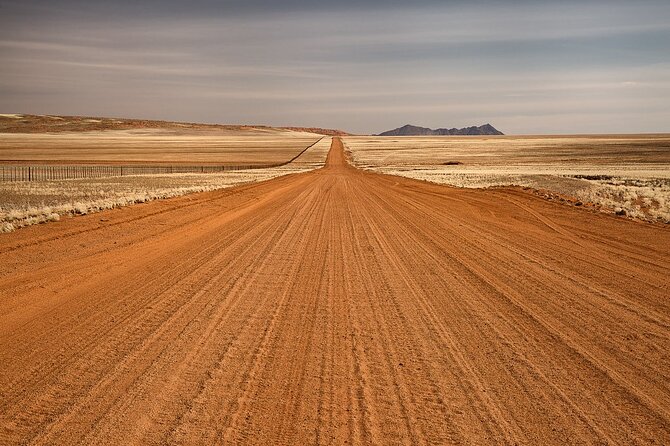
The next morning brings a two-hour visit to Otjikandero Himba Orphan Village. The focus again is Himba culture, beliefs, and history, but the setting and purpose differ from the previous community visit.
Two Himba-related stops in consecutive days may be a strength or a repetition, depending on your interests. If you want cultural context and time to compare traditions, this extra visit adds value. If you prefer a faster route to the major natural sights, it may feel like more of the same. The admission is included here, unlike at Ozohere.
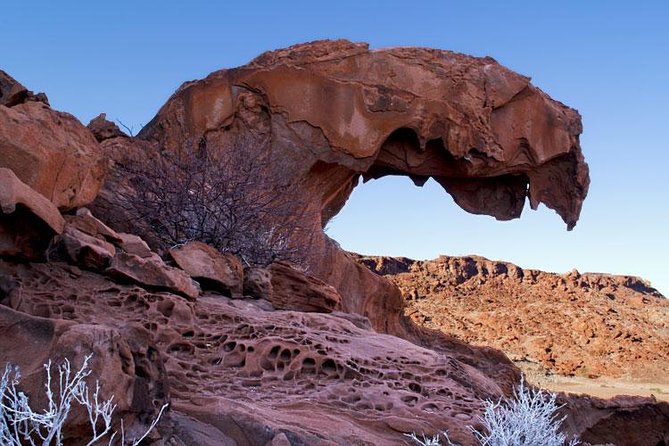
In the afternoon, you visit Twyfelfontein, a UNESCO World Heritage Site in northwestern Namibia. The site is known for its large concentration of rock engravings and paintings, some of the most important ancient art in southern Africa.
The name means Doubtful Fountain, a reference to an unreliable water source. That small detail helps explain the stark setting. Twyfelfontein is not about grand buildings or museum cases. It is about stone, dry air, and marks left on rock long ago.
The visit lasts about two hours, with admission included. Wear practical shoes and be ready for a site where the value comes from interpretation. Without a guide explaining the images and their setting, the engravings can be easy to overlook. With good explanation, they become a window into how earlier communities used and understood this part of Namibia.
Day 5: Swakopmund, German architecture, and the Zeila wreck
Day 5 is allocated to Swakopmund for up to 12 hours, including a stop at the jetty and a short visit to the Zeila Shipwreck. Swakopmund brings a sharp change of mood. After Etosha and the dry interior, you reach a coastal town known for German colonial architecture, museums, and access to desert activities.
The long time allocation gives you room to see more than a quick roadside stop, though the precise balance between sightseeing, meals, and free time is not specified. Ask your guide how the day is arranged if you have a particular interest in architecture, museums, or the waterfront.
The Zeila wreck receives about 30 minutes. Its appeal is simple: it connects Namibia’s coast with maritime history and offers a memorable photographic stop. It is not a lengthy museum visit or a full diving excursion in this program. Think of it as a brief coastal landmark along a much larger town day.
Day 6: Walvis Bay by boat, then Dune 7
At Walvis Bay Waterfront, a three-hour sea excursion provides a welcome break from road travel. The boat cruise includes champagne and lunch, and the description promises views of aquatic life along the coast.
This is one of the better value additions to the route because it is not just transport between two points. You get time on the water, a meal, and a different view of Namibia’s coast. The tour information does not specify which marine animals you will see, so enjoy the outing for the setting rather than expecting guaranteed wildlife.
Later, you visit Dune 7 for about two hours. At roughly 383 meters, it is described as one of the world’s highest sand dunes and offers broad views across the surrounding desert. You might climb, photograph the curves, or simply take in the scale of the sand.
Admission is not included. Activities such as sandboarding may be available in the area, but they are not listed as part of the package, so treat them as optional extras rather than promised features.
Day 7: Kuiseb Pass, the Tropic of Capricorn, and Solitaire
Day 7 is a transition day through the Namib Desert. The stops are short, but each has a clear purpose.
Kuiseb Pass takes about 30 minutes. The Kuiseb River carved this pass and canyon through the dry region, creating a striking geological break in an otherwise severe setting. It is a quick stop, yet it helps you understand how water has shaped Namibia even where rainfall is scarce.
The Tropic of Capricorn sign receives only 10 minutes. This is a classic roadside photo stop, not a major attraction, but it gives the drive a sense of place. You are crossing one of the five major circles of latitude.
Solitaire takes another 30 minutes. This small settlement is a well-known stopping point for routes toward Sossusvlei and Namib-Naukluft National Park. Since the stop is brief, use it to stretch your legs and reset before the next full day of desert sights.
These pauses also show the tradeoff of the tour. The schedule covers a lot, but some places are experienced in snapshots. You will see the sign and the pass, not spend half a day studying them.
Day 8: The big desert day at Sossusvlei and Deadvlei
Day 8 is the visual high point for many people. Sossusvlei receives three hours, followed by two hours at Deadvlei, one hour at Dune 45, and one hour at Sesriem Canyon.
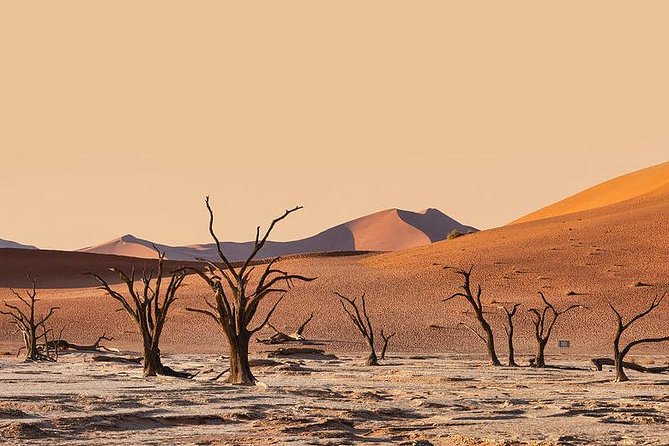
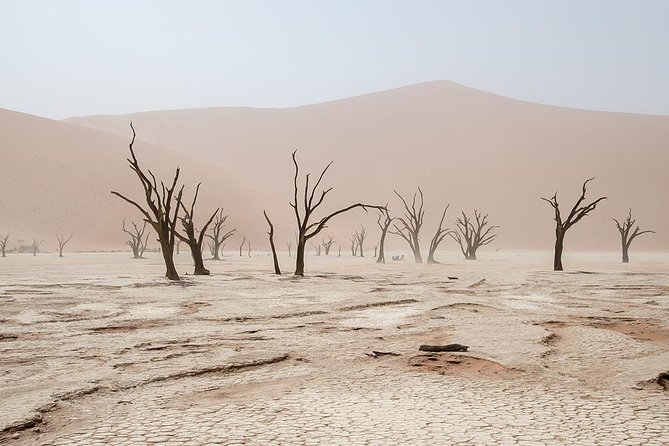
Sossusvlei lies in Namib-Naukluft National Park, within the Namib Desert, one of the oldest and driest deserts on Earth. Its appeal comes from the contrast between enormous dunes, pale salt and clay surfaces, and the stark open sky. The scale is hard to grasp from photographs.
Deadvlei is especially striking. Its name means dead marsh, and the dry basin is known for its lifeless appearance and old trees set against pale ground and surrounding dunes. The admission fee is included here.
Dune 45 is one of the most recognizable dunes in Namibia. Its symmetrical form makes it popular with photographers, while the climb gives you a stronger sense of the sand’s height and shape. Admission is included, but the hour passes quickly if you want both a walk and photographs.
Sesriem Canyon offers a different kind of scenery. The Tsauchab River carved the canyon through sedimentary rock over millions of years. It is about one kilometer long and can reach depths of around 30 meters. One hour is enough for a focused visit, but not a leisurely exploration of every section.
This is a demanding day. You should expect walking, sun, sand, and a schedule that leaves little room for lingering. The reward is a remarkable range of desert sights in one day. Bring sun protection and comfortable footwear, though the supplied details do not specify what equipment or refreshments are provided.
Day 9: Red dunes and the move toward the Kalahari
The ninth day begins with another Sossusvlei stop listed for three hours, followed by the road toward the Kalahari Desert. The description makes clear that the point is the transfer to a different desert area, known for its red dunes.
This may feel confusing after the previous day’s Sossusvlei visits, so ask your guide how the time is divided. It could provide another chance to see the area or simply mark the start of a long road section. Either way, the day is about contrast: the Namib’s pale, severe desert forms versus the Kalahari’s red sand.
The Kalahari portion gives the trip a final change in scenery rather than ending immediately after the famous dunes. That broader view is worthwhile if you want to see how varied Namibia’s dry regions can be.
Day 10: Namibia’s story at the National Museum
The final scheduled stop is the National Museum of Namibia in Windhoek, with about one hour devoted to Namibian history. After so much time outdoors, this is a sensible closing visit.
A museum stop helps connect the places you have seen. Etosha, Himba communities, Twyfelfontein, German-influenced Swakopmund, and the desert regions all fit into a larger national story. The provided details do not list specific exhibits, so I would treat this as a concise historical overview rather than a full museum day.
The tour ends back at the meeting point in central Windhoek. That makes the final day convenient if you are continuing from the city or arranging onward plans nearby.
Is $4,842.28 a fair price?
At $4,842.28 per person, this is a serious purchase. Its value depends on what your lodging and transport arrangements include beyond the clearly listed items.
The package includes fuel, parking, nine breakfasts, and seven dinners. It also includes the Walvis Bay cruise with lunch and champagne, plus admission at several key sites such as Otjikandero, Twyfelfontein, Deadvlei, and Dune 45. A private vehicle and guide for 10 days can also save you the work and risk of organizing long intercity drives yourself.
The gaps matter. GST is not included. Wi-Fi and restroom facilities are not provided on board. Some admissions are specifically excluded, including the Okaukuejo waterhole and Dune 7, while the Ozohere Himba visit also lists admission as not included.
Before paying, ask for a clear accommodation list, room arrangement, vehicle details, exact park and site fees, and a schedule showing which meals are covered on each day. Since the tour is guided lodge travel, those lodging details are central to judging the price.
Who should book this private lodge tour?
I would recommend it to you if you want Namibia’s major highlights in one organized trip and prefer a private group. It suits people who value cultural stops as much as wildlife, and who are comfortable with long drives, changing scenery, and full days outside.
It is especially appealing if you want a guide who explains what you are seeing. Basile is praised for professionalism, organization, and teaching, which are important qualities on a route this large.
I would hesitate if you want a slow holiday, guaranteed luxury, or detailed control over every stop. The program is packed, several visits are short, and extra fees need checking. But if you want Etosha, Himba culture, Twyfelfontein, the Atlantic coast, Sossusvlei, and the Kalahari without managing the logistics alone, this route gives you a strong and varied introduction to Namibia.
Free cancellation is available up to 24 hours before the 8:30 am start for a full refund. Cancellations or changes within 24 hours are not refunded, and poor weather may lead to a new date or a full refund.
FAQ
Where does the tour start and end?
It starts in central Windhoek, Namibia, at 8:30 am, and ends back at the meeting point.
How long is the experience?
The tour lasts approximately 10 days.
Is pickup available?
Yes. Pickup is offered.
Is this a private tour?
Yes. Only your group participates in the activity.
What meals are included?
The package includes nine breakfasts and seven dinners. The Walvis Bay cruise also includes lunch and champagne.
Is Wi-Fi available on the vehicle?
No. Wi-Fi on board is not included, and restroom facilities are also not provided on board.
Are all admission fees included?
No. Some admissions are not included, including the Okaukuejo waterhole, the Ozohere Himba Village, and Dune 7. Other listed visits, including Otjikandero, Twyfelfontein, Deadvlei, and Dune 45, include admission.
What is the cancellation policy?
You can cancel at least 24 hours before the local start time for a full refund. Cancellations or changes made less than 24 hours before the start are not refunded. If poor weather cancels the experience, you are offered another date or a full refund.
Just added around Windhoek
- Knight Vibes: Bars, Shebeen, Clubs Crawl Windhoek★ 5.0 · 3 reviews
- From Windhoek: 3-Day Sossusvlei Shared Shuttle Tour★ 3.8 · 3 reviews
- 3 day Sossusvlei Camping★ 5.0 · 3 reviews
- Windhoek: Katutura Township Tour with Local Guide★ 3.5 · 3 reviews
- Windhoek: City & Township tour. Vehicle, guide, kapana★ 4.2 · 4 reviews
- Airport Transfers★ 5.0 · 5 reviews
- Predator Encounter: Half-Day Carnivore Feeding Windhoek★ 4.0 · 5 reviews
- 3 Day Camping tour at Etosha National Park★ 5.0 · 5 reviews
Guided, compared.
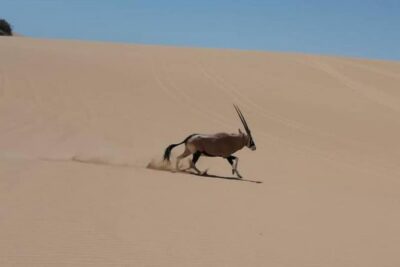
Sandwich Harbour 4×4 guided tours.Join us for an awe inspiring adventure.
Read our review →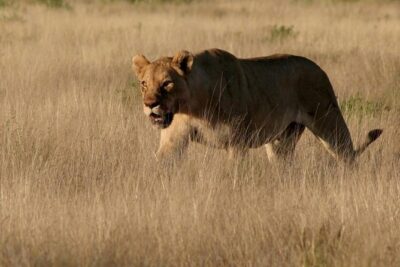
10-Day Namibia Highlights Guided Tour from Windhoek
Read our review →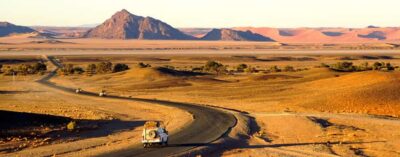
Namibia Self-Driving Audio Guide (in English & German)
Read our review →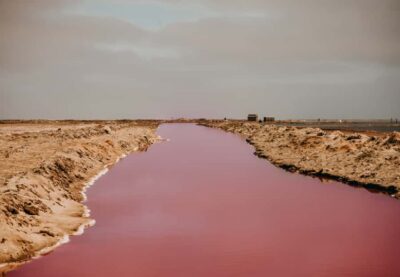
Kayaking and Sandwich Habour Guided Day Tour from Walvis Bay
Read our review →
Exhilarating Sandwich Harbour 4×4: Guided Self drive experience
Read our review →
Private Guided Walking Tour with the San in Windhoek
Read our review →Browse the lists this tour appears in