
Reviewed · WINDHOEK TOURS
11 Days Small Group Namibia Experience Fully Accommodated Tour
Namibia rewards patient road travelers. This 11-day small-group safari links the country’s biggest sights, from the red dunes of the Kalahari and Sossusvlei to Etosha’s wildlife and the Atlantic coast. I like the fully accommodated plan, which removes the need to arrange a string of remote lodges yourself, and I like the small maximum of seven people, which gives the guide room to answer questions and adjust the pace. The main consideration is the amount of time spent on the road. Namibia is huge, so several days involve long drives.
The route also gives you more than wildlife. You’ll meet local people, see ancient rock engravings, visit a Himba village, stop at a seal colony, and finish with conservation work at the AfriCat Foundation. I especially like the mix of simple guest houses, lodges, desert scenery, and structured game drives. Still, this is not a soft, resort-style holiday. Early starts, dust, heat, and long stretches between stops are part of the deal.
Bluecrane Safaris Namibia has earned a 4.9 rating from 31 reviews, with 97 percent recommending the experience. Guides named in the feedback include Markus, Frank, Me-Gusto, and Sidney. The strongest praise focuses on patient guiding, clear communication, vehicle comfort, and guides who explain animals and local culture rather than simply pointing at them.
In This Review
- Key things to know before booking
- From Windhoek to the red Kalahari
- A bushmen walk and the road toward Sossusvlei
- Dead Vlei, Dune 45, and Sesriem Canyon
- Crossing the Tropic of Capricorn to Swakopmund
- A free day in German-influenced Swakopmund
- Cape Cross seals and ancient rock art in Damaraland
- Desert rhinos and the Palmwag Concession
- Himba culture and the first Etosha game drive
- Etosha’s waterholes and the 5,000-square-kilometre pan
- AfriCat and the final return to Windhoek
- What the $4,500 price really covers
- Guides, comfort, and practical concerns
- Should you book this Namibia safari?
- FAQ
- How long is the tour?
- Where does pickup take place?
- How large is the group?
- Is accommodation included?
- Are meals included?
- Is mineral water provided?
- Are park and attraction fees included?
- Are activities in Swakopmund included?
- What is the cancellation policy?
Key things to know before booking
- Sossusvlei includes Dead Vlei, Dune 45, and Sesriem Canyon, so you get Namibia’s most famous desert sights in one full day.
- The group is limited to seven people, a useful size for wildlife viewing and personal questions.
- Etosha receives a full game-viewing day, with waterholes, the salt pan, and a possible afternoon drive on arrival.
- Cultural stops are built into the route, including a bushmen walk and a visit to the Otjikandero Himba Orphanage Village.
- The accommodation is fully arranged, with breakfast each morning, selected dinners, and mineral water supplied on the vehicle.
- The route covers major contrasts, including the Kalahari, Namib Desert, Atlantic coast, Damaraland, and central Namibia.
From Windhoek to the red Kalahari
Pickup in Windhoek is scheduled between 8:00 and 8:45 in the morning, so you should be ready early and have breakfast before leaving if your hotel schedule allows. The first drive heads south toward Mariental and the Kalahari Desert.
The Kalahari here is described as a fossil desert. It receives more rain than a true desert, which explains the combination of low red dunes, golden grass, and camelthorn trees. This is a gentle opening to the trip. You begin with wide views and quiet space rather than rushing straight into a major attraction.
Accommodation is in rondavel-style thatched huts at a lodge with a stone pool. The setting sounds especially pleasant after the first long drive, and the pool may attract passing oryx. The area around Mariental also connects with the Hardap region, known for the Hardap Dam, farmland, citrus, melons, lucerne, wine, maize, and ostrich farms.
The drawback is time. Day one is listed at roughly 15 hours, although that includes the overall stop period and accommodation time rather than 15 hours behind the wheel. You should still expect a substantial driving day. The Kalahari stop is valuable because it gives you a softer introduction to Namibia, but it is not the main wildlife section of the trip.
A few more Windhoek trips worth weighing up
- Windhoek: City and Township Tour
★ 4.8 · 430 reviews - Half-Day Windhoek City and Township Cultural Tour
★ 4.5 · 187 reviews - Windhoek: Bushman Walk with the San
★ 4.9 · 145 reviews
A bushmen walk and the road toward Sossusvlei
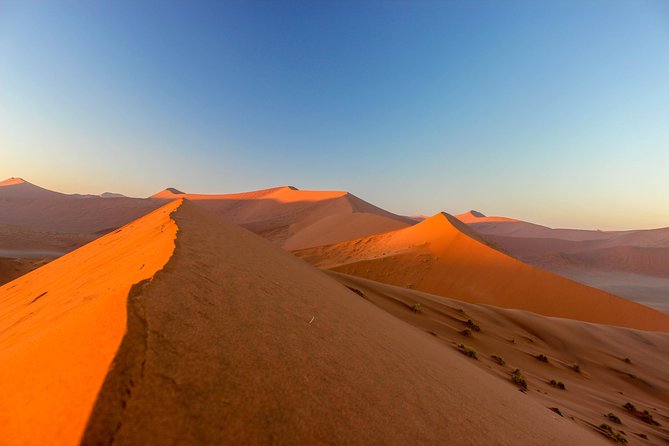
After breakfast on day two, you take a walk with local bushmen in the area before crossing from the smaller red dunes of the east toward the much taller dunes farther west. This is an important change in scenery. The route passes small villages and open country, with lunch served along the way.
You are meant to reach the lodge in the early afternoon, leaving time for a cold drink and the pool. Optional activities can be booked through the lodge, but they are not specified in the tour details, so ask about the choices and extra prices before committing.
This day is best understood as a transition day. It connects two desert regions rather than delivering one headline attraction. That can feel slow if you want constant activity, but it also keeps the schedule from becoming a string of rushed photo stops.
Dead Vlei, Dune 45, and Sesriem Canyon
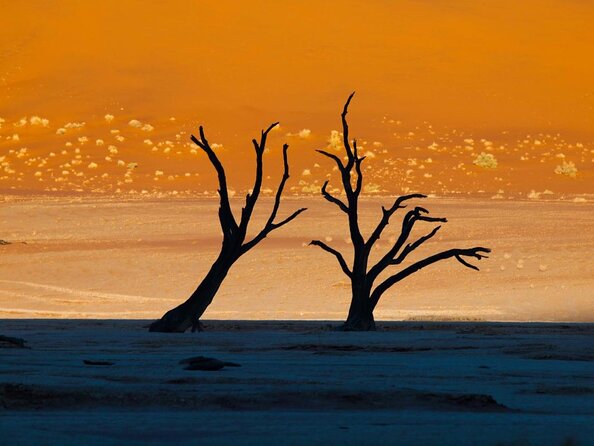
Day three is the visual centerpiece of the tour. Dead Vlei is an ancient clay pan surrounded by red-pink dunes. Its dead acacia trees, blackened and preserved by extreme dryness, rise from the cracked white ground. The contrast is stark and easy to understand in photographs, but the place is more impressive when you see how empty and still it feels.
You have about two hours at Dead Vlei. Wear shoes with a firm grip and bring water. The walk across sand can be tiring, especially in heat, and the tour details do not promise a particular vehicle arrangement for the final approach, so ask your guide about the walking distance on the day.
Next comes Dune 45, a more approachable climb than Big Daddy. It is about 80 meters high and has a gentler slope, though climbing loose sand is still hard work. You can choose to climb partway for the view instead of treating the summit as a test of character.
Sesriem Canyon adds texture to the day. Water cut this narrow chasm through rock, leaving steep stone walls, birds in the cracks, and lizards along the ledges. The canyon is explored on foot, and the planned visit lasts about three hours. Unlike the dunes, it gives you shade and cooler stone in places.
The attraction is the variety: clay pan, giant dune, and canyon in a single day. The tradeoff is that the schedule is full. You need to be comfortable walking on sand, standing in the sun, and moving between several stops.
Crossing the Tropic of Capricorn to Swakopmund
Day four changes the mood completely. You leave the inland desert and cross the Tropic of Capricorn, then continue through the Gaub and Kuiseb passes toward the coast. The road out of Kuiseb Canyon offers some of the trip’s best broad desert views.
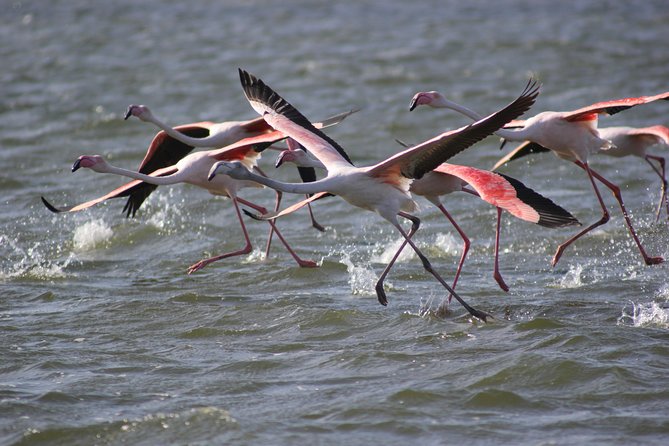
At Walvis Bay, the lagoon is a major bird stop. It is a wetland used by flamingos, pelicans, avocets, and Damara terns. The nearby salt works add another unusual sight, with industrial activity set against bare desert and water.
The final drive follows the coastal road to Swakopmund, with dunes on one side and the cold Atlantic on the other. Dinner is planned at a local restaurant, which gives you a more social evening after a long day in the vehicle.
The Tropic of Capricorn sign gets about 30 minutes. It is a quick photo stop, not a major attraction, but it breaks up the drive and marks the route in a memorable way.
A completely different sort of day out of Windhoek:
- 6-Day Dunes and Wildlife Accommodated Safari from Windhoek
★ 5.0 · 123 reviews - Windhoek City Tour
★ 5.0 · 113 reviews - 10-Day Namibia Highlights Guided Tour from Windhoek
★ 5.0 · 78 reviews - 12 Day Classic Namibia Camping Safari
★ 5.0 · 77 reviews
A free day in German-influenced Swakopmund
Swakopmund is one of the few places on the route where you have a full day without a fixed sightseeing program. Its German colonial buildings, palm-lined streets, shops, restaurants, beaches, museum, and aquarium give you a chance to slow down.
The free day is also where you can add an activity. Options include a boat trip with oysters and champagne, a scenic flight, a microlight flight, fishing, a desert tour, quad biking, sandboarding, and skydiving. These activities cost extra, depend on availability, and are taken at your own risk.
I see this free day as essential rather than wasted time. After several long drives, you can explore at your own speed or simply rest. Dinner is not included, so budget for it. You should also ask the guide to pre-book popular activities because availability is not guaranteed.
Cape Cross seals and ancient rock art in Damaraland
Day six heads north toward Damaraland along the Skeleton Coast. Cape Cross is the first major stop, home to a very large colony of Cape fur seals. The viewing walkway keeps you roughly 200 meters from the animals, but the colony is still an overwhelming sight and sound. Bring a scarf or jacket. The smell is part of the experience, whether you like it or not.
The route continues to Uis, an old mining town where you may find semi-precious stones such as amethyst and tourmaline. This is a useful place to buy a small local souvenir, though you should compare prices and ask about the stone before purchasing.
You then pass the Brandberg, Namibia’s highest mountain, before reaching Twyfelfontein. The area is known for rock engravings and paintings made by Stone Age people more than 6,000 years ago. The main site includes about 2,500 engravings spread across 17 rock-art locations, with additional painted sites nearby.
Twyfelfontein is not a quick roadside photo stop. Allow about two hours and expect to walk over uneven ground. A guide adds real value here because the animals and symbols are easier to understand with cultural context.
Desert rhinos and the Palmwag Concession
On day seven, the schedule returns to Twyfelfontein in the morning before heading toward Palmwag through Bersig. In the afternoon, local trackers from the Torra Conservancy lead a desert rhino tour.
This is one of the most distinctive wildlife experiences on the route. Desert-adapted black rhinos live in a harsh area of table mountains, dry riverbeds, and sparse vegetation. Sightings cannot be guaranteed, and the search may take time. That uncertainty is part of the point. You are seeing wildlife in a difficult natural setting rather than at a guaranteed waterhole.
Palmwag is also associated with elephants, mountain zebra, kudu, springbok, giraffe, leopard, lion, and cheetah. The lodge area is near a palm-lined tributary of the Uniab River, a water source that can draw animals closer.
Day seven is another long day, listed at around 12 hours. The attraction is unusual wildlife and dramatic scenery. The cost is that the rhino activity follows a morning visit and a substantial transfer, so you may arrive tired.
Himba culture and the first Etosha game drive
Day eight takes you toward Etosha National Park, passing through Kamanjab. The stop at Otjikandero Himba Orphanage Village is intended to show traditional Himba life and explain how the village supports children through tour income. Funds are used for medical care, food, and basic needs.
This kind of visit deserves a respectful approach. Ask before taking photographs, listen to the explanations, and remember that you are entering a living community, not a museum display. The stop lasts about two hours and is one of the clearest cultural elements in the itinerary.
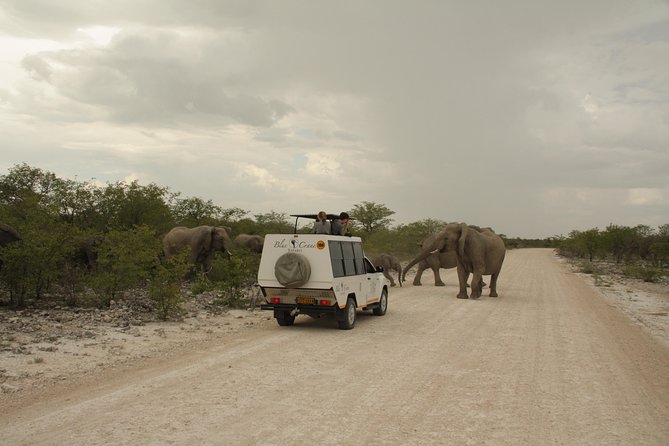
You continue to a lodge outside Etosha’s south gate. If time permits, you take an afternoon game drive and return before sunset. Etosha contains more than 100 mammal species, 340 bird species, and 110 reptile species, but nature does not follow a tour schedule. The best approach is to enjoy the searching as much as the sightings.
Etosha’s waterholes and the 5,000-square-kilometre pan
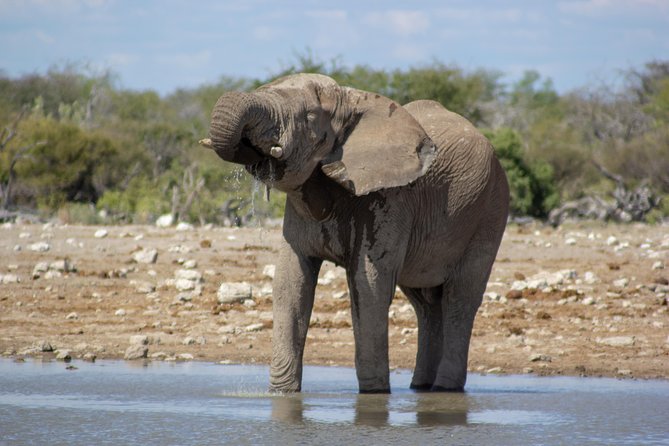
Day nine is devoted to Etosha. The vehicle visits several waterholes and stops at Etosha Pan, a huge salt depression covering about 5,000 square kilometres. The pan can appear almost empty, yet that emptiness makes animals easier to see against the pale ground.
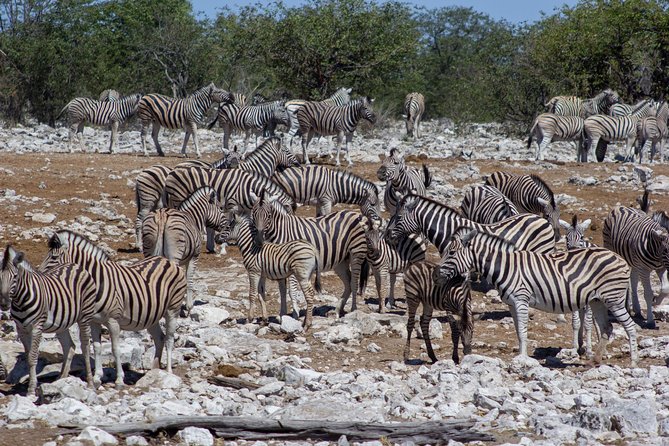
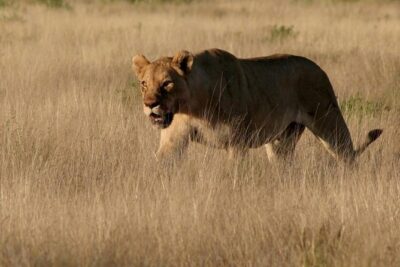
The area is known for springbok, zebra, impala, giraffe, gemsbok, elephants, and many birds. Lions, leopards, white rhinos, and other species may also occur in the park, but you should not treat any animal as guaranteed.
A lunch stop may be made at Halali before the drive back to the lodge. The planned game-viewing period is about eight hours, so bring sun protection, water, and patience. A full day here is a strong point of the tour. Some shorter Namibia programs give Etosha only a hurried taste.
AfriCat and the final return to Windhoek
Day ten begins with a morning game drive before leaving Etosha and heading south. The next major stop is Okonjima Game Reserve, where lunch is followed by an AfriCat activity.
The AfriCat Foundation works with large carnivores including cheetahs, leopards, and brown hyenas. The visit adds a conservation angle to the safari and helps explain the problems facing predators in Namibia. It is not the same as seeing wild animals in Etosha, but it offers a closer look at conservation work and environmental education.
The schedule allows about four hours for the Okonjima stop and two hours for the AfriCat activity. You then spend the night in the area before returning to Windhoek on day eleven.
The final stop is Okahandja’s craft market, described as Namibia’s largest. It is operated cooperatively by local sellers and works well for last-minute souvenirs. If your flight is that day, airport transfer or drop-off at your own Windhoek accommodation is available.
What the $4,500 price really covers
At $4,500 per person, this is not a budget road trip. The value comes from the number of remote areas connected in 11 days, the included accommodation, breakfast each morning, selected dinners, park and parking fees, mineral water, and passenger liability insurance.
You are also paying for a guide, vehicle, route planning, and access to places that are awkward to connect independently. Lodges in remote Namibia can be expensive, and organizing each transfer, park visit, and cultural stop yourself would take considerable time.
Not included are drinks, tips, personal insurance, personal purchases, and most optional activities in Swakopmund. Those extras can add up. I would set aside a separate activity and meal budget rather than treating the advertised price as the total cost.
The accommodation is described as a mix of lodges and guest houses, not one fixed hotel standard. If you need identical room quality every night, ask for the current accommodation list before booking. One useful detail from the feedback is that guide Markus helped arrange rooms with good views, so it is worth asking your guide politely about room placement.
Guides, comfort, and practical concerns
The most praised part of the operation is the guiding. Markus is described as attentive and helpful, while Frank is praised as a good companion and a strong guide. Me-Gusto is noted for warmth, patience, professionalism, and a particularly good manner with children. Sidney also receives praise for patience and kindness on a family trip.
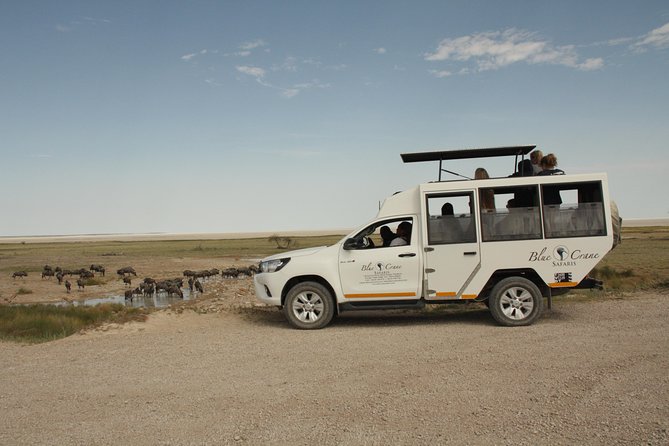
That matters in Namibia. Long drives feel much better when the guide explains what you are seeing, keeps the group comfortable, and handles the small problems that come with remote travel. Previous feedback also describes spacious, well-maintained four-wheel-drive vehicles.
I would still raise safety questions before departure. One serious account describes a vehicle rollover during a 2024 trip. The company said its safety procedures reduced the severity and that the incident was addressed, but this is a reasonable reason to ask about driver hours, seat belts, emergency procedures, and vehicle maintenance.
The tour accepts most people, but you should be comfortable with long road days, uneven walks, heat, sand, and remote locations. Pickup is offered, and the maximum group size is seven.
Should you book this Namibia safari?
I would choose this tour if you want Namibia’s major highlights in one organized route and prefer lodges over camping. It suits first-time visitors, couples, families with older children, and anyone who wants wildlife, deserts, culture, and coastal scenery without arranging every transfer.
I would hesitate if you dislike long drives, want luxury accommodation throughout, or prefer a slow trip with several nights in each place. You should also ask for the exact lodge list, confirm current vehicle and safety procedures, and price your optional Swakopmund activities before paying.
For the right kind of traveler, the route is unusually complete. You get the Kalahari, Sossusvlei, Swakopmund, Cape Cross, Twyfelfontein, Palmwag, Himba culture, Etosha, and AfriCat in 11 days. That is a lot of Namibia, and the price makes the most sense when you value the planning, guiding, and remote-road logistics as much as the sightseeing.
FAQ
How long is the tour?
The tour lasts approximately 11 days, beginning with pickup in Windhoek and ending with return to Windhoek or transfer to the airport.
Where does pickup take place?
Pickup is offered from your hotel in Windhoek. The scheduled start time is 8:00 a.m., with collection stated as between 8:00 and 8:45 a.m. on the first day.
How large is the group?
The tour has a maximum of seven participants.
Is accommodation included?
Yes. The itinerary is fully accommodated and includes the listed lodges and guest houses.
Are meals included?
Breakfast is included for 10 mornings. Dinner is included where listed, but dinner in Swakopmund on the free day is at your own expense. Lunches and some meals are not included unless specifically listed.
Is mineral water provided?
Yes. Mineral water is supplied on the vehicles and at all times during the tour.
Are park and attraction fees included?
The itinerary lists admission for Dead Vlei, Dune 45, Sesriem Canyon, Cape Cross, Twyfelfontein, the Himba village, and AfriCat activities as included. Parking fees are also included.
Are activities in Swakopmund included?
No. Optional activities such as boat trips, scenic flights, microlight flights, fishing, desert tours, quad biking, sandboarding, and skydiving cost extra and depend on availability.
What is the cancellation policy?
You can receive a full refund if you cancel at least six full days before the start time. Cancellations made two to six full days before the start may receive a 50 percent refund. Cancellations less than two full days before the start are not refunded.
Just added around Windhoek
- Knight Vibes: Bars, Shebeen, Clubs Crawl Windhoek★ 5.0 · 3 reviews
- 10 DAYS BEAUTY OF NAMIBIA | Guided Lodge★ 5.0 · 3 reviews
- From Windhoek: 3-Day Sossusvlei Shared Shuttle Tour★ 3.8 · 3 reviews
- 3 day Sossusvlei Camping★ 5.0 · 3 reviews
- Windhoek: Katutura Township Tour with Local Guide★ 3.5 · 3 reviews
- Windhoek: City & Township tour. Vehicle, guide, kapana★ 4.2 · 4 reviews
- Airport Transfers★ 5.0 · 5 reviews
- Predator Encounter: Half-Day Carnivore Feeding Windhoek★ 4.0 · 5 reviews
Windhoek Tours, compared.
Half-Day Windhoek City and Township Cultural Tour
Read our review →
6-Day Dunes and Wildlife Accommodated Safari from Windhoek
Read our review →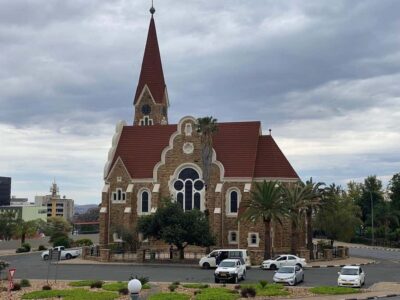
10-Day Namibia Highlights Guided Tour from Windhoek
Read our review →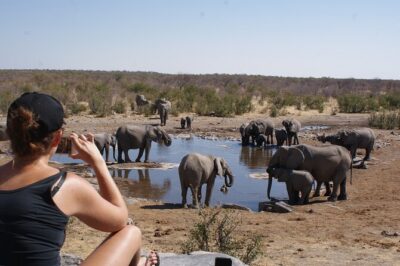
Browse the lists this tour appears in