
Reviewed · CAMPING SAFARIS
9 Day Canyons, Dunes & Wildlife Camping and Lodge Safari
Namibia packs huge scenery into nine days. This small-group safari links Etosha wildlife, the Namib Desert, Sossusvlei, Fish River Canyon, and the Atlantic coast in one well-planned route. I especially like the mix of lodge stays and camping, plus the custom safari vehicle with a pop-up roof. It gives you a broad taste of Namibia without asking you to arrange every transfer, meal, park visit, and campsite yourself.
I also like the human side of the trip: a Himba village visit, time with Damara people, and the chance to see Kolmanskop before sleeping under southern Namibia’s clear stars. The main catch is the mileage. You spend long hours on rough and open roads, and five nights of camping means you need to accept dust, early starts, basic facilities, and some hard-earned comfort.
In This Review
- Key points to know before booking
- What this nine-day route is really trying to do
- Day 1: Windhoek to Etosha and a first waterhole
- Day 2: Etosha Pan and a full day of wildlife watching
- Day 3: Damaraland, a Himba settlement, and the Atlantic coast
- Day 4: Swakopmund choices, then across the Namib
- Day 5: Dune 45, Sossusvlei, Dead Vlei, and Sesriem Canyon
- Day 6: From Sesriem to Aus through remote desert country
- Day 7: Kolmanskop, Lüderitz, and the wild horses of Aus
- Day 8: Fish River Canyon and a night beneath the stars
- Day 9: Giant’s Playground and the return to Windhoek
- Lodges, camping, meals, and the daily rhythm
- Is the $2,568.47 price good value?
- How the guiding and group size affect the experience
- Who should book this safari?
- FAQ
- Where does the safari start?
- Where does the tour end?
- How many people can join the tour?
- Is pickup available?
- How many nights are spent camping?
- Is a sleeping bag included?
- Are meals included?
- Are drinks included?
- Are optional Swakopmund activities included?
- Do I need a high level of fitness?
- Can I take a flight from Windhoek on day nine?
- Is the tour refundable?
- Should you book the Canyons, Dunes and Wildlife Safari?
Key points to know before booking
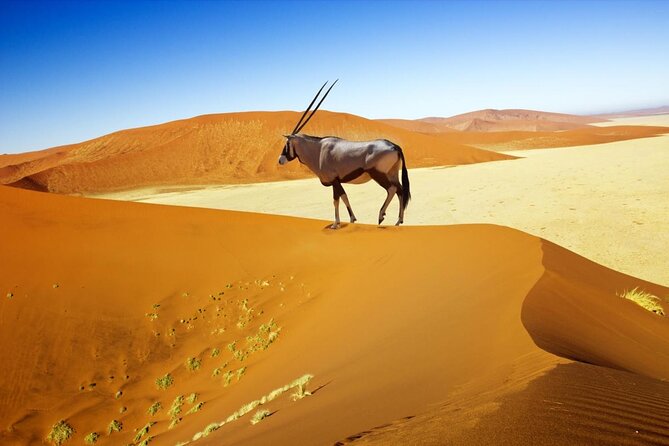
- Etosha gives you one full day and one afternoon of game driving, with chances to search for lions, elephants, rhinos, leopards, and other wildlife.
- Dune 45, Sossusvlei, Dead Vlei, and Sesriem Canyon provide the trip’s biggest visual moments, but the pre-dawn start is very early.
- Five nights of camping and three nights in accommodation keep the price down while adding a more outdoorsy feel.
- The route covers much of Namibia, from the northern wildlife areas to the Atlantic coast and the far south.
- Groups are limited to 10 people, so your guide can usually give more personal help than on a large coach tour.
- The price of $2,568.47 per person includes most major costs, but you still pay for drinks, snacks, sleeping-bag hire or purchase, optional activities, and one dinner.
What this nine-day route is really trying to do
This is not a slow safari based in one park. It is a grand circuit through Namibia, designed to show you several very different sides of the country in a short time.
You begin in Windhoek and travel north to Etosha National Park. From there, the route turns west through Damaraland and the desert to Swakopmund, then heads south through Sossusvlei, Aus, Lüderitz, and the Fish River Canyon before returning to Windhoek.
That scope is the appeal. In nine days, you see wildlife, giant dunes, colonial towns, a ghost town, unusual trees, a huge canyon, remote desert, and Indigenous communities. The price of that variety is time in the vehicle. You should think of this as a moving safari, not a restful resort holiday.
The tour uses a custom-built safari vehicle with a pop-up roof. That matters in Etosha, where a raised view helps you scan the bush and waterholes. A maximum of 10 people also keeps the group fairly small, though comfort will depend on how full the vehicle is and how well everyone handles long drives.
More Camping Safaris:
- 12 Day Classic Namibia Camping Safari
★ 5.0 · 77 reviews - 3 Day Sossusvlei Budget Camping Safari
★ 5.0 · 62 reviews - 6 Day Sand, Sea & Etosha Budget Camping Safari
★ 5.0 · 36 reviews
Day 1: Windhoek to Etosha and a first waterhole
The tour starts at Chameleon Backpackers in Windhoek at 7:00 a.m. A short pre-departure briefing gives you a chance to meet the group and hear how the days will work.
After about three hours on the road, you stop in Otjiwarongo for supplies, drinks, and snacks. This is an important practical stop. Drinks and snacks are not included, so use it to buy anything you want for the long stretches ahead.
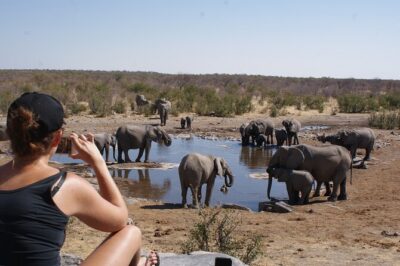
You reach Anderson Gate at Etosha National Park around 2:00 p.m. The afternoon is spent on a game drive toward Halali, where you stay in twin-share rooms. Your first night has one of the trip’s simplest pleasures: the floodlit waterhole.
I would make time for the waterhole before and after dinner. You might see animals coming to drink, and the quiet wait is part of the safari experience. Sightings cannot be promised, of course, but a lit waterhole gives you a good chance to watch animal behavior without driving anywhere.
Day 2: Etosha Pan and a full day of wildlife watching
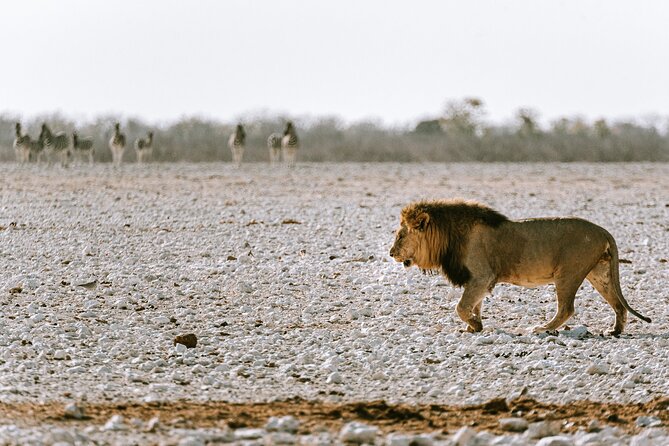
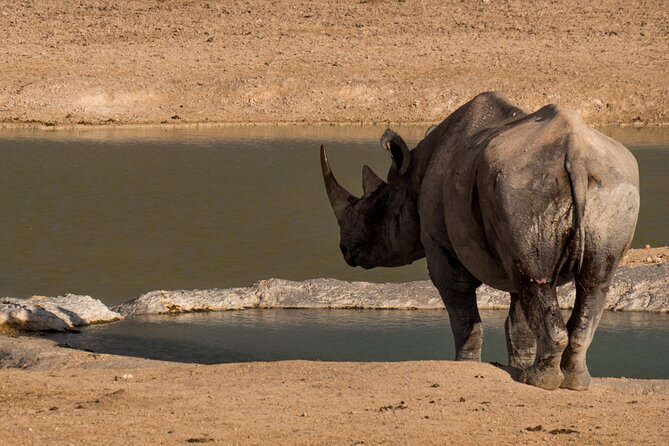
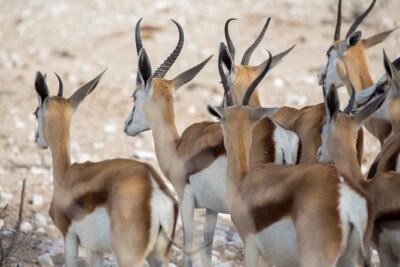
Day two begins with breakfast, packing, and a morning game drive. The goal is to search for predators and other animals across Etosha. The park is known for large mammals, and the tour specifically highlights lions, leopards, elephants, rhinos, and more.
The route takes you toward Etosha Pan, the dry salt basin that gives the park its name. This is not a lush safari setting. The open, pale ground can feel stark, but it makes animals easier to spot in some areas because there is less thick vegetation to block the view.
You eat a picnic lunch in the park, then continue with a final game drive toward Okaukuejo before leaving near sunset. You spend the night at Etosha Village.
This is one of the strongest parts of the trip for wildlife fans because you receive both an afternoon drive and a full day in the park. Still, you need patience. A safari is not a checklist, and even excellent guides cannot control animal movements.
Day 3: Damaraland, a Himba settlement, and the Atlantic coast
Day three is a long vehicle day. You pass through Damaraland, with a chance to meet Damara people and support a small roadside shop. The stop is brief, but it adds a human element to a route otherwise dominated by open country and wildlife.
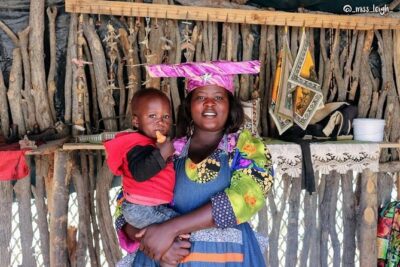
Near Uis, you visit a small Himba settlement for about an hour. The visit is intended to give you a closer look at Himba life and traditions. Approach this stop with respect and curiosity. It is a short introduction, not a full cultural study, so listen carefully and avoid treating the community as a photo backdrop.
After a resupply stop in Uis, the road crosses the Namib Desert toward the coast. You stop at the Zeila Shipwreck, a striking reminder of the Atlantic’s rough edge.
You arrive in Swakopmund late in the afternoon and stay at Hotel A La Mer, across from the beach and close to restaurants. Dinner is not included that evening, giving you freedom to choose your own meal. This is a welcome change after several organized meals, though you should budget for it.
More Wildlife Trips:
- 6-Day Dunes and Wildlife Accommodated Safari from Windhoek
★ 5.0 · 123 reviews - Swakopmund: Little Five Desert Wildlife Quad Biking Tour
★ 4.8 · 123 reviews - Wildlife and Landscape Tour- full-day (7hours) from Walvis Bay
★ 5.0 · 5 reviews
Day 4: Swakopmund choices, then across the Namib
You leave Swakopmund at 11:30 a.m., which gives you a rare late morning. You can enjoy a slow breakfast or pay for an optional activity.
The available choices include sandboarding and quad biking. Sandboarding can involve racing down a dune head first at high speed, while quad biking offers a faster way to explore the dune area. These activities are not included, so decide based on your budget and energy. The late departure means you are not forced into an activity, which is a nice touch.
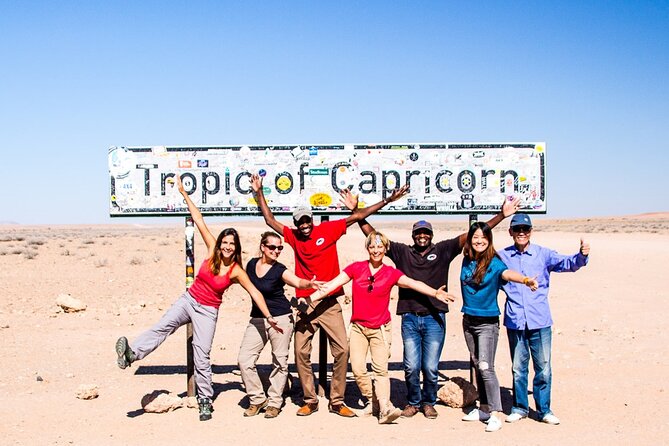
The afternoon drive passes through the Namib Desert via Kuiseb Pass and across the Tropic of Capricorn. You stop at Solitaire for a snack and a leg stretch before continuing to Sesriem.
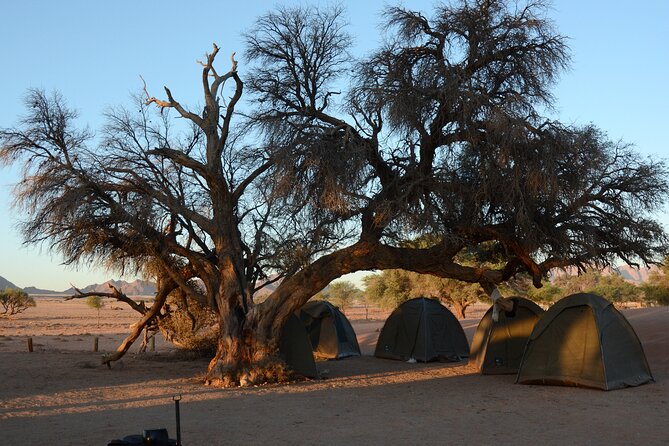
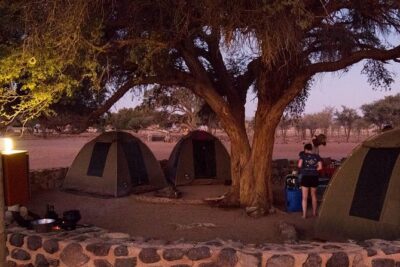
At camp, you put up your tent, watch the sun drop over the desert, and have access to a pool and bar. Dinner is prepared by your guide. An early night makes sense because day five begins before sunrise.
This is where the camping portion becomes real. You get an excellent desert setting, but you also do the practical work of setting up camp. Camping equipment is supplied except for a sleeping bag, so bring one or arrange one separately.
Day 5: Dune 45, Sossusvlei, Dead Vlei, and Sesriem Canyon
The pre-dawn departure is tough but worthwhile. You drive along an ancient river bed toward Dune 45, one of the most famous dunes in Namibia, and climb it for sunrise.
Walking on sand is harder than it looks. The climb can be physically demanding, especially in the early morning when you are still waking up. The reward is a wide view of orange dunes changing color as the sun rises. Afterward, you return for breakfast and continue into the Sossusvlei area.
Sossusvlei is a dry lake bed surrounded by towering dunes. You explore on foot, then spend about two hours at Dead Vlei. The cracked white clay and dead camel-thorn trees create a stark scene against the dunes. This is one of the best places on the route for photography, but the heat can build quickly, so carry water and protect yourself from the sun.
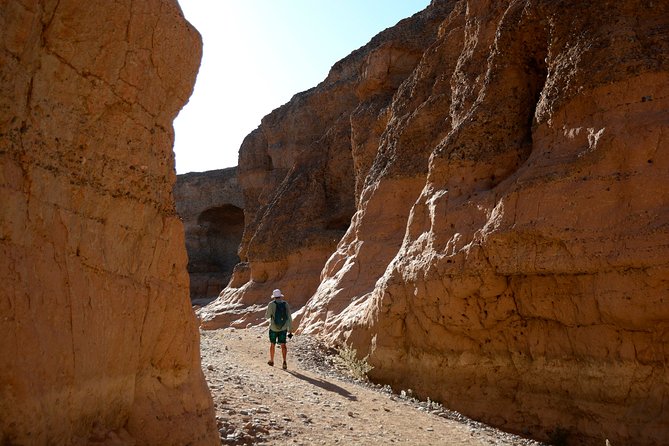
Back at Sesriem around lunchtime, you have time for lunch, a swim, or a siesta. Later, you visit Sesriem Canyon, a smaller but more enclosed formation shaped by water over time.
This day is packed with major sights. It is also one of the most physically demanding days because of the early start, dune walking, heat, and time outside. A moderate level of fitness is expected, and you should be comfortable walking on uneven sand.
Day 6: From Sesriem to Aus through remote desert country
After a leisurely breakfast, you pack up and aim to leave by 9:00 a.m. The route turns south through the Namib Rand Nature Reserve toward Klein Aus.
The scenery changes again. Instead of the tall dunes around Sossusvlei, you travel through broad desert country and the Gondwana Sperrgebiet Rand Park. This is a day for watching the view pass by rather than collecting a long list of attractions.
You arrive at Klein-Aus Vista Desert Horse Campsite in the late afternoon. Short hiking trails offer a chance to stretch your legs, and the sunset over the Aus Mountains gives the day a strong finish.
Dinner is cooked by your guide over an open fire. That detail captures the charm of the camping setup: meals are simple, social, and tied to the place. It also means you should not expect restaurant service or a fully private evening. The shared camp routine is part of the experience.
Day 7: Kolmanskop, Lüderitz, and the wild horses of Aus
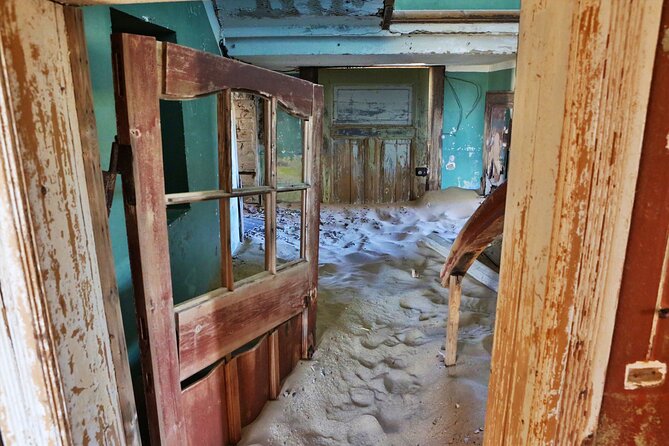
After an early breakfast, you drive to Kolmanskop, about 15 kilometers from Lüderitz. This abandoned diamond-mining town once had luxury housing, a bowling alley, and the southern hemisphere’s first X-ray machine.
Today, sand-filled rooms and fading buildings tell the story of a boom that did not last. The three-hour visit gives you time to look closely at the architecture and imagine how sharply the town changed after the diamond industry declined.
You continue to Lüderitz, a small Atlantic town with colorful colonial-style buildings on a rocky shore. At Diaz Point, you see the site of the original Diaz Cross. The stop is short, but the coastal setting adds another change of mood to the trip.
On the return drive to Aus, keep watch for the wild horses of the Namib Desert. Their survival in such a dry environment is remarkable, but sightings are never guaranteed. You return to Klein-Aus Vista for another campsite night and sunset.
This day blends history, coastal scenery, and wildlife in an unusual way. It is less about a single major attraction and more about how strange and varied southern Namibia can be.
Day 8: Fish River Canyon and a night beneath the stars
You leave early and head east toward the Fish River Canyon. At Hell’s Bend viewpoint, you look over one of the world’s largest canyons, formed by water erosion and movements in the earth’s crust over millions of years.
The viewpoint visit lasts about an hour. It is not a canyon hike, so set your expectations accordingly. You get a powerful look across the vast cut in the land, but not an extended trek into it.
After lunch, you continue to Quiver Tree Forest Rest Camp near Keetmanshoop. Around 250 quiver trees grow here, with some estimated to be 200 to 300 years old. The quiver tree is Namibia’s national tree, and the forest has been a national monument since 1995.
Your final night is spent camping under the stars, with dinner prepared by your guide. The site is especially appealing if you enjoy night-sky photography. A permit is needed for night photography and is not included, so check that detail before packing specialized equipment.
Day 9: Giant’s Playground and the return to Windhoek
The final morning starts slowly, with a lie-in and breakfast. You then visit Giant’s Playground, where dolerite rocks appear to have been stacked by giants.
It is a short stop, but a good final geological surprise after the canyon, dunes, and desert. From there, you drive through Mariental and Rehoboth before reaching Windhoek in the late afternoon.
Do not schedule a flight for this day. The return drive can take much of the day, and the tour states that no flights are recommended. Drop-off is within Windhoek city limits, including accommodation in the city.
Lodges, camping, meals, and the daily rhythm
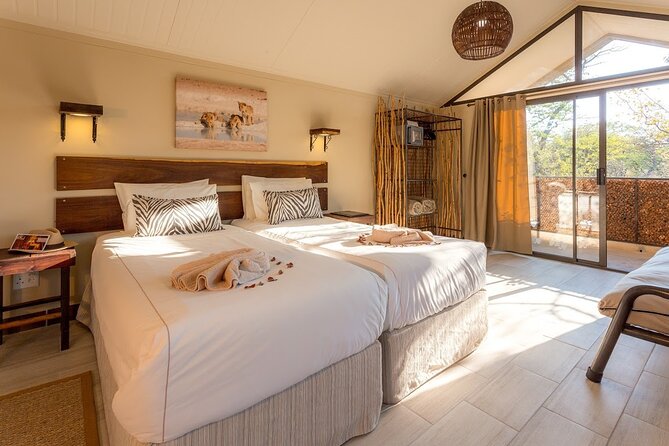
The accommodation plan includes three nights in lodges or hotels and five nights camping, based on twin sharing. That combination keeps the cost below a fully lodge-based safari and gives you more contact with the outdoors.
Breakfast is included on eight days, lunch on all nine, and dinner on seven. Drinks are not included, including mineral water, soft drinks, and alcohol. Tap water is supplied, but you should budget for additional drinks and snacks during long drives.
The food appears to be a real strength of the setup, with guides preparing meals at camp. That can be a pleasant surprise if you enjoy hearty, practical cooking around a fire. It also means meal times and menus are less formal than at a lodge.
The route often starts early, particularly for Etosha, Dune 45, and the Fish River Canyon. Your biggest comfort needs are a sleeping bag, sun protection, water storage, warm layers for early mornings, and patience with long hours in the vehicle.
Is the $2,568.47 price good value?
At $2,568.47 per person, this is not a cheap short break. But the price includes transport for nine days, a professional English-speaking driver and guide, accommodation, camping equipment, park activities, airport transfers, most meals, and major visits such as Kolmanskop and the Fish River Canyon viewpoint.
The value comes from the amount of ground covered without having to rent a vehicle, plan campsites, arrange park access, or manage meals. A self-drive trip might give you more freedom, but it would also shift the driving, navigation, reservations, and logistics onto you.
You still need money for optional Swakopmund activities, drinks, snacks, sleeping-bag costs, personal insurance, and the dinner in Swakopmund. The trip is best value for someone who wants a broad first look at Namibia and accepts a busy schedule.
How the guiding and group size affect the experience
A group of no more than 10 people is a good middle ground. You gain a social setting without the scale of a large coach, and the guide has a better chance of helping with questions, meals, camping, and wildlife stops.
Guide names have included Gideon, Kennedy, Gregory, Michael, Taimi, Tulimo, Daniel, Barrier, and others, depending on the departure and tour arrangement. That variation means you should not book based on one named guide alone. The strongest feedback consistently points to friendly, attentive staff, good explanations, humor, and careful support when plans needed adjustment.
There have also been mixed experiences. One difficult account involved dissatisfaction with the budget style, group dynamics, and a previous booking issue. That is a useful warning: this is a budget-friendly small-group safari, not a private luxury expedition. People in your group may have different languages, habits, and expectations.
Who should book this safari?
I would recommend it to you if you want Namibia’s major sights in one organized trip, enjoy wildlife and photography, and are happy to trade comfort for variety.
It suits solo visitors who want built-in company, couples who do not need luxury every night, and first-time visitors who prefer a guide to handle the roads and meals. It also works well for anyone who likes sunsets, starry skies, geological formations, and cultural stops as much as animal sightings.
I would hesitate if you dislike long drives, need private rooms, want a slow pace, or expect every activity to be included. The route is ambitious, and the camping days require flexibility. Also remember that the booking is non-refundable and cannot be changed for any reason, so confirm your dates and fitness level before paying.
FAQ
Where does the safari start?
It starts at Chameleon Safaris, Ferry Street, Windhoek, with a meeting time of 7:00 a.m.
Where does the tour end?
The tour returns to Windhoek and ends with drop-off at accommodation within Windhoek city limits.
How many people can join the tour?
The maximum group size is 10 people.
Is pickup available?
Yes. Pickup and drop-off are offered within Windhoek city limits, and airport transfers are included.
How many nights are spent camping?
You spend five nights camping and three nights in accommodation, using twin-share arrangements.
Is a sleeping bag included?
No. Camping equipment is included, but a sleeping bag is not.
Are meals included?
Breakfast is included on eight days, lunch on all nine days, and dinner on seven days.
Are drinks included?
No. Drinks such as mineral water, soft drinks, and alcohol are not included. Tap water is supplied.
Are optional Swakopmund activities included?
No. Sandboarding, quad biking, and other optional activities are paid separately.
Do I need a high level of fitness?
The tour states that you should have a moderate level of physical fitness. Walking on dunes, setting up camp, and handling early starts are part of the trip.
Can I take a flight from Windhoek on day nine?
No flight is recommended on the final day because the group returns to Windhoek in the late afternoon.
Is the tour refundable?
No. The experience is non-refundable and cannot be changed for any reason.
Should you book the Canyons, Dunes and Wildlife Safari?
Book it if you want a strong first taste of Namibia and can handle long road days. The combination of Etosha, Sossusvlei, Kolmanskop, Lüderitz, Fish River Canyon, and Quiver Tree Forest is hard to match in nine days.
Skip it if you want deep time in one region or a polished lodge holiday. For the right person, the dusty roads, campfire dinners, early dune walks, and changing guides are not flaws to hide. They are the price of seeing this much of Namibia in one well-organized trip.
Just added around Windhoek
- Knight Vibes: Bars, Shebeen, Clubs Crawl Windhoek★ 5.0 · 3 reviews
- 10 DAYS BEAUTY OF NAMIBIA | Guided Lodge★ 5.0 · 3 reviews
- From Windhoek: 3-Day Sossusvlei Shared Shuttle Tour★ 3.8 · 3 reviews
- 3 day Sossusvlei Camping★ 5.0 · 3 reviews
- Windhoek: Katutura Township Tour with Local Guide★ 3.5 · 3 reviews
- Windhoek: City & Township tour. Vehicle, guide, kapana★ 4.2 · 4 reviews
- Airport Transfers★ 5.0 · 5 reviews
- Predator Encounter: Half-Day Carnivore Feeding Windhoek★ 4.0 · 5 reviews
Camping Safaris, compared.
6 Day Sand, Sea & Etosha Budget Camping Safari
Read our review →
7 Day Southern Namibia and Sossusvlei Camping Safari
Read our review →
9 Day Etosha, Skeleton Coast and Sossusvlei Camping and Lodge Safari
Read our review →
7 Day Northern Namibia and Skeleton Coast Camping Safari
Read our review →
Browse the lists this tour appears in