

Reviewed · TOWNSHIP CULTURAL TOURS
Swakopmund:Mondesa Cultural Township Tour
Mondesa turns a short drive into a human story. I like the chance to see everyday township life with a guide who may have grown up in Mondesa, and I like that the tour ends around a family table rather than at a standard tourist restaurant.
The live a cappella performance and visits with a Nama herbalist and Herero woman add real cultural depth. The main consideration is time: three hours moves quickly, and the visit to the Herero woman is available only on afternoon and weekend tours.
In This Review
- Key points at a glance
- Why Mondesa adds something different to Swakopmund
- Your first look at Mondesa and OB Street
- Craft stalls and the small home market
- DRC and the realities of new housing
- Nama herbal medicine and living tradition
- Herero dress, identity, and the afternoon schedule
- Music, the shebeen, and a family table
- Is $80 a fair price?
- Who should book this experience?
- Booking, timing, and practical preparation
- Should you book the Mondesa Township Tour?
- FAQ
- How long does the Mondesa Cultural Township Tour last?
- How much does the tour cost?
- Is hotel pickup included?
- What languages are available?
- Is a traditional meal included?
- What foods might I try?
- Is the Herero cultural visit offered on every tour?
Key points at a glance

- A guide with local roots: A guide originally from Mondesa can explain the area from personal experience, not just from a prepared script.
- Several cultures in one short tour: You encounter Nama herbal traditions, Herero dress and customs, and food from different Namibian communities.
- A family meal is included: Try mahangu porridge, mopane worms, beans, wild fruits, and other local foods in a township home.
- The route goes beyond sightseeing: OB Street, DRC, schools, homes, craft stalls, and a shebeen help you see how people live and work.
- Private and practical: Hotel pickup, transport, English or German guidance, and a private group make the outing easy to arrange.
- Good value at $80: The price covers three hours, transport, a guide, cultural visits, and a traditional lunch or dinner.
Why Mondesa adds something different to Swakopmund
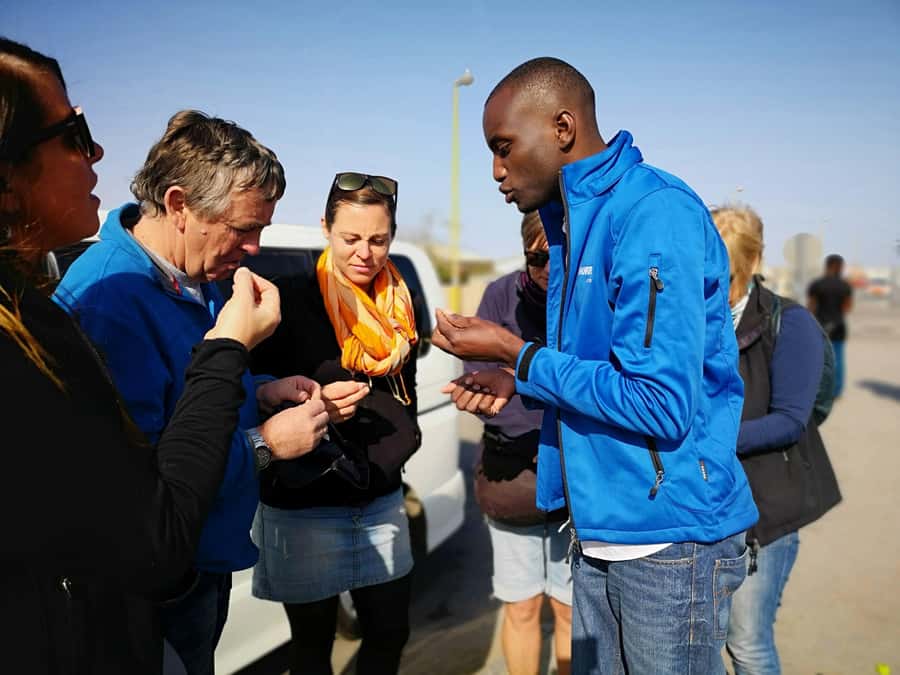
Swakopmund is known for German colonial buildings, ocean air, desert activities, and polished guesthouses. Those are all worth your time, but they show only one part of the town. Mondesa gives you a chance to look beyond the familiar visitor center and hear about contemporary Namibian life from people connected to the community.
This is not a museum tour. You move through a living neighborhood, with stops that bring together housing, schooling, small-scale craft work, local beliefs, music, food, and family life. That makes the outing useful for anyone who wants more context for Swakopmund rather than another scenic drive.
The tour is private, so you are not placed in a large group. That matters here. Conversations with residents, a family meal, and questions about dress or herbal medicine all work better when the group is small and the pace is personal.
You are picked up directly from your hotel accommodation. Transport is included, and the full visit takes about three hours. Starting times vary, so check the available departure before booking. If you want to meet the Herero woman, choose an afternoon or weekend tour, since that part is not offered on every departure.
More Township Tours in Swakopmund
- Swakopmund: Mondesa Township Day Tour Experience
★ 3.8 · 25 reviews - Swakopmund Best Cultural Historical Township Tours Namibia
★ 5.0 · 8 reviews - Explorer Historical Private Township Cultural Tours
★ 4.0 · 6 reviews
Your first look at Mondesa and OB Street
The outing begins with a drive to Mondesa and a short introduction to its history. This opening helps you understand the township before you begin walking. Ask questions early, especially if you want more detail about housing, local communities, or how Swakopmund has changed.
The walk along OB Street offers a look at typical homes and schools. You may also have a chance to speak with residents. That is one of the most valuable parts of the experience, but it calls for good manners. Listen first, ask before taking photographs, and remember that you are walking through someone’s neighborhood, not a staged attraction.
You will see a more ordinary side of town than the central streets provide. The homes and schools are not presented as decoration. They help show how people organize daily life and how the community functions.
The walk may be less comfortable in strong sun, so wear comfortable shoes, sunglasses, a sun hat, and sunscreen. The tour is listed as wheelchair accessible, but the experience includes walking through township streets, so it is sensible to confirm any route needs in advance.
Craft stalls and the small home market
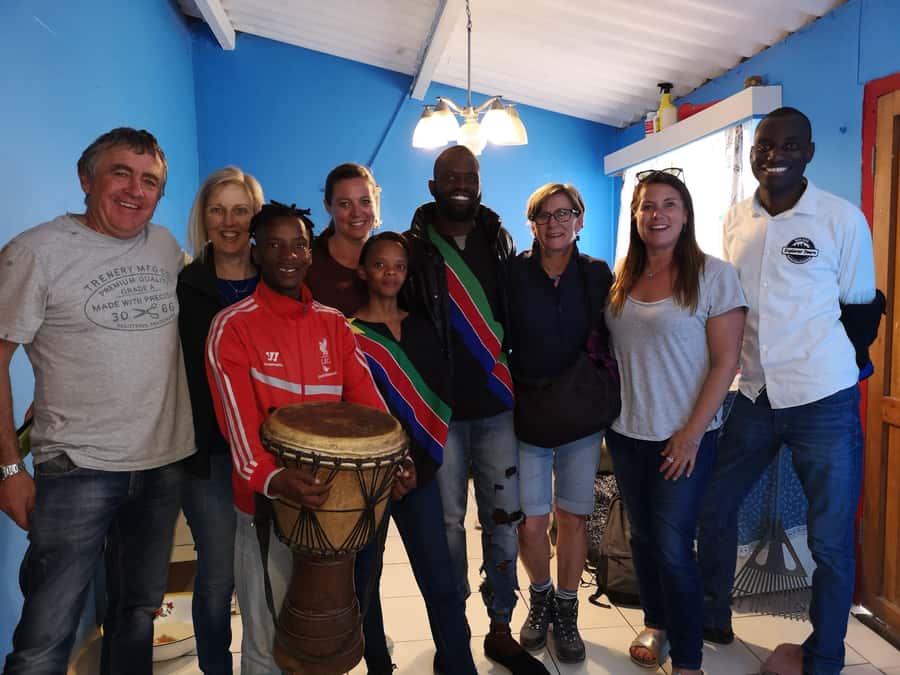
A stop at a small home craft market introduces you to local artists and their work. This is a modest stop, not a large commercial market, which can make it feel more direct and personal.
You can browse different crafts and speak with the people who make or sell them. Souvenirs are not included in the tour price, so bring extra money if you want to purchase something. Since the market is small, the selection may be limited, but that is also part of the appeal. You are supporting individual makers rather than passing through a large shop designed for bus groups.
I would keep this stop in proportion. The craft market is one part of a broader community visit, not the main reason to book the tour. If shopping is your priority, you may want more time elsewhere in Swakopmund. If you want a short look at local creative work, it fits the route well.
DRC and the realities of new housing

The tour continues to DRC, the Democratic Resettlement Community. Here, you learn about housing projects and the ways the Swakopmund Municipality is improving the area.
This stop gives the tour a useful civic side. Instead of showing only culture in the form of food, dress, and music, it also addresses housing and public improvement. That wider view helps you understand that township life includes practical questions about homes, roads, services, and community development.
The information will depend on your guide and the questions you ask. A guide with personal ties to Mondesa can be especially helpful here. One guide praised in a verified account spoke excellent German and had originally come from Mondesa, allowing the history and neighborhood stories to be explained in a personal way. German-speaking visitors may find that especially useful, though English is also available.
DRC may feel more serious than the food and music stops later in the tour. That is a strength if you want a fuller picture of Namibia, but it may not suit someone looking for a purely lighthearted excursion. The tour asks you to look at both cultural traditions and present-day community needs.
More Township Tours:
- Explorer Private Cycling Township Tours
★ 3.9 · 5 reviews - Half Day Swakopmund Cultural Historical Township Tour
★ 5.0 · 4 reviews - Swakopmund Explorer Township Tour in Mondesa with Nande the Township Local Guide
★ 5.0 · 4 reviews - Swakopmund Cultural Township Private Day Tour
★ 3.8 · 4 reviews
Nama herbal medicine and living tradition

One of the most distinctive visits is with a traditional Nama herbalist. She explains Nama culture and shares her knowledge of herbal medicines.
This is not simply a quick introduction to local plants. It is a chance to hear how cultural knowledge is passed on and how plants can be connected to daily life and healing traditions. You should approach this part with respect and curiosity rather than treating it as a demonstration of exotic remedies.
The experience does not say that you receive medical treatment or products, so do not book it expecting a consultation. Its value is educational and cultural. Listen carefully, ask thoughtful questions, and avoid assuming that traditional medicine can replace advice from a qualified medical professional.
For many people, this will be one of the strongest stops because it offers something you are unlikely to get from a standard city tour. It also gives the guide a chance to explain the Nama community in a way that food or architecture alone cannot.
Herero dress, identity, and the afternoon schedule

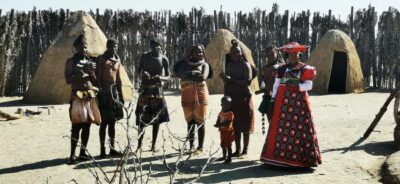
On afternoon and weekend tours, you drive to meet a Herero woman who discusses her traditional dress and Herero culture. Her clothing is an important part of the conversation, and the visit gives you a direct way to learn how appearance, identity, and cultural history connect.
This stop is schedule-sensitive. If it is important to you, do not assume that every morning tour includes it. Check the starting time and availability before paying.
The Herero visit also broadens the cultural focus. The tour is not presenting Namibia as one single tradition. Nama and Herero culture are given their own space, along with food and community life from the township. That variety is a strong reason to choose this tour over a shorter neighborhood drive.
Music, the shebeen, and a family table
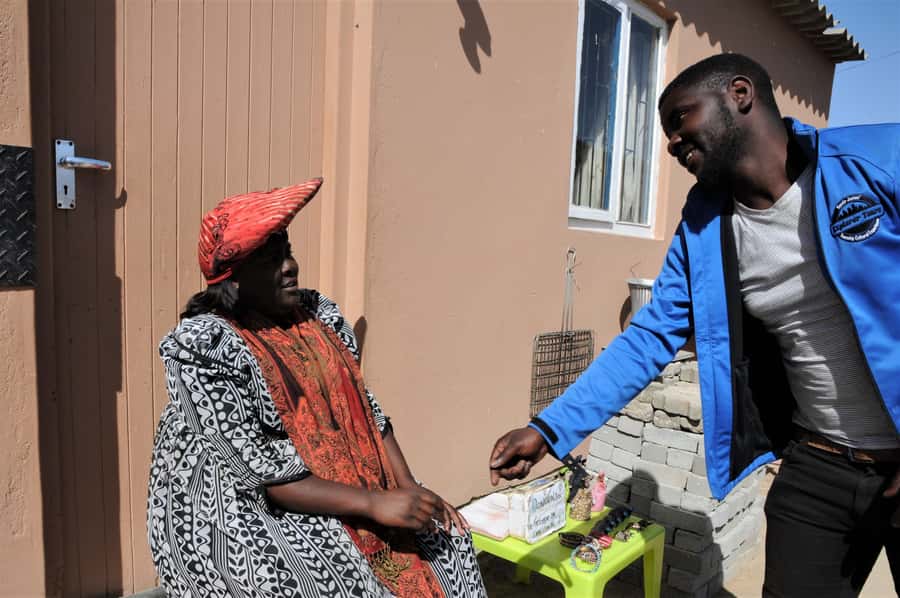
The experience includes a live a cappella performance. Music changes the pace after the walking and explanatory stops, and it gives you a direct encounter with local performance rather than a recorded soundtrack.
You also stop for drinks at a shebeen, an African bar. The shebeen visit offers a look at a social setting that many visitors would not find on their own. It is a casual part of the route, but remember that smoking is not allowed on the tour.
The food stop is the most social part of the afternoon. You visit a local family home and try traditional dishes, with a lunch or dinner included in the price. The menu can include:
- Ondjuhwa, barbecue chicken
- Omagungu, mopane worms
- Mahangu porridge made from millet
- Omakunde, beans
- Oofukwa, ground nuts
- Onyandi, Oombe, and Ondunga, wild fruits and berries
This is a good place to be adventurous without pretending you must enjoy every dish. Mopane worms may be the most unfamiliar item for many people, while chicken, beans, porridge, and ground nuts offer more recognizable options. The wild fruits and berries add another side of local food traditions.
A family home is different from a restaurant. The setting is likely to feel more personal, and you should follow the household’s lead on manners, photographs, and conversation. Bring an appetite, but also patience. The meal is part of the cultural exchange, not just a fast food tasting.
The tour information refers to a local traditional lunch, while the itinerary also describes a family lunch or dinner. Confirm the meal timing when you book, especially if you have dietary restrictions. The supplied details do not specify vegetarian, allergy, or special-diet options.
Is $80 a fair price?
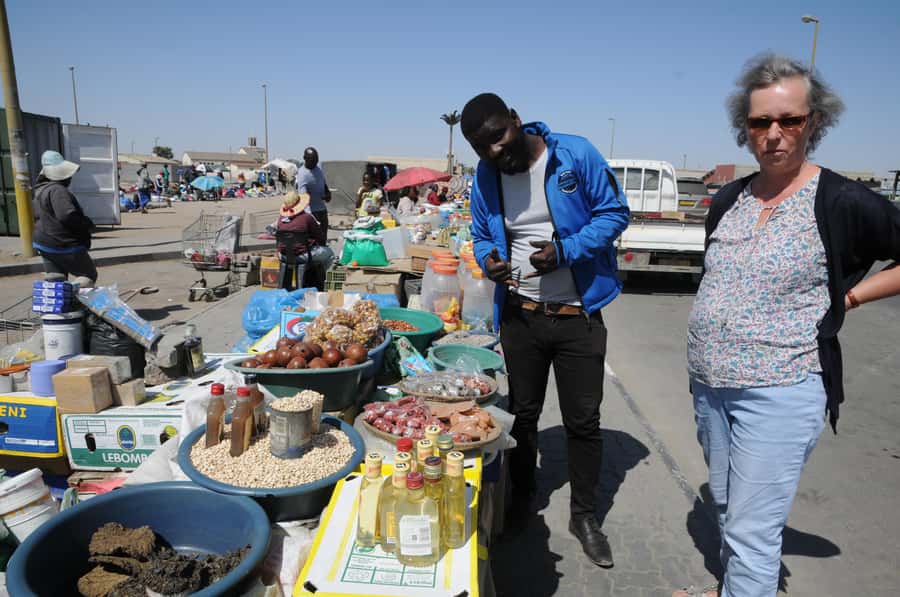
At $80 per person, this is not the cheapest way to spend three hours in Swakopmund. It is also more than a simple township transfer or self-guided walk. The value comes from what is bundled into the experience.
Your fee covers hotel pickup, transport, a private guide, cultural visits, the music performance, and a traditional meal. You also get access to settings that would be difficult to arrange independently, including a local family home, a shebeen, a Nama herbalist, and a Herero cultural visit when scheduled.
The private format helps justify the price. You can ask questions and keep the conversation focused on what interests you. A German-speaking guide is available, as is English, and an audio guide is included in English and German.
The price is strongest for couples, families, or small groups who value direct contact and convenience. Solo visitors may find it costly by comparison, but the private arrangement avoids the noise and fixed pace of a large group.
Souvenirs are extra. The tour also does not promise a long shopping stop, so treat any craft purchase as optional rather than part of the main value.
Who should book this experience?
I would recommend this tour to you if you want to meet people, ask questions, and learn how culture appears in ordinary daily life. It suits visitors who have already seen central Swakopmund and now want a more community-focused outing.
It is especially useful for:
- First-time visitors who want context beyond the town center
- Families interested in food, music, and local traditions
- German-speaking visitors who prefer a German guide or audio support
- Private groups that want a flexible conversation
- Anyone curious about Nama and Herero culture
- Visitors willing to try unfamiliar foods
It may be less suitable if you dislike walking, prefer polished attractions, or feel uncomfortable eating in a family home. The tour is also not suitable for pregnant women or people with back problems. Pets, smoking, luggage, and large bags are not allowed.
The advice about bringing sweets or stationery for children should be handled carefully. If you choose to bring something, offer it politely through the guide and avoid turning the interaction into a handout spectacle. A respectful attitude matters more than what you carry.
Booking, timing, and practical preparation
The tour lasts three hours, but the schedule includes several stops. Wear shoes that can handle walking and dress for strong sun. Sunglasses, a sun hat, and sunscreen are practical choices, not extras.
Hotel pickup is included, which saves you the trouble of arranging transport to Mondesa. The tour is available in English and German, with an audio guide in both languages. It is wheelchair accessible, although you should discuss specific mobility needs before booking because the route includes streets and community visits.
You can reserve now and pay later, which helps if your Namibia plans are still changing. Cancellation is free up to 24 hours before the tour for a full refund. Check the available starting time carefully, especially if you want the Herero visit.
Should you book the Mondesa Township Tour?
Book it if you want a personal, three-hour introduction to Namibian community life, with food, music, local history, and several cultural voices. The strongest reason to go is the range of encounters packed into a short visit, especially the Nama herbalist, the family meal, and a guide with roots in Mondesa.
Skip it if you want a quiet sightseeing drive, dislike unfamiliar food, or need a slow schedule with little walking. For the right visitor, $80 buys more than transport and a meal. It buys access to conversations and places that are hard to reach on your own, while keeping the group private and the planning simple.
FAQ
How long does the Mondesa Cultural Township Tour last?
The tour lasts three hours.
How much does the tour cost?
The listed price is $80 per person.
Is hotel pickup included?
Yes. Pickup directly from your hotel accommodation and transport are included.
What languages are available?
The live tour guide and audio guide are available in English and German.
Is a traditional meal included?
Yes. A local traditional lunch is included, and the itinerary describes a traditional lunch or dinner at a local family home.
What foods might I try?
Possible foods include barbecue chicken, mopane worms, millet porridge, beans, ground nuts, and wild fruits and berries.
Is the Herero cultural visit offered on every tour?
No. The visit with the Herero woman is available on afternoon and weekend tours only.
Just added around Swakopmund
- Pelican Point Peninsula Tour★ 5.0 · 3 reviews
- Cultural Tour in Swakopmund★ 5.0 · 3 reviews
- Spitzkoppe : via Zeila Shipwreck★ 5.0 · 3 reviews
- Unforgettable Half Day Adventure, Explore Sandwich Harbour★ 5.0 · 3 reviews
- Spitzkoppe – Day Tour to the Spitzkoppe Mountain from Swakopmund★ 5.0 · 3 reviews
- Full-Day Tour in Namib Desert from Swakopmund, Namibia★ 5.0 · 3 reviews
- Walvis Bay Shore Excursion: Flamingos, Dune 7, Swakopmund★ 5.0 · 3 reviews
- Half Day Swakopmund Cultural Historical Township Tour★ 5.0 · 4 reviews
Township Cultural Tours, compared.
Half-Day Windhoek City and Township Cultural Tour
Read our review →
Katutura Tour – Experience Genuine Namibian Life
Read our review →
Swakopmund Best Cultural Historical Township Tours Namibia
Read our review →Browse the lists this tour appears in