
Reviewed · LIVING DESERT TOURS
Living Desert Eco Dune Tour
Small creatures make a huge desert memorable. The Living Desert Eco Dune Tour takes you from Swakopmund into the sand between Swakopmund and Walvis Bay, where a guide explains how fog, dunes, plants, and animals fit together. I like the focus on tiny desert wildlife, and I like that hotel pickup, water, snacks, and return transport are included.
The main thing to consider is the weather. This is an outdoor tour in an exposed desert, and the experience depends on conditions. It also cannot be changed or refunded after booking, so I would only reserve it once your Swakopmund plans are firm.
The tour lasts about four hours, though the stated duration is four to five hours. It costs $60.39 per person and is capped at 33 people. That is not a private outing, but the guide-led format gives you a better chance of understanding what you are seeing than simply driving out to the dunes on your own.
In This Review
- Key points to know before you book
- Why the Living Desert is worth your morning
- From Swakopmund into the dunes
- Finding lizards, snakes, chameleons, and beetles
- Coastal fog and the desert’s survival system
- The Horse Graveyard adds a darker note
- Birdwatching between Swakopmund and Walvis Bay
- What the $60.39 price includes
- Timing, weather, and practical comfort
- Who will enjoy this tour most
- Should you book the Living Desert Eco Dune Tour?
- FAQ
- How long does the Living Desert Eco Dune Tour last?
- Where does the tour begin?
- Is hotel pickup included?
- What is included in the price?
- How much does the tour cost?
- What animals might I see?
- Is the tour suitable for most people?
- Can I cancel or change my booking?
Key points to know before you book
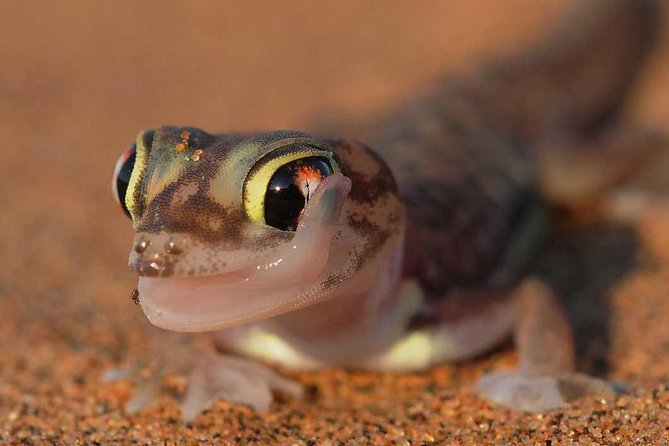
- Look for life in the sand: Your guide helps you spot lizards, snakes, chameleons, beetles, and other small desert creatures.
- Learn how fog feeds the desert: Coastal fog is central to understanding how life survives in this dry part of Namibia.
- Visit the Horse Graveyard: The stop adds a stark human and animal story to the natural setting.
- Expect a half-day outing: The four-hour tour fits neatly into a Swakopmund sightseeing plan.
- Enjoy an easy transport package: Hotel pickup and drop-off, bottled water, snacks, and a professional guide are included.
- Book ahead: This experience is booked an average of 38 days in advance, suggesting that popular dates can fill early.
Why the Living Desert is worth your morning
Swakopmund is framed by a desert that can look empty at first glance. The sand rolls away in broad, pale ridges, and the coast can make the air feel cool or hazy. The point of this tour is to show you that the Namib is not empty at all. It is simply subtle.
You are not going to a wildlife park with large animals waiting in plain view. Instead, you learn to watch for movement, tracks, color, and shape. A lizard may blend into the sand. A beetle may be easy to miss. A chameleon may sit quietly until your guide points it out.
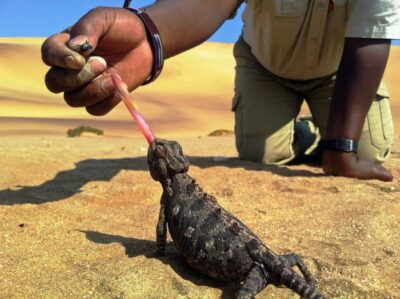
That makes the guide the heart of the experience. Arnold from The Naturalist Collection received particularly warm praise for his engaging storytelling, strong grasp of Namibian ecology, and fun way of involving the group. The provider also describes its guide service through Batis Birding Safaris, so birdlife is part of the wider picture rather than an afterthought.
I like this style of nature outing because it gives you a new way to read the desert. You leave with more than photographs. You understand why the dunes look bare, how animals avoid heat and water loss, and why the coast matters so much.
More Living Desert Tours:
- Swakopmund: Little Five Desert Wildlife Quad Biking Tour
★ 4.8 · 123 reviews - From Swakopmund: Living Dunes Experience
★ 4.9 · 84 reviews - Living Dunes Experience from Swakopmund
★ 4.5 · 76 reviews
From Swakopmund into the dunes
The tour begins at the Desert Explorers Adventure Centre on Nathaniel Maxuilili in Swakopmund. Pickup is offered, which matters because it removes one of the small headaches of a half-day excursion. The exact pickup arrangement should be confirmed when your booking is accepted, since the published meeting point is also the adventure centre.
From town, the outing heads toward the Namib Desert between Swakopmund and Walvis Bay. Transportation is included, so you can concentrate on the scenery and the guide’s explanation instead of directions, vehicle access, or finding a place to leave a rental car.
The route takes you into shifting dunes. The sand is more than scenery here. It is the setting for a lesson in adaptation. Your guide may ask you to look closely at the ground, scan a slope, or notice how an animal’s coloring matches its surroundings.
The exact order of stops can depend on conditions and wildlife sightings. That is useful to remember. Nature tours are not stage shows, and small creatures do not follow a timetable. The reward comes from paying attention rather than expecting a constant stream of activity.
Finding lizards, snakes, chameleons, and beetles
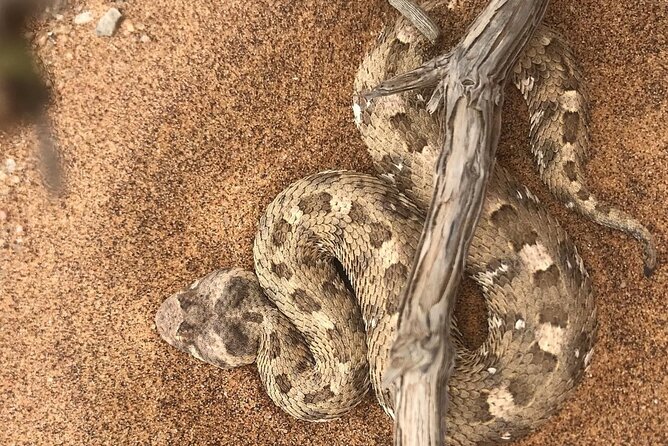
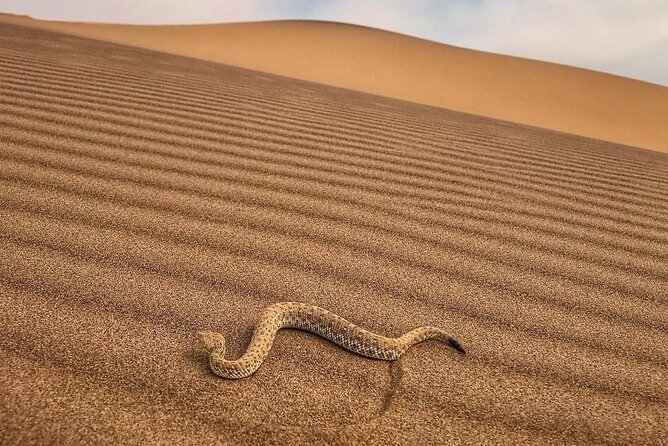
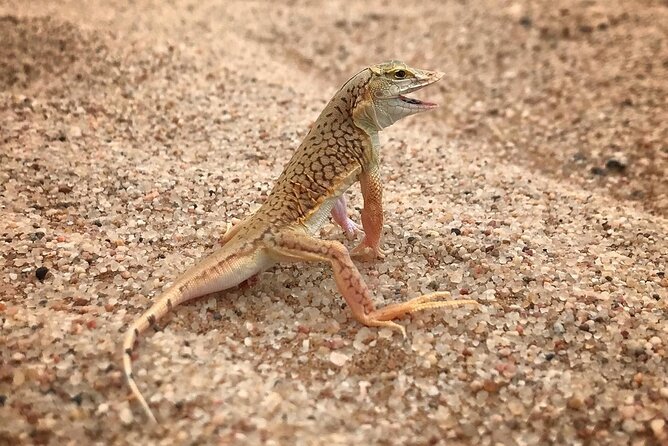
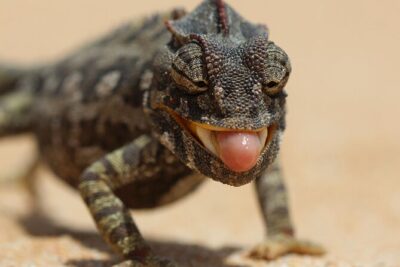
The most praised part of this outing is the search for small animals. The tour is built around creatures that are easy to overlook, including lizards, snakes, chameleons, and beetles.
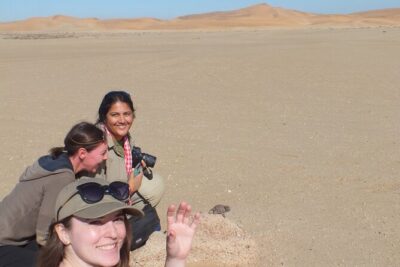
A standout subject is the Namib sand-diving lizard, a desert specialist associated with the dunes. To avoid expecting a guaranteed sighting, think of this as a guided search. Your guide’s trained eye and local experience make a real difference, especially when an animal is partly hidden or has the same color as the sand.
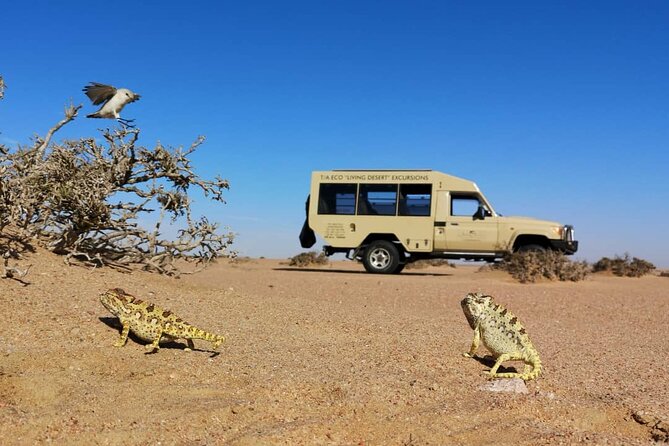
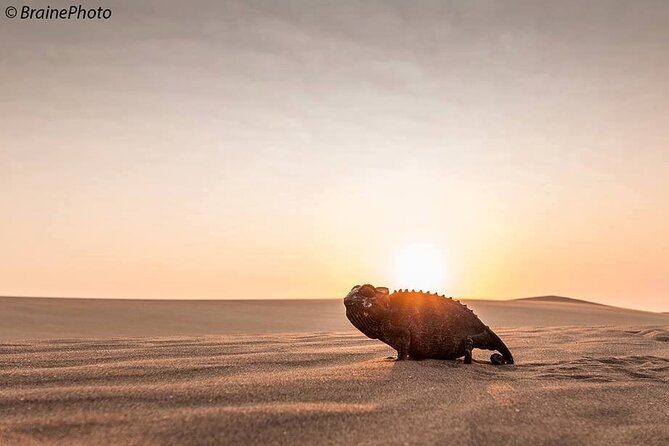
Namaqua chameleons are another possible find. They add a striking contrast to the sandy surroundings, but sightings are never promised. The tour information also names birds such as Tractrac Chats and Red-capped Larks, giving birdwatchers another reason to keep looking beyond the ground.
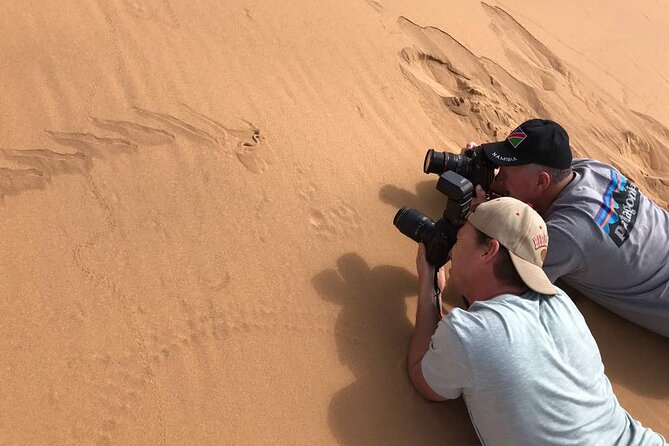
I would bring a camera if you enjoy close-up nature photography, but keep your expectations sensible. The supplied details do not promise specialist photography equipment or long periods at one fixed site. This is an active, guide-led outing where you move through the dunes and stop when there is something worth examining.
The best mindset is curiosity. If you need large animals and instant photo opportunities, this may feel quiet. If you enjoy spotting small signs of life and hearing the story behind them, the experience offers far more than a scenic drive.
Coastal fog and the desert’s survival system
One of the most useful lessons is how coastal fog sustains life. Namibia’s desert seems defined by a lack of water, so fog provides an important clue to how plants and animals can survive near the coast.
Your guide explains this system while you move through the dunes. That context changes the way you see the sand. Instead of viewing the area as a dry stretch between Swakopmund and Walvis Bay, you begin to notice the connection between ocean air, fog, insects, reptiles, birds, and the dune system.
This is also where the tour earns its eco focus. The emphasis is not only on finding animals, but on explaining the conditions that support them. Arnold’s praised style appears to fit this approach well. He is described as passionate, interactive, and able to explain Namibian ecology in a way that keeps the subject approachable.
For families and first-time visitors to Namibia, this can be especially helpful. You do not need a background in biology to follow the tour. The guide turns a dry-looking place into a series of practical questions: Where does the water come from? How does an animal stay cool? How can something survive with so little visible vegetation?
A few more Swakopmund trips worth weighing up
- Walvis Bay: Marine Big 5 Luxury Catamaran Tour
★ 4.8 · 1,012 reviews - Swakopmund: Desert Dunes Quad Biking with Optional Sandboard
★ 4.9 · 590 reviews - Walvis Bay and Sandwich Harbour Tour
★ 4.8 · 483 reviews - Scenic Sandwich Harbour Tour
★ 5.0 · 277 reviews
The Horse Graveyard adds a darker note
The Horse Graveyard gives the tour a different mood. The stop connects the desert to local history and the hard conditions faced by animals in this region.
It is not just another photo stop. The site adds a reminder that the desert can be beautiful and unforgiving at the same time. After spending time learning how desert creatures have adapted, seeing the remains at the Horse Graveyard gives the environment a more serious edge.
The available details do not explain the full story of the site, so I would let your guide provide the local context rather than arriving with fixed assumptions. The stop is best understood as part of the wider relationship between people, animals, travel, and the Namib.
This portion may be less appealing to very young children or anyone seeking a purely lighthearted outing. Still, it gives the half-day tour more depth and prevents the experience from becoming only a search for small reptiles.
Birdwatching between Swakopmund and Walvis Bay
The dune outing also has a birdwatching angle. Tractrac Chats and Red-capped Larks are specifically associated with the route, and the guide can help you watch for them as you move through the area.
You should not book this as a dedicated birding trip unless the provider confirms that the focus can be adjusted for your interests. The main theme is the desert environment and its small animals. Still, birdwatchers will appreciate having extra species to look for.
The birdlife also helps connect the different parts of the desert system. Birds, insects, reptiles, fog, and sand are not separate topics. They share the same demanding environment, and the guide’s job is to show you those connections.
If you bring binoculars, use them when practical, but the tour’s supplied information does not state that binoculars are provided. Bottled water and a snack are included, which is useful on a warm or windy morning, though you may still want to carry sun protection and suitable outdoor clothing.
What the $60.39 price includes
At $60.39 per person, this tour is priced as a convenient half-day nature experience rather than a simple ride into the desert. The value comes from the combination of transport, interpretation, and the chance to see wildlife that you would likely miss without a trained guide.
You receive:
- Hotel pickup and drop-off
- Transportation during the outing
- A professional guide
- Bottled water
- Snacks
- Access to the desert outing, with no separate admission charge listed
If you already have a rental car and strong knowledge of the area, you may question the price. But driving to the dunes is not the same as knowing where to look or how to explain what you find. For most visitors, the guide is the main reason to pay rather than simply viewing the sand from a roadside stop.
The included pickup also has real value. Swakopmund is an easy base for exploring the coast, but a bundled transfer saves time and keeps the morning simple. You return to the meeting point after the activity, so you can plan lunch or another Swakopmund activity afterward.
A maximum of 33 people is listed. That is a moderate-to-large group for a nature experience. The size may make the outing less intimate than a private safari, and not everyone will have the same view at every stop. On the other hand, it keeps the cost lower than a private guide and suits people who prefer a structured excursion.
Timing, weather, and practical comfort
Plan on four hours, with the possibility of the outing running closer to five. That gives you enough time for transport, walking among the dunes, wildlife searches, explanations, and the Horse Graveyard.
The activity is weather dependent. This is an important point, not a footnote. Conditions can affect comfort, visibility, and the ability to find animals. The provider may cancel if the minimum number of participants is not reached, in which case you are offered another date or experience, or a full refund.
Most people can participate, and the meeting point is near public transportation. The supplied details do not state a specific fitness level, walking distance, or surface conditions, so ask the provider if you have concerns about walking on loose sand.
Wear clothing suited to an exposed desert setting. The official inclusions cover water and a snack, but they do not list sunscreen, hats, or specialty gear. I would treat those as personal essentials, especially if you are sensitive to sun or wind.
Confirmation is sent within 48 hours of booking, subject to availability. Because the outing is often reserved well ahead of time, I would avoid leaving it until the last day of your Swakopmund stay.
Who will enjoy this tour most
I would recommend this tour to nature lovers who enjoy learning while they explore. It is also a strong choice if you have only a few hours and want to see the desert without arranging a full-day trip.
It suits:
- First-time visitors who want an introduction to the Namib
- Families interested in reptiles, insects, and unusual wildlife
- Birdwatchers who enjoy adding desert species to a trip list
- Visitors without a rental car
- Anyone who prefers a guide to explain what they are seeing
- People who enjoy active observation more than large-animal viewing
I would think twice if your main goal is dramatic dune photography, total privacy, or a guaranteed animal encounter. The group can include up to 33 people, the creatures are small, and the weather can change the feel of the outing.
The strongest reason to choose it is the teaching. Guides such as Arnold appear to make the ecology lively and interactive rather than dry. That human element turns a short excursion into a useful introduction to one of Namibia’s most unusual environments.
Should you book the Living Desert Eco Dune Tour?
Book it if you want to understand the Namib, not just see it. The combination of dune travel, small wildlife, fog ecology, birds, the Horse Graveyard, transport, water, and snacks makes $60.39 a fair price for a convenient half-day.
I would reserve it early, especially if your dates are fixed, since it is commonly booked well in advance. Check the weather forecast, confirm pickup details, and remember that the booking is non-refundable and cannot be changed for any reason.
Skip it if you want a private outing or large mammals. Choose it if you like patient wildlife searches, practical nature stories, and the pleasure of discovering that a seemingly bare desert is full of life.
FAQ
How long does the Living Desert Eco Dune Tour last?
The tour lasts approximately four to five hours. The main desert visit is listed as a four-hour experience.
Where does the tour begin?
The listed meeting point is the Desert Explorers Adventure Centre at 8G7G+XMM, Nathaniel Maxuilili, Swakopmund, Namibia.
Is hotel pickup included?
Yes. Hotel pickup and drop-off are included, and the activity ends back at the meeting point.
What is included in the price?
The price includes bottled water, snacks, transportation, hotel pickup and drop-off, and a professional guide.
How much does the tour cost?
The listed price is $60.39 per person.
What animals might I see?
You might see lizards, snakes, chameleons, beetles, and desert birds. Named examples include the Namib Sand-diving Lizard, Namaqua Chameleon, Tractrac Chat, and Red-capped Lark.
Is the tour suitable for most people?
Most people can participate. The activity is weather dependent, and specific walking requirements are not provided.
Can I cancel or change my booking?
No. The experience is non-refundable and cannot be changed for any reason. If the provider cancels because the minimum number of participants is not reached, you are offered another date or experience, or a full refund.
Just added around Swakopmund
- Pelican Point Peninsula Tour★ 5.0 · 3 reviews
- Cultural Tour in Swakopmund★ 5.0 · 3 reviews
- Swakopmund:Mondesa Cultural Township Tour★ 5.0 · 3 reviews
- Spitzkoppe : via Zeila Shipwreck★ 5.0 · 3 reviews
- Unforgettable Half Day Adventure, Explore Sandwich Harbour★ 5.0 · 3 reviews
- Spitzkoppe – Day Tour to the Spitzkoppe Mountain from Swakopmund★ 5.0 · 3 reviews
- Full-Day Tour in Namib Desert from Swakopmund, Namibia★ 5.0 · 3 reviews
- Walvis Bay Shore Excursion: Flamingos, Dune 7, Swakopmund★ 5.0 · 3 reviews
Living Desert Tours, compared.
Browse the lists this tour appears in