
Reviewed · ETOSHA NATIONAL PARK SAFARIS
Etosha National Park: Himba Village Cultural Tour
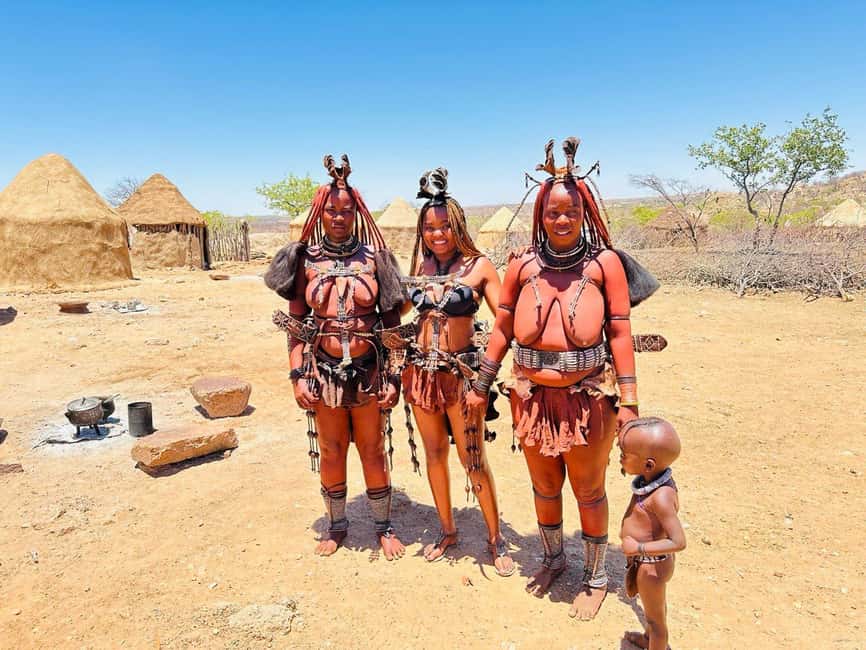
Red ochre, cattle, and close-to-home culture. This short outing takes you from Etosha’s southern gate to a traditional Himba village about 40 kilometers away, where a local guide explains daily life, rituals, family customs, and craft traditions. I like the small group limit of six, which should make questions and conversation easier. I also like that your visit can support the village through handmade purchases.
The main caution is value and clarity. At $64 per person, the price is reasonable only if you want a focused cultural visit rather than a long day out. The supplied timing is also a little muddled: the activity is listed as 150 minutes, while the route describes a 1.5-hour transfer and about two hours in the village. One important fee question needs checking before you go, since the tour details say village entry is included, but one booking experience reported an additional 300 NAD charge.
In This Review
- Key points to know before you go
- From Anderson Gate to the Himba village
- A small village visit with a local guide
- Understanding the red ochre beauty ritual
- Huts, cattle kraals, and the rhythm of daily life
- Dance, music, and handmade crafts
- Is $64 a fair price?
- The timing needs a careful reading
- Cultural respect and the question of staging
- Who will enjoy this Etosha side trip?
- What to bring and what to confirm
- Should you book the Himba village tour?
- FAQ
- Where does the Himba village tour begin?
- Does the tour operate from every Etosha entrance?
- How long does the experience last?
- Is village entrance included in the price?
- Is transportation provided?
- Is the tour suitable for wheelchair users?
Key points to know before you go
- The tour runs only from Etosha’s southern entrance: Meet at Anderson Gate or at a lodge within 30 kilometers outside the gate.
- The village is roughly 40 kilometers from Anderson Gate: Transport is by jeep or SUV, with the drive forming a large part of the outing.
- You get a guided look at Himba daily life: Expect mud huts, cattle kraals, courtyards, family customs, spiritual practices, and beauty rituals.
- The group is limited to six people: That is useful for questions and keeps the visit smaller than a large coach excursion.
- Dance and crafts may depend on the season: You might see traditional music, dancing, jewelry-making, pottery, or weaving.
- Confirm the entrance fee before departure: The published information says it is included, but a recent booking account described a separate 300 NAD payment.
From Anderson Gate to the Himba village

This experience begins at Anderson Gate, the southern entrance to Etosha National Park. You can also arrange pickup at a lodge within 30 kilometers outside the gate, but the activity does not operate from Etosha’s other entrances. That restriction matters if your route takes you through Namutoni or another part of the park.
The drive is by jeep or SUV. The village is described as about 40 kilometers from Anderson Gate, and the route information gives a transfer time of around 1.5 hours. That is a surprisingly large part of a 150-minute activity, so you should treat this as a short village visit with transport, not as a full-day cultural excursion.
I like the setting because the trip links two very different parts of northern Namibia. Etosha is known for wildlife and water holes. This visit turns your attention toward people, homes, work, belief, and family life. It gives you a way to add cultural context to a safari schedule without committing to a separate overnight journey.
The vehicle ride also means you should plan for sun, dust, and a fair amount of sitting. Wear practical shoes, carry water, and bring a hat and sunscreen. Food and drinks are not provided, so pack them yourself.
More Etosha National Park Safaris:
- Etosha National Park: Full or Half-Day Game Drive
★ 4.6 · 175 reviews - ETOSHA PARK SAFARI with local guides in 9-seater 4x4s
★ 5.0 · 87 reviews - 3 Day Etosha Budget Camping Safari
★ 5.0 · 37 reviews
A small village visit with a local guide
At the village, a local English-speaking guide leads the walk. The guide is the key to the experience. Without explanation, you would see distinctive clothing, huts, cattle, and red ochre, but you would miss the meaning behind them.
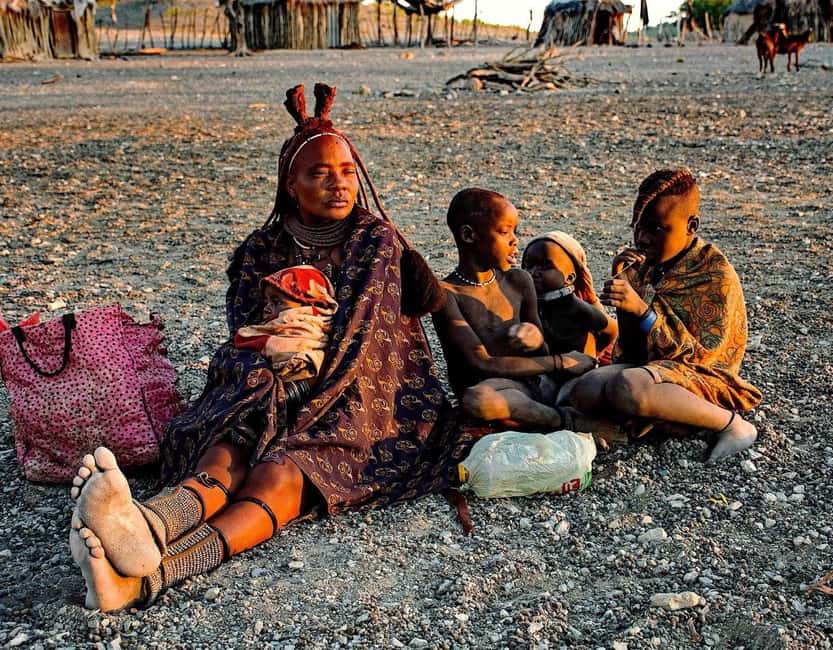
The tour introduces you to Himba customs, social structure, spiritual practices, marriage traditions, and the community’s connection to land and livestock. The information provided describes a way of life centered on animal husbandry, agriculture, and handmade goods. Cattle are not just a source of food or income. They also have an important place in family and community life.
You can expect to walk through traditional mud huts, open courtyards, and cattle kraals. The central meeting areas offer a practical view of how communal life works. This is not a museum display. It is a living village, which makes the visit more direct, but also demands better manners from you.
Ask before taking close-up photographs. The tour specifically encourages photography, and the Himba women’s red ochre-covered skin and hair create striking images. Still, an attractive picture is not a free pass. Follow your guide’s instructions, avoid treating people as costumes, and remember that you are entering a community rather than a film set.
Understanding the red ochre beauty ritual
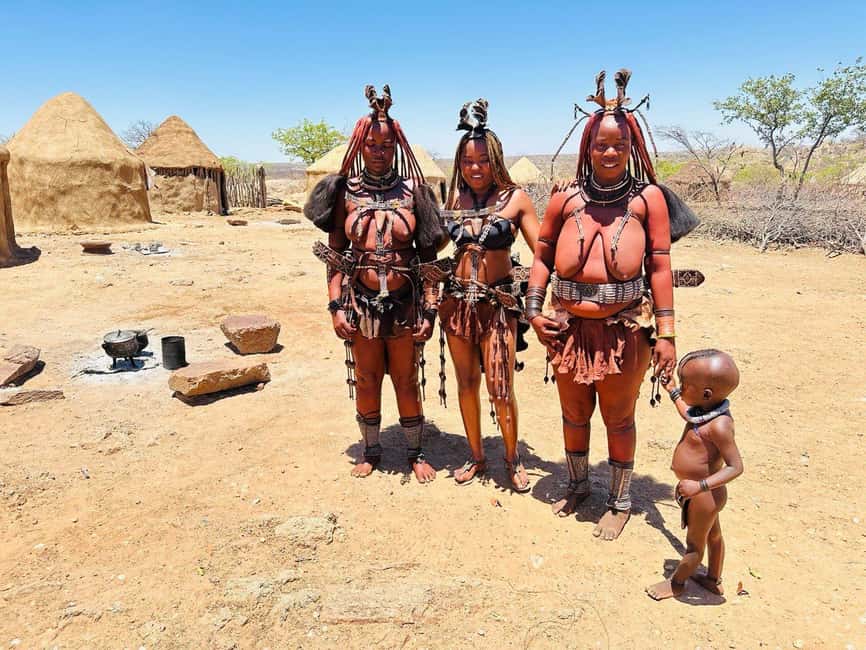
One of the most recognizable Himba traditions is the use of red ochre mixed with butter and applied to the skin and hair. The tour explains this beauty ritual as part of Himba appearance and custom.
You may see the red coloring during your visit, along with traditional attire and hairstyles. The contrast between the ochre and the dry Namibian surroundings makes photography memorable. But the visual appeal should come second to understanding what you are seeing.
A good guide can explain how beauty, identity, and tradition connect. I would listen closely here rather than rushing to take pictures. Ask clear, respectful questions about the ritual, and let the guide decide what is appropriate to discuss or photograph.
This part of the visit also shows why a local guide matters. Customs can look strange or theatrical when viewed without context. With explanation, they become part of a social system that has been passed down through generations.
Huts, cattle kraals, and the rhythm of daily life
The village walk is designed to show ordinary structures and activities. You will see oval-shaped traditional huts, open spaces for gathering, and cattle kraals. These are simple features, but they help you understand how the village is organized.
The tour also presents the Himba as pastoral people with agricultural and craft traditions. Their daily life is tied closely to animals, family relationships, land, and practical work. You may learn how marriage customs and family connections shape the community, as well as how spiritual beliefs influence everyday behavior.
I like this part because it moves beyond the familiar portrait of Himba clothing and ochre. The people are not presented only as an exotic image. The visit aims to show how homes, cattle, work, and social bonds fit together.
At the same time, you should keep your expectations realistic. A 150-minute activity cannot explain every part of Himba life. The village walk gives you an introduction, not a full anthropological study. If the drive takes close to the stated 1.5 hours, your time on foot may be tighter than the separate two-hour village description suggests.
More National Park Trips:
- Safari in Etosha national park with professional tour guides born in Etosha.
★ 5.0 · 32 reviews - Etosha National Park: Full or Half-Day Game Drive
★ 4.6 · 22 reviews - 3 Day Camping tour at Etosha National Park
★ 5.0 · 5 reviews
Dance, music, and handmade crafts
Depending on the season, the visit may include traditional Himba music and dance. The program also describes demonstrations or opportunities connected with jewelry-making, pottery, and weaving.
The words depending on the season are important. Do not book this expecting a guaranteed performance or every craft demonstration. Conditions in the village may affect what is available on the day.
A dance presentation can add energy to the visit and offer another way to see how tradition is shared. It can also feel uncomfortable if it is presented only for cameras. Your best approach is to watch respectfully and ask the guide how the performance fits into local life.
The craft market gives you a direct way to support the community. Handmade jewelry and other goods may be available for purchase. I would set aside some cash if buying local work matters to you, while remembering that no particular item or price is guaranteed.
This is one of the strongest practical features of the outing. Instead of treating the village as a place you simply pass through, you have a chance to spend money directly with local makers. Buy because you value the work, not because you feel pressured.
Is $64 a fair price?
The listed cost is $64 per person. It covers transportation, a local guide, and village entrance according to the tour details. For a small group of up to six people, that can be fair, especially if pickup is convenient and the guide gives you a thoughtful, personal visit.
The value becomes less convincing if the outing consists mainly of a transfer and a brief stop. One booking account described the activity as overpriced and said the village visit felt staged. That is a serious concern for anyone seeking a candid cultural exchange.
There is also a direct contradiction about the entrance charge. The included section says village entry is covered, yet one person reported paying 300 NAD per person separately. I would ask the operator, Yavola Tours and Transfer, to confirm in writing whether the 300 NAD is included before you leave Anderson Gate.
That question is not nitpicking. Unexpected local fees can change the value of a short activity. It is better to know the full cost before setting out.
The strongest case for the price is the small vehicle, local guiding, direct community support, and easy connection with an Etosha itinerary. The weakest case is the short total duration and uncertain amount of time actually spent in the village.
The timing needs a careful reading
The experience is advertised as lasting 150 minutes, or two and a half hours. The route then lists a 1.5-hour jeep or SUV transfer, followed by a two-hour village visit, and a return to Anderson Gate.
Those figures do not fit neatly together. If the transfer is 1.5 hours each way, the activity would be much longer than 150 minutes. If 1.5 hours is the total transport time, the village portion would still make the full outing longer than the advertised duration.
I would contact the operator before booking and ask three simple questions:
- Is the 150 minutes the full time from pickup to return?
- Is the 1.5-hour vehicle time total, or one way?
- How long will you actually spend walking through the village?
The booking system may show available starting times, but that does not resolve the timing issue by itself. Build a little breathing room around the activity, especially if you have an Etosha game drive, lodge transfer, or border-related plan afterward.
Cultural respect and the question of staging
A Himba village visit can be meaningful because it lets you hear directly about customs and daily life. It can also reduce a living culture to a short performance if the exchange is handled poorly.
The feedback available for this particular experience is mixed. One account described the visit as natural, with helpful guides and no obvious staging. Another felt the village activity looked arranged for tourists and questioned the value. Both reactions are possible in this type of experience.
You cannot control every part of the presentation, but you can control your own behavior. Listen before photographing. Ask permission. Avoid touching people or belongings. Do not assume that every dance, pose, or craft display represents ordinary daily life.
It is also fair to ask the guide how the visit benefits the community. The tour says local people benefit directly, and craft purchases provide one clear route for support. A polite question about village fees, guiding, and sales can help you understand where your money goes.
The presence of tourism does not automatically make the encounter false. Many communities choose to share selected parts of their culture with visitors. The useful question is whether the community has a say in the visit and receives a fair benefit.
Who will enjoy this Etosha side trip?
I would recommend this outing to you if you want more than wildlife viewing and have a particular interest in people, customs, craft, and daily life. It suits visitors staying near Anderson Gate who want a compact cultural activity without a long independent drive.
The small group should appeal to you if you prefer asking questions and moving at a measured pace. An English-speaking guide makes the explanations accessible, and the local perspective is more useful than simply walking around without context.
Photographers may also enjoy the strong visual elements: red ochre, traditional clothing, huts, cattle, handmade goods, and the Namibian setting. Remember that good photographs depend on permission and respectful timing.
I would hesitate if you have limited time and expect a long, detailed cultural program. I would also hesitate if you dislike staged demonstrations or feel uncomfortable with village visits designed partly around photography and sales.
The activity is not suitable for wheelchair users or people with mobility impairments. Comfortable walking shoes are required, and the village portion includes walking across an outdoor setting. Electric wheelchairs are specifically not accepted.
What to bring and what to confirm
Pack water, sunscreen, a hat, comfortable walking shoes, a camera, and your own food and drinks. The tour does not include meals or beverages, so do not assume refreshments will be available.
Before you go, confirm the exact meeting point. Pickup is available at Anderson Gate or at lodges within 30 kilometers outside the gate, and the activity operates only from the southern entrance.
I would also confirm the following:
- The full door-to-door duration
- The actual time at the village
- Whether village entry is included
- Whether 300 NAD per person is payable locally
- Whether dance and craft demonstrations are planned on your date
Fireworks and explosive substances are not permitted. That is an obvious rule, but it is included in the activity conditions and worth noting if you are carrying unusual equipment.
Cancellation is flexible up to 24 hours before departure for a full refund, and you can reserve now and pay later. Those policies are useful if your Etosha schedule may change, but they do not replace checking the practical details above.
Should you book the Himba village tour?
Book it if you want a small, convenient introduction to Himba customs and you value meeting a local guide, seeing village structures, learning about rituals, and supporting handmade crafts. The highest praise is directed toward the attentive guiding and the chance to see village life up close.
I would not book without first resolving the entrance fee and timing discrepancies. At $64, a clear two-and-a-half-hour visit with transport and entry included can be good value. A short transfer, a brief stop, and an unexpected 300 NAD charge would make it much less attractive.
My call: a worthwhile add-on for culturally curious visitors near Anderson Gate, but only after you confirm exactly what is included and how long you will spend at the village.
FAQ
Where does the Himba village tour begin?
It begins at Anderson Gate, the southern entrance to Etosha National Park. Pickup is also available at lodges within 30 kilometers outside Anderson Gate.
Does the tour operate from every Etosha entrance?
No. This activity operates only from Etosha’s southern entrance, Anderson Gate.
How long does the experience last?
The activity is listed as 150 minutes. The route details also describe a 1.5-hour vehicle transfer and about two hours at the village, so you should confirm the exact timing with the operator.
Is village entrance included in the price?
The tour information says village entrance is included. However, one booking account reported an additional 300 NAD charge per person, so confirm this before departure.
Is transportation provided?
Yes. Transportation by jeep or SUV is included.
Is the tour suitable for wheelchair users?
No. The activity is not suitable for wheelchair users or people with mobility impairments.
More Historical Tours
- Half-Day Windhoek City and Township Cultural Tour
★ 4.5 · 187 reviews - From Walvis Bay: Sandwich Harbour World Heritage Site
★ 4.8 · 134 reviews - Swakopmund Best Cultural Historical Township Tours Namibia
★ 5.0 · 8 reviews - City Tour of Historical Swakopmund
★ 5.0 · 8 reviews
Just added around Namibia
- Sandwich harbour r Kayak and dune tour★ 5.0 · 3 reviews
- Pelican Point Peninsula Tour★ 5.0 · 3 reviews
- Walvis Bay: Seal Kayaking Adventure with Brunch★ 4.1 · 3 reviews
- Knight Vibes: Bars, Shebeen, Clubs Crawl Windhoek★ 5.0 · 3 reviews
- 10 DAYS BEAUTY OF NAMIBIA | Guided Lodge★ 5.0 · 3 reviews
- Swakop River Valley & Spitzkoppe Full Day 4×4 tour from Walvis Bay★ 5.0 · 3 reviews
- Full Day Tour Shipwreck Sandwich Harbour Adventure★ 5.0 · 3 reviews
- Sandwhich Harbour Dune 4×4 Full Day★ 4.0 · 3 reviews
Etosha National Park Safaris, compared.

Etosha National Park: Full or Half-Day Game Drive
Read our review →
ETOSHA PARK SAFARI with local guides in 9-seater 4x4s
Read our review →

6 Day Sand, Sea & Etosha Budget Camping Safari
Read our review →
Safari in Etosha national park with professional tour guides born in Etosha.
Read our review →Etosha National Park: Full or Half-Day Game Drive
Read our review →
9 Day Etosha, Skeleton Coast and Sossusvlei Camping and Lodge Safari
Read our review →
4-Day Etosha And Swakopmund Accommodated Adventure from Windhoek
Read our review →Browse the lists this tour appears in