
Reviewed · NAMIB DESERT TOURS
Cruise liner Special: Swakopmund and Namib Desert Highlights
Desert geology meets old coastal charm. This 7.5-hour cruise excursion packs Swakopmund, the Namib gravel plains, Moon Landscape, Goanikontes, Welwitschia Plains, Dune 7, and Walvis Bay’s flamingos into one long day. I like the mix of town history and stark desert scenery, and I especially like that the guide can adjust timing to avoid arriving with the biggest crowds.
The main caution is distance. You spend many hours in a vehicle, often on gravel roads, and the sights are spread far apart. At $193.68 per person, the tour offers strong value if you want a broad introduction to the region from a cruise ship, but it is a poor match if you prefer a slow city visit or dislike long drives.
In This Review
- Key points at a glance
- Why this Walvis Bay shore excursion works
- From Walvis Bay Port to Swakopmund’s old waterfront
- Lichens on the Namib gravel plains
- Moon Landscape and the geology of a bare world
- Goanikontes, an oasis in the dry Swakop River
- Welwitschia Plains and one of Namibia’s strangest plants
- Returning past Dune 7 to Walvis Bay Lagoon
- How much value do you get for $193.68?
- Guide quality, language, and comfort
- Who should book this seven-and-a-half-hour tour?
- Should you book it?
- FAQ
- Where does the tour start and end?
- How long does the experience last?
- Is pickup available for cruise ship passengers?
- Is this a private tour?
- Does the tour climb Dune 7?
- Can I request a German-speaking guide?
- What is the cancellation policy?
Key points at a glance
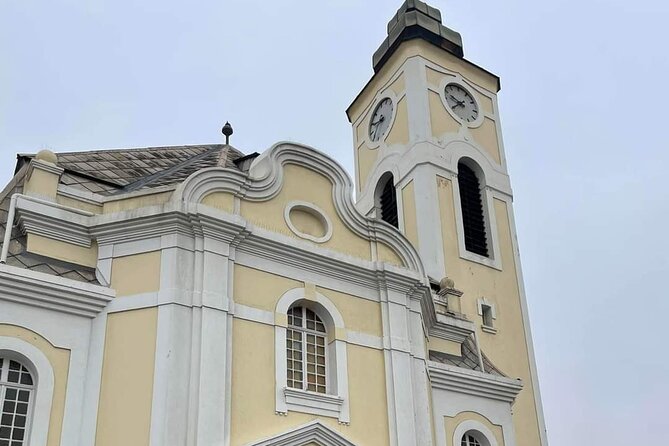
- Swakopmund in one hour: Walk along the Jetty and Mole, then see German colonial buildings, old hotels, and the former railway station area.
- A true desert science lesson: Learn how lichens survive on bare gravel and how Welwitschia plants gather moisture from fog.
- Moon Landscape viewpoints: See ancient lava flows, traces of ice ages, uranium exploration sites, and perhaps zebra or springbok.
- Small-group format: The vehicle holds no more than 25 people, and the tour is shared rather than private.
- Designed around cruise arrivals: Pickup times are arranged around the ship, with the guide waiting if the vessel docks late.
- A long but varied day: The route returns to Walvis Bay and includes the lagoon flamingos before ending at the port meeting point.
Why this Walvis Bay shore excursion works
The appeal is simple: you see a large slice of the central Namib coast without arranging several separate outings. Starting at Walvis Bay Port, the route heads north toward Swakopmund, then turns inland across the desert before returning to the harbor.
That gives you three very different settings in one day. Walvis Bay offers salt air and birdlife. Swakopmund brings German colonial architecture and a seaside resort feel. Inland, the scenery becomes almost bare, with gravel plains, dry riverbeds, strange plants, and rock forms that look more lunar than African.
I like this range because it gives you context. You are not simply driven to a viewpoint, handed a few minutes for photographs, and sent back to the ship. The guide explains how people lived in this harsh area, how water shaped settlement, and how plants and small organisms manage to survive.
Still, you should set realistic expectations. The tour covers a lot of ground. One of the less favorable experiences described the seats as uncomfortable and the day as too dominated by driving. That criticism makes sense, since the major stops are separated by long stretches of road. The route is best understood as a wide survey of the region, not a relaxed visit to one place.
More Namib Desert Tours:
- Namib Desert Landscape Tour
★ 5.0 · 20 reviews - Cruise liner special: Swakopmund and Namib Desert Highlight Tour
★ 4.5 · 5 reviews - NAMIB DESERT TOURS, Full-Day and Half-Day Tours from Swakopmund, Namibia
★ 5.0 · 11 reviews
From Walvis Bay Port to Swakopmund’s old waterfront
Pickup begins at Walvis Bay Port, with timing arranged around the cruise ship’s arrival. If the ship docks late, the operator says the guide will wait for passengers to disembark. That is an important detail for a shore excursion, since a fixed departure time can be risky when port procedures change.
The drive north passes Bird Island, described as the only manmade guano island. You then reach Swakopmund, a small coastal resort with a strong German colonial imprint.
The first stop is at the Swakopmund Jetty and the Mole. You have about an hour to walk, hear about the town’s past, and see older buildings. The admission charge is included, and the walking portion gives you a useful break after the opening drive.
Swakopmund is not presented as a major museum visit. Instead, you get an outdoor introduction to the town, including old hotels, the station area, and other colonial-era structures seen while driving through. That approach suits a shore excursion, though anyone wanting a detailed architectural tour may find the town portion brief.
The guide’s explanation matters here. Swakopmund’s buildings are only part of the story. The town’s location between the Atlantic and the desert helps explain both its appeal and its unusual character. It feels like a seaside resort, yet the dry interior begins almost immediately beyond the streets.
Lichens on the Namib gravel plains
After Swakopmund, the vehicle heads onto the gravel plains. The first desert stop focuses on lichens, tiny organisms that can be easy to miss unless someone points them out.
The tour explains lichens as a partnership between a mushroom and an alga. One provides structure, while the other helps produce food through photosynthesis. In an environment where ordinary vegetation is scarce, that relationship becomes a lesson in survival.
This stop is valuable because it changes how you look at the desert. At first, the gravel may appear empty. Then you begin to notice small patches of life spread across the ground. The point is not visual drama. It is learning to see what is already there.
You receive about an hour for this part of the route. The admission is included. Because the stop depends heavily on the guide’s explanation, the quality of the commentary can shape your experience. The published feedback gives particular praise to guides who explain the region clearly and adapt the schedule well.
Moon Landscape and the geology of a bare world
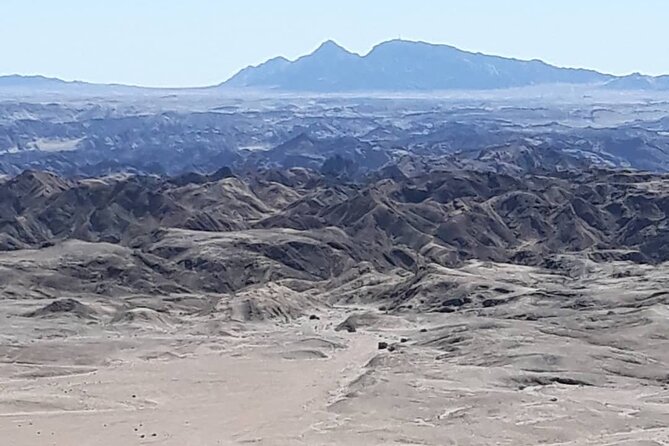
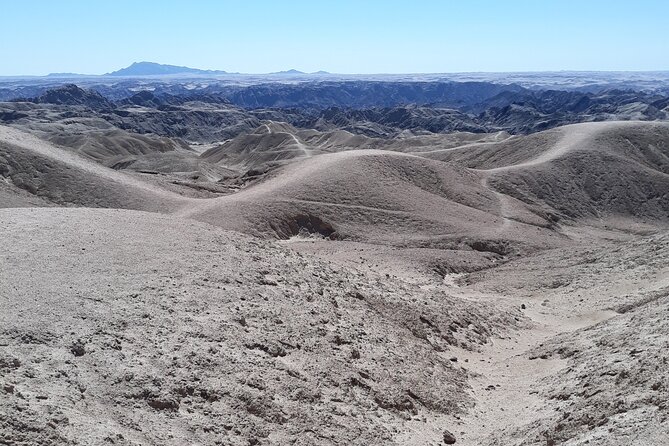
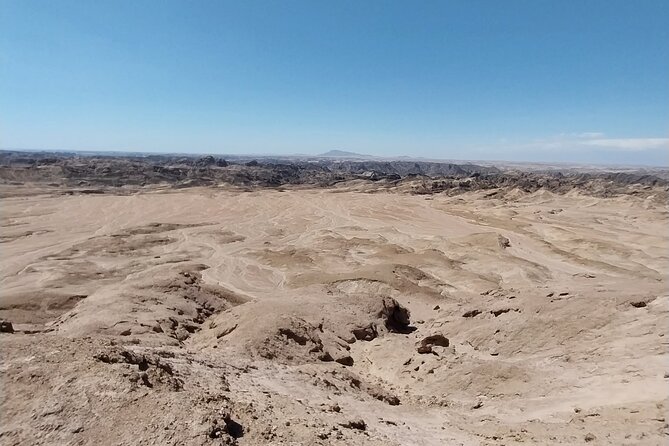
The gravel road continues to several Moon Landscape viewpoints. The name is not subtle, but it fits. The eroded formations and open, gray-brown terrain can make you feel far removed from the coast.
The route highlights traces of lava-flow periods and ice ages. You also pass uranium exploration sites, which add a modern industrial chapter to the area’s geological story. The result is a place where natural forces and human extraction sit side by side.
You have around an hour here. Depending on conditions and timing, you might see desert animals such as zebra or springbok. The tour does not promise wildlife, so treat any sighting as a bonus rather than a main reason to book.
This is one of the places where the long drive earns its keep. You are not visiting a conventional attraction with signs, shops, and a short paved path. The value comes from the scale of the desert and the guide’s explanation of how the rock and soil formed.
The drawback is that the views are spread along a gravel route. If you expect one dramatic lookout followed by plenty of free time, you may find the stop less satisfying. Bring patience, since the experience depends on moving through a broad area rather than spending the whole hour at one single point.
More Boat Trips:
- Sandwich Harbour Scenic Excursion – Design for the Cruise Ships
★ 5.0 · 57 reviews - Mola Mola Marine Dolphin Cruise from the Walvis Bay Waterfront to Pelican Point
★ 5.0 · 52 reviews - Marine Dolphin Seal Cruise
★ 5.0 · 34 reviews - Walvis Bay: Namibian Coast Dolphin Cruise with Light Lunch
★ 4.8 · 20 reviews
Goanikontes, an oasis in the dry Swakop River
Goanikontes adds human history to the route. This oasis lies in the Swakop River and once served as an important watering place for people coming from Swakopmund.
The area also had an old police post, and vegetables were grown there. Those details make the dry riverbed easier to understand. In a place that looks unable to support settlement, access to water created a small center of activity.
The tour allows about an hour for Goanikontes, with no separate admission charge. Much of the visit involves passing through the dry riverbed while the guide explains the site’s role.
I find this stop especially useful for connecting geology with daily life. The desert is not just a dramatic backdrop. Water, even in a river that appears dry, determined where people could stop, grow food, and maintain a route across the region.
Do not expect a large developed attraction. Goanikontes is about its setting and story. If you prefer formal museums or many buildings to explore, this may feel modest. If you enjoy places where a guide helps you read the evidence around you, it adds real depth to the day.
Welwitschia Plains and one of Namibia’s strangest plants
The Welwitschia Plains receive the longest stop, about two hours. That extra time is sensible, because the plants deserve more than a quick roadside photograph.
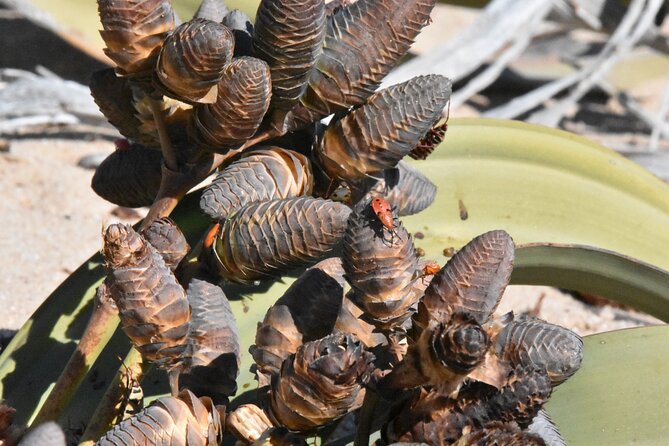
Welwitschia has no ordinary trunk. It grows from a low central base and produces only two leaves, which continue growing and can split into many ribbons over time. The plant survives with very little rain by taking moisture from fog and using its highly adapted form to withstand the desert.
The guide explains that plants may live for hundreds of years. There are male and female plants, and small brown and orange insects living in the plants help with pollination. Each plant can produce thousands of seeds, which are carried by the prevailing winds.
This is one of the tour’s strongest stops. You see a plant that seems almost impossible in such hard, empty ground, then learn the practical tricks that keep it alive. The visit rewards attention more than speed.
The stop is not a botanical garden. You should not expect lush greenery or a broad collection of species. The interest lies in the contrast between the plant’s age and the severity of its surroundings.
Two hours also gives the group time to avoid rushing. That matters on a cruise day, when many shore excursions move from one photo stop to the next. A patient guide can turn Welwitschia Plains into a memorable lesson rather than just another name on a schedule.
Returning past Dune 7 to Walvis Bay Lagoon
After the inland portion, the vehicle returns toward Walvis Bay and passes Dune 7. The tour does not include a climb. You have time only to view the dune before continuing toward the harbor.
That limitation is worth noting because the name may lead you to expect a sand-dune activity. This is a look from the route, not a climb, walk, or sand adventure. If climbing Dune 7 is a priority, this excursion will not meet that specific goal.
The final stop is at the Walvis Bay Lagoon, where flamingos gather. The area supports more than 750,000 birds and 54 bird species, including palearctic migratory birds. Depending on the season and conditions, you might also see pelicans, terns, and cormorants.
The lagoon stop lasts only about 15 minutes. That is enough for a quick look and photographs, but not for a long birdwatching session. Bring binoculars if you have them, though the tour’s short timing means you will need to be ready when the group arrives.
Ending with the flamingos gives the day a pleasant change of pace. After hours of rock and gravel, the movement and color of the birds bring you back to the coast before you return to the port.
How much value do you get for $193.68?
At $193.68 per person, this is not a cheap sightseeing ride. But cruise excursions often cost more because they must coordinate with ship arrival and departure, cover a wide route, and return passengers to the port on schedule.
The value is strongest if you want variety. In one outing, you receive transportation between Walvis Bay and Swakopmund, a town visit, desert geology, lichens, an oasis, Welwitschia, Dune 7, and the lagoon. Paying separately for each element would be difficult during a single port call.
The value is weaker if you mainly want Swakopmund. You spend too much of the day on the road for a simple town visit. The operator now offers a Swakopmund City tour, which may suit you better if architecture, waterfront walking, and town history are your main interests.
The experience is shared, not private. At least two people are needed for the tour to operate, and the maximum group size is 25. If you want the vehicle to yourself, you must pay locally for the remaining seats and tell the operator when booking.
That group size is smaller than a large ship bus, but it is not intimate in the way a private car is. The guide may be able to adjust the order or timing of stops, as one highly praised experience did, but the group still has to move together.
Guide quality, language, and comfort
The strongest praise centers on the guides. The tour benefits from a local guide who can explain the town, geology, plants, and difficult history of the area in clear terms. One guide named in the feedback was Hannes, who was warmly praised for leading an enjoyable day.
German-speaking guides are scarce. You can request one, but it is allocated on a first-come, first-served basis and cannot be guaranteed, especially during peak periods or when a cruise ship releases around 2,000 people into the port.
That is worth addressing before you book. If German commentary is essential, contact the operator early and treat the request as a preference rather than a promise.
Comfort is the other practical issue. The route is long, and some of it uses gravel roads. A complaint about uncomfortable seats should not be ignored, particularly if you are sensitive to road travel. The tour description itself makes the distances clear, so you should book it for the places you will reach, not for a luxurious ride.
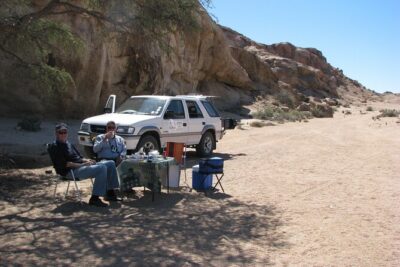
Food and drinks were included on at least one reported outing, including a desert buffet. However, the supplied tour details do not clearly define this as a guaranteed feature for every departure. Confirm what is included before you rely on it for lunch.
One food-related report described several days of stomach trouble after the meal. The operator apologized and said the caterer would be contacted. That is not proof of a general problem, but it is a sensible reminder to use your own judgment with prepared food and to ask what meal arrangements apply on your date.
Who should book this seven-and-a-half-hour tour?
I would choose this tour if you have one cruise stop in Walvis Bay and want to understand the region as a whole. It suits you if you enjoy natural oddities, geology, local history, and scenery that changes from ocean to town to gravel plain.
It also works well for curious first-time visitors. The guide’s explanations turn unfamiliar sights into something meaningful. A lichen field may sound minor until you learn why it survives. A dry riverbed may look empty until you hear about Goanikontes as a watering point and former police post.
You should think twice if your ideal shore day means minimal driving, a long café stop, or a leisurely walk through Swakopmund. You should also reconsider if rough or uncomfortable vehicle travel would spoil the day.
Families and older passengers may participate, since most travelers can take part, but the long duration and gravel-road sections still matter. The tour provides pickup and a mobile ticket, and it ends back at the port meeting point, which keeps the logistics straightforward for cruise passengers.
Free cancellation is available up to 24 hours before the start time. Changes or cancellations inside that window are not accepted for a refund, and cut-off times follow local Namibian time.
Should you book it?
Book this excursion if you want a broad, efficiently arranged introduction to Walvis Bay, Swakopmund, and the Namib Desert. Its best moments are the Moon Landscape, Welwitschia Plains, and the guide-led explanations that reveal life in an apparently empty place.
Skip it if you mainly want a deep visit to Swakopmund or cannot tolerate a full day of driving. For the right kind of explorer, the $193.68 price buys a rare amount of variety in a single port call. For everyone else, a shorter city-focused outing may be the wiser choice.
FAQ
Where does the tour start and end?
It starts at Walvis Bay Port, at the listed meeting point on Unnamed Road in Walvis Bay. The activity ends back at the same meeting point.
How long does the experience last?
The tour lasts approximately 7 hours and 30 minutes.
Is pickup available for cruise ship passengers?
Yes. Pickup times are arranged around the ship’s arrival. If the ship docks late, the guide will wait for passengers to disembark.
Is this a private tour?
No. It is a shared tour with a maximum of 25 people. To make it private, you must pay locally for the unused seats in the vehicle and tell the operator when booking.
Does the tour climb Dune 7?
No. The route passes Dune 7, but there is only time to view it. The tour does not include climbing the dune.
Can I request a German-speaking guide?
You may request one, but German-speaking guides are scarce and assigned on a first-come, first-served basis. A German-speaking guide cannot be guaranteed during peak periods or major cruise arrivals.
What is the cancellation policy?
You can cancel up to 24 hours before the experience begins for a full refund. Cancellations or changes made less than 24 hours before the start time are not accepted for a refund.
Just added around Walvis Bay
- Walvis Bay: Seal Kayaking Adventure with Brunch★ 4.1 · 3 reviews
- Swakop River Valley & Spitzkoppe Full Day 4×4 tour from Walvis Bay★ 5.0 · 3 reviews
- Full Day Tour Shipwreck Sandwich Harbour Adventure★ 5.0 · 3 reviews
- Sandwhich Harbour Dune 4×4 Full Day★ 4.0 · 3 reviews
- Kayak Dune Day★ 5.0 · 3 reviews
- Mola Mola Marine Dolphin Cruise & Beach Braai on Pelican Point★ 5.0 · 3 reviews
- Mola Mola Kayaking Experience with a Licensed Guide★ 5.0 · 4 reviews
- Pelican Point: Kayak with Seals Experience★ 5.0 · 6 reviews
Namib Desert Tours, compared.
NAMIB DESERT TOURS, Full-Day and Half-Day Tours from Swakopmund, Namibia
Read our review →Cruise liner special: Swakopmund and Namib Desert Highlight Tour
Read our review →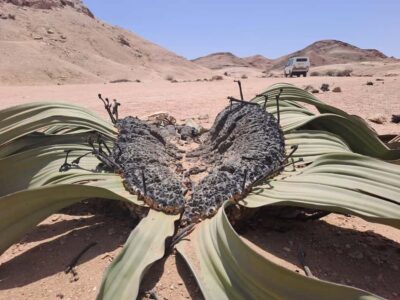
Full-Day Tour in Namib Desert from Swakopmund, Namibia
Read our review →Browse the lists this tour appears in