
Reviewed · NAMIB DESERT TOURS
Cruise liner special: Swakopmund and Namib Desert Highlight Tour
Desert silence tells the story here. This 7.5-hour excursion packs Swakopmund, the Moon Landscape, lichen fields, Welwitschia plants, Goanikontes, and Dune 7 into one air-conditioned trip from Walvis Bay. I like the wide range of sights and the chance to see how plants survive on coastal fog alone. I also like the small-group format, with no more than 16 people. The main drawback is the long driving time between stops, especially if your ship arrives late.
I would choose this tour for a first visit to the area. Guides such as Hannes, Hans, and Michael have been praised for careful driving and clear explanations. Still, cruise passengers need to protect their schedule: immigration delays can be severe when a large ship docks, and this route has little spare time.
In This Review
- Five things to know before you book
- Why this Walvis Bay tour covers so much
- Swakopmund Jetty and the town’s German past
- Lichen fields and the gravel plains
- The Moon Landscape’s old lava and ice
- Goanikontes, an oasis with practical history
- Meeting Welwitschia mirabilis
- Dune 7, a final look at Namib sand
- Timing, cruise ships, and guide quality
- Who should book this experience?
- Should you book the Swakopmund and Namib Desert Highlight Tour?
- FAQ
- Where does the tour start?
- How long does the experience last?
- What is the price?
- How many people can join the tour?
- Does the tour include lunch?
- Can I climb Dune 7?
- Is the tour suitable for cruise passengers?
- Is a German-speaking guide guaranteed?
- What is the cancellation policy?
Five things to know before you book
- This is a full Namib Desert sampler: You see coastal history, gravel plains, ancient lava layers, desert plants, an oasis, and a major dune in one day.
- The Moon Landscape is a main event: Several viewpoints reveal a 500-million-year-old area shaped by wind erosion and old lava flows.
- The Welwitschia plant is genuinely unusual: Its two leaves can live for hundreds of years in one of the harshest parts of Namibia.
- You spend plenty of time in the vehicle: The sights are far apart, so expect road time as part of the experience.
- The group is limited to 16 people: That is more comfortable than a large coach, though the tour can still become strained when thousands of cruise passengers disembark together.
- Dune 7 is a photo stop only: You will see it, but the schedule does not allow time to climb it.
Why this Walvis Bay tour covers so much
At $191 per person, this is not the cheapest way to spend a day near Walvis Bay. I think the price makes better sense if you want one organized outing that joins several distant sites. You get pickup, an air-conditioned vehicle, a guide, a drink, and a light lunch at a 360-degree lookout point.
The value is less about time at one single attraction and more about the variety. In one outing, you move from German colonial-era buildings to a manmade guano island, then across gravel plains to a place that looks almost lunar. You finish with Welwitschia plants and a view of Dune 7.
That broad reach also creates the tour’s weakness. You cannot linger everywhere. The route covers a large area, and much of the day is spent driving. If you prefer a slow visit focused on Swakopmund or a dedicated dune trip, this may feel rushed.
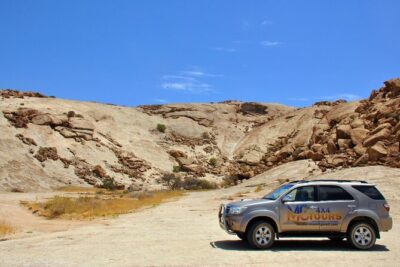
The vehicle is air-conditioned, an important comfort in a dry desert region. The maximum group size is 16, which should allow better contact with the guide than a standard ship excursion. Pickup is offered, and the operator uses a name board and a teardrop flag at the meeting point.
More Namib Desert Tours:
- Namib Desert Landscape Tour
★ 5.0 · 20 reviews - Cruise liner Special: Swakopmund and Namib Desert Highlights
★ 4.5 · 14 reviews - NAMIB DESERT TOURS, Full-Day and Half-Day Tours from Swakopmund, Namibia
★ 5.0 · 11 reviews
Swakopmund Jetty and the town’s German past
The first part of the route introduces the coast before the desert takes over. You pass Bird Island, described as the only manmade guano island along the coast. It is a brief stop of about 10 minutes, but it gives you an early look at how people have tried to use this stark shoreline.
At Swakopmund Jetty, you have about 30 minutes. The guide explains the difficulties involved in building the Mole and the jetty, each tied to the town’s effort to create a usable harbor. This is a useful setting for understanding Swakopmund. Its coastal position looks inviting, but the sea, wind, fog, and shifting sand have never made development easy.
The town visit also includes old German colonial buildings, with about 20 minutes for this part. You then see Martin Luther, the old steam tractor that was tested as a way to tow wagons during the years of the Rinderpest. The machine is an odd and memorable reminder that transport across this region demanded unusual solutions.
I like this opening because it gives human context before the natural sights. The tradeoff is time. Swakopmund receives only a short look, so this is not a walking tour or an architecture-focused visit.
Lichen fields and the gravel plains
After Swakopmund, the route heads across the Namib gravel plains toward Goanikontes. About 30 minutes is spent looking for tiny lichen plants, some only millimeters across. These lichens are a partnership between algae and fungus, and they survive by drawing moisture from the coastal fog.
This is one of the most valuable parts of the day because it changes how you read the desert. At first glance, the gravel plains can seem empty. Your guide points out that the plain is not lifeless. Small organisms have adapted to one of the few dependable sources of moisture in the area.
The fog can be heavy. One account of the trip described thick fog at the start, hiding the dunes until it slowly cleared. That is not a defect in the outing. Fog is part of the coastal desert, and it helps explain why plants can exist here at all. It can, however, reduce visibility and change the views you get.
You will also hear about other desert plants and the ways they use fog. Keep your eyes open, but do not expect a bright, flower-filled scene. The appeal is in spotting life that is easy to miss.
The Moon Landscape’s old lava and ice
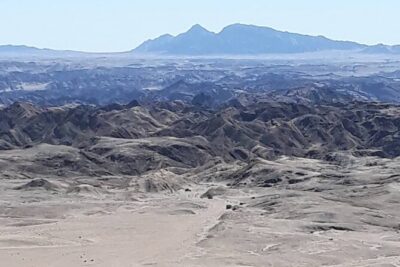
The Moon Landscape is the visual center of the tour. After the gravel plains, the terrain changes into broad, eroded formations that look far older than the nearby town. The area is about 500 million years old, and wind erosion has carved its surfaces into folds, ridges, and bare slopes.
The route uses several viewpoints, with roughly 15 minutes at each one. That arrangement helps you see the formations from different angles rather than stopping once for a quick photograph. You can also see layers linked to lava flows from millions of years ago.
The area is believed to have experienced at least two ice ages. Your guide connects those ancient events with the exposed rock and stark shapes around you. I find this kind of explanation more useful than simply being told that the scenery is old. It helps you understand why the Namib feels so different from a sandy dune desert.
Silence is part of the attraction. The area is vast and largely unpopulated, with little sound beyond the vehicle and the desert breeze. You should expect viewpoints rather than trails or a long walk. A moderate level of physical fitness is requested, but the main challenge here is the length of the day and the repeated getting in and out of the vehicle.
More Boat Trips:
- Sandwich Harbour Scenic Excursion – Design for the Cruise Ships
★ 5.0 · 57 reviews - Mola Mola Marine Dolphin Cruise from the Walvis Bay Waterfront to Pelican Point
★ 5.0 · 52 reviews - Marine Dolphin Seal Cruise
★ 5.0 · 34 reviews - Walvis Bay: Namibian Coast Dolphin Cruise with Light Lunch
★ 4.8 · 20 reviews
Goanikontes, an oasis with practical history
Goanikontes adds a human story to the geology. It was an important watering place in earlier times, located along the Swakop River. Horses and oxen were watered and changed here, making the oasis a useful stopping point in a difficult region.
The site later became a vegetable garden for Swakopmund. An old police station remains part of its story, and today there is a small restaurant and toilet facilities. The tour passes through the area and goes to a few higher viewpoints before continuing toward the Welwitschia plants.
This is not a polished resort stop. That is part of its appeal. The place shows how a small source of water could support transport, food growing, and official activity in a desert where water is scarce. The facilities also matter on a long outing, since opportunities for restrooms are limited elsewhere.
The schedule gives about two hours to this broad section, including the drive and the surrounding viewpoints. Do not read that as two full hours at a restaurant or oasis. The day combines several nearby elements before moving on.
Meeting Welwitschia mirabilis
The Welwitschia Plains are the tour’s most distinctive botanical stop. The route passes uranium prospecting sites and weather stations before reaching the plants. The Welwitschia mirabilis grows only in this part of Namibia and farther north, making this one of the few places where you can see it in its natural desert setting.
Each plant has no stem and only two leaves. Those leaves can split and spread over time, giving the plant a battered appearance. Some are believed to be hundreds of years old. Local people call it the plant that never dies, a fitting name for something growing slowly where water is almost absent.
The guide points out both male and female plants. That detail makes the stop more than a quick roadside photograph. You get a chance to look closely at a plant that has developed a very different strategy from ordinary trees and shrubs.
I would give this stop your full attention. The plants are not dramatic from a distance, but they become fascinating once you understand their age and structure. This is also a good place to appreciate the tour’s central theme: survival in the Namib often happens quietly and on a very small scale.
Dune 7, a final look at Namib sand
After the Welwitschia Plains, the route travels about 80 kilometers, or roughly 40 minutes, toward Dune 7. The dune is outside Walvis Bay and was named for its distance from the town, originally measured as seven miles.
You stop to view it, but you do not climb. The schedule is already full, and the tour returns to the harbor after this brief visit. That limitation should be clear before you book. If climbing a dune is your main goal, choose a different outing.
Dune 7 near Sossusvlei is the highest dune in Namibia, but it is not the dune you visit here. The Dune 7 near Walvis Bay is considered the highest dune you can climb in the local area, though this tour does not include that activity or the admission fee.
As a final stop, it works well as a visual contrast. Earlier, you saw gravel, rock, lava, fog-fed plants, and an oasis. Here, the desert returns to sand. The stop is short, but it rounds out the day.
Timing, cruise ships, and guide quality
Cruise timing is the most important practical issue. The operator adjusts the start if your ship docks at a different time, but the tour still needs enough daylight and road time to complete the route. A large ship can create long immigration delays, especially when people disembark by deck.
One trip began late for that reason. The guide still provided the planned outing, but a delayed start can make an already packed route feel tighter. I recommend leaving the ship as soon as you are cleared and going straight to the agreed meeting point.
Look for your name on the board and the teardrop flag. The operator asks you to use WhatsApp if you need help, which can be useful when ship schedules change.
Guide performance can shape the day. Hannes and Hans have been praised for professional driving, while Michael was singled out for informative commentary. The operator can sometimes provide a German-speaking guide, but German guides are scarce and cannot be guaranteed, especially during peak periods or when about 2,000 cruise passengers arrive.
The vehicle holds no more than 16 people. That is a sensible limit for a route requiring frequent explanation and long hours on the road. Still, the experience can become disorganized when Walvis Bay receives several thousand cruise passengers at once. Keep your confirmation details and ship schedule close at hand.
Who should book this experience?
I recommend this tour if you are in Walvis Bay for one day and want the largest possible sample of the region. It suits you if you enjoy geology, unusual plants, desert ecology, local transport history, and long scenic drives.
It is also a good match for cruise passengers who prefer an independent shore excursion rather than a large ship bus. Pickup and a mobile ticket simplify the start, while the limited group size keeps the outing more personal.
I would not choose it if you want a relaxed town visit, a serious dune climb, or extended time at one viewpoint. The route is ambitious. You spend much of the day moving between far-flung sights, and the itinerary allows only brief stops in some places.
The tour requires a moderate physical fitness level. You should be comfortable with a long day in a vehicle and getting out at several viewpoints. A drink and light lunch are included at a 360-degree lookout point, but this is not presented as a full restaurant meal, so do not expect a leisurely lunch break.
Free cancellation is available up to 24 hours before the start time. The tour needs at least two people to operate. If that minimum is not reached, you are offered another option or a full refund.
Should you book the Swakopmund and Namib Desert Highlight Tour?
Book it if you want one well-filled day that connects the coast, Swakopmund, ancient rock, a desert oasis, Welwitschia plants, and Dune 7. At $191, the value comes from the distance covered, air-conditioned transport, guide service, small group, and included light lunch rather than from long visits at individual attractions.
Skip it if your priority is climbing dunes or spending several hours in Swakopmund. For everyone else, this is a strong first look at the Namib near Walvis Bay, provided your ship arrives on time and you are happy to trade slow travel for a broad, memorable route.
FAQ
Where does the tour start?
The tour starts in Walvis Bay, Namibia, with pickup offered. At the meeting point, look for a name board and a teardrop flag.
How long does the experience last?
The tour lasts approximately 7 hours and 30 minutes.
What is the price?
The listed price is $191 per person.
How many people can join the tour?
The maximum group size is 16 people.
Does the tour include lunch?
A light lunch and a drink are provided at a 360-degree lookout point.
Can I climb Dune 7?
No. The tour only stops to view Dune 7 because there is not enough time to climb it.
Is the tour suitable for cruise passengers?
Yes. It is designed to meet cruise passengers at the port, and the start time can be adjusted if the ship docks at a different time. The tour still needs enough time to finish the route.
Is a German-speaking guide guaranteed?
No. German-speaking guides are scarce and are assigned on a first come, first served basis. A German-speaking guide cannot be guaranteed during peak periods or when a cruise ship with about 2,000 people arrives.
What is the cancellation policy?
You can cancel for a full refund up to 24 hours before the local start time. Cancellations or changes made less than 24 hours before the start are not accepted for a refund.
Just added around Walvis Bay
- Walvis Bay: Seal Kayaking Adventure with Brunch★ 4.1 · 3 reviews
- Swakop River Valley & Spitzkoppe Full Day 4×4 tour from Walvis Bay★ 5.0 · 3 reviews
- Full Day Tour Shipwreck Sandwich Harbour Adventure★ 5.0 · 3 reviews
- Sandwhich Harbour Dune 4×4 Full Day★ 4.0 · 3 reviews
- Kayak Dune Day★ 5.0 · 3 reviews
- Mola Mola Marine Dolphin Cruise & Beach Braai on Pelican Point★ 5.0 · 3 reviews
- Mola Mola Kayaking Experience with a Licensed Guide★ 5.0 · 4 reviews
- Pelican Point: Kayak with Seals Experience★ 5.0 · 6 reviews
Namib Desert Tours, compared.
Cruise liner Special: Swakopmund and Namib Desert Highlights
Read our review →
NAMIB DESERT TOURS, Full-Day and Half-Day Tours from Swakopmund, Namibia
Read our review →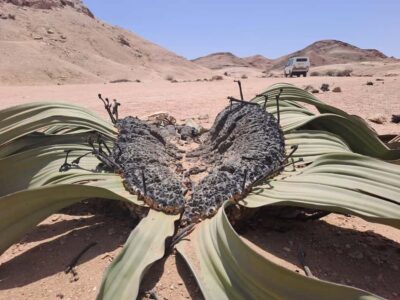
Full-Day Tour in Namib Desert from Swakopmund, Namibia
Read our review →Browse the lists this tour appears in